

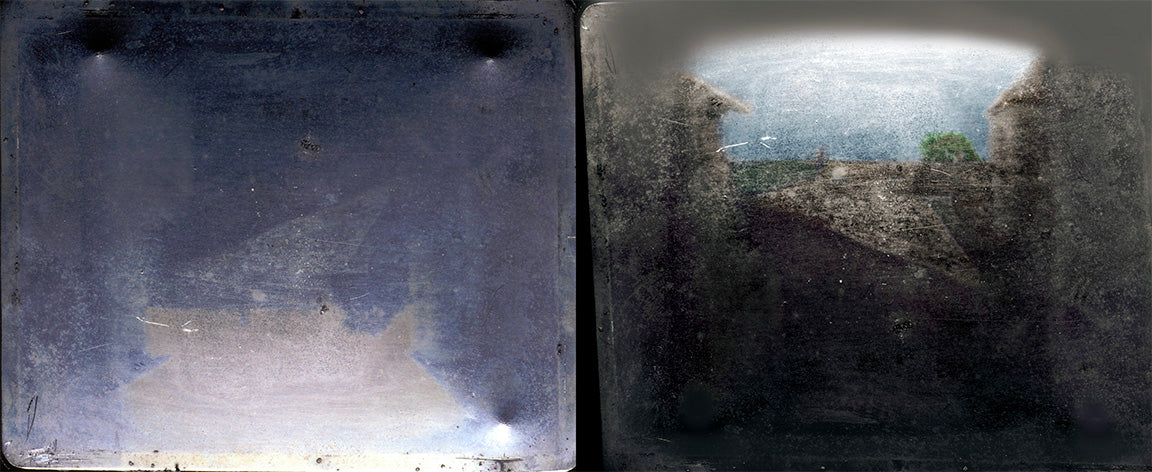

The Haunt of Joseph Nicéphore Niépce, 1826
The Haunt of Joseph Nicéphore Niépce, 1826
In the labyrinthine streets of Paris, an enigmatic figure named Joseph Nicéphore Niépce embarked on an audacious journey that would reshape human perception irrevocably. Here, in the very heart of the city, the dawn of photography emerged—a moment transcending words, profound in its quiet revelation. Allow me, dear reader, to be your guide through the shadows of history, as we unravel the tale of Niépce's pioneering odyssey.
The epoch was the early 19th century, an age of nascent possibilities. Amidst the timeworn cobblestones and whispered secrets, Niépce, armed with a contraption akin to a camera obscura, unveiled his ambition. On a fateful day, using a copper plate coated in a mysterious amalgam of light-sensitive materials, he achieved the extraordinary—an image imprinted by nature's own hand, captured in the very essence of time.
As we embark upon our journey, we tread the same pathways as Niépce once did, meandering through streets veiled in the mystique of antiquity. Paris, the City of Light, stands as both witness and muse—a canvas where history and the present intermingle like wraiths in the dim glow of twilight. Enigmatic cafes and dimly lit alleys weave an arcane tapestry that seems to whisper secrets of an era long shrouded.
In the heart of the Latin Quarter, a bastion of artistry and innovation, Niépce's vision manifested—a window into a new reality. Here, in the footprint of time, he conjured his experiment, capturing the world's first photograph. The ground beneath our feet resonates with the echoes of that moment—a spectral chamber where past and present intertwine in a haunting waltz.
To experience this historic transformation firsthand, we engage in the very process that birthed the image. Guided by modern alchemists well-versed in the forgotten rituals, we partake in the meticulous craftsmanship of creating a daguerreotype—an enigmatic mirror that captures light and shadows with eerie fidelity.
However, this is no ordinary journey—it's a descent into the chasms of innovation that bind eras in a continuum. From the sepia-toned reverberations of the daguerreotype to the kaleidoscope of contemporary images, the lineage remains unbroken—an irrefutable testament to the unfathomable power of human ingenuity.
As we bid adieu to the cobblestone enclaves and enigmatic corners of Paris, we bear with us a profound connection to the birth of photography. The faint whisper of that inaugural photograph still lingers—a relic of a visionary endeavor that forever altered the course of human history. In the spirit of Niépce's audacity, we depart with eyes tuned to new visions and the realization that beneath the shrouds of time, creation endures—an enigmatic beauty that defies the ages.
--------
The original plate above left and colorized reoriented enhancement (right). The photo was found to be taken at his home from a second-story south-facing bedroom window.
Leave a comment
Comments will be approved before showing up.
Also in Time Capsule
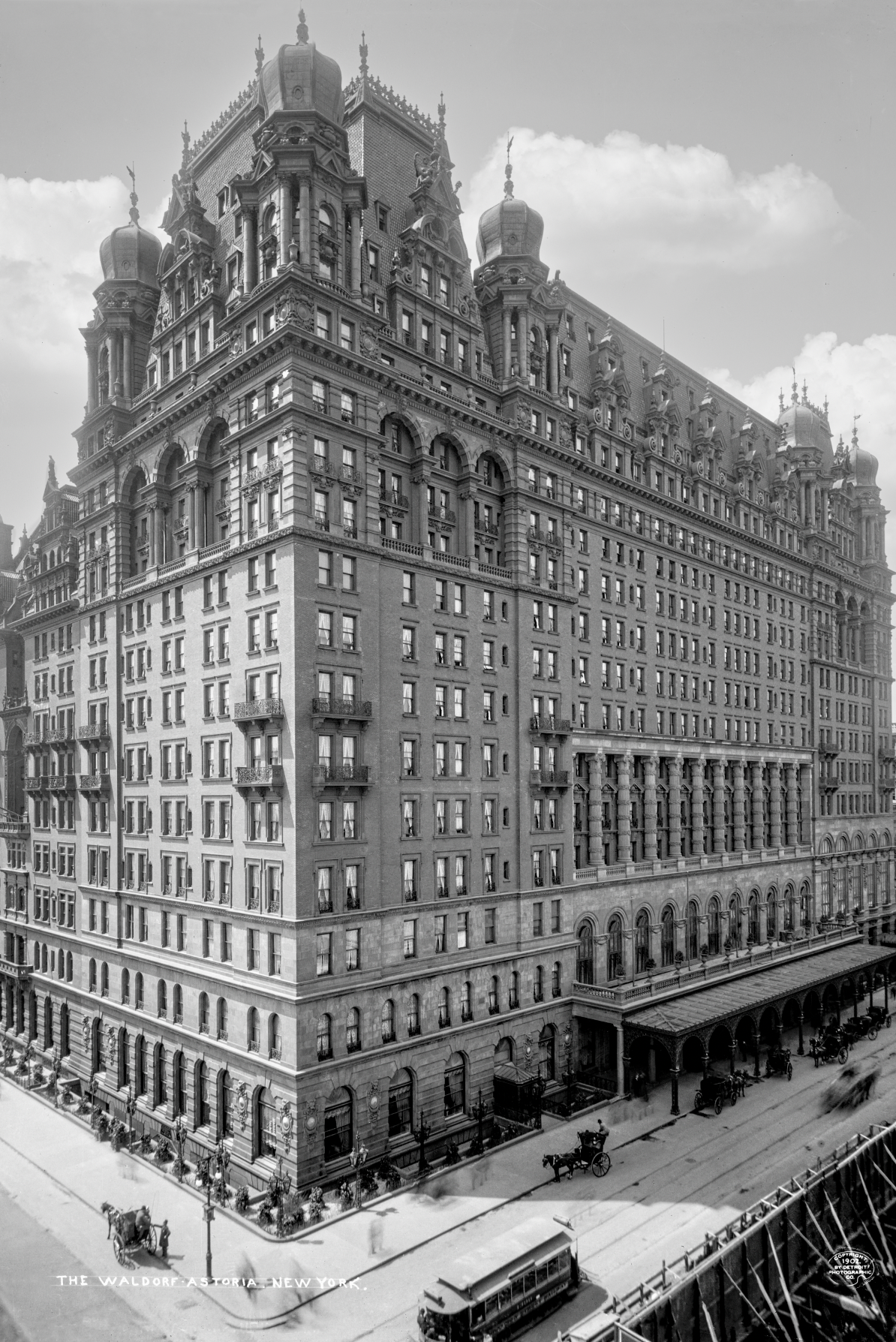

Six New York Landmarks That Changed the Manhattan Skyline
New York's skyline wasn't built overnight. Vintage photographs of Trinity Church, the Plaza, Waldorf-Astoria, Chrysler Building, Empire State Building and Rockefeller Center reveal how Manhattan grew from a city of church steeples and grand hotels into the skyscraper capital of the world.

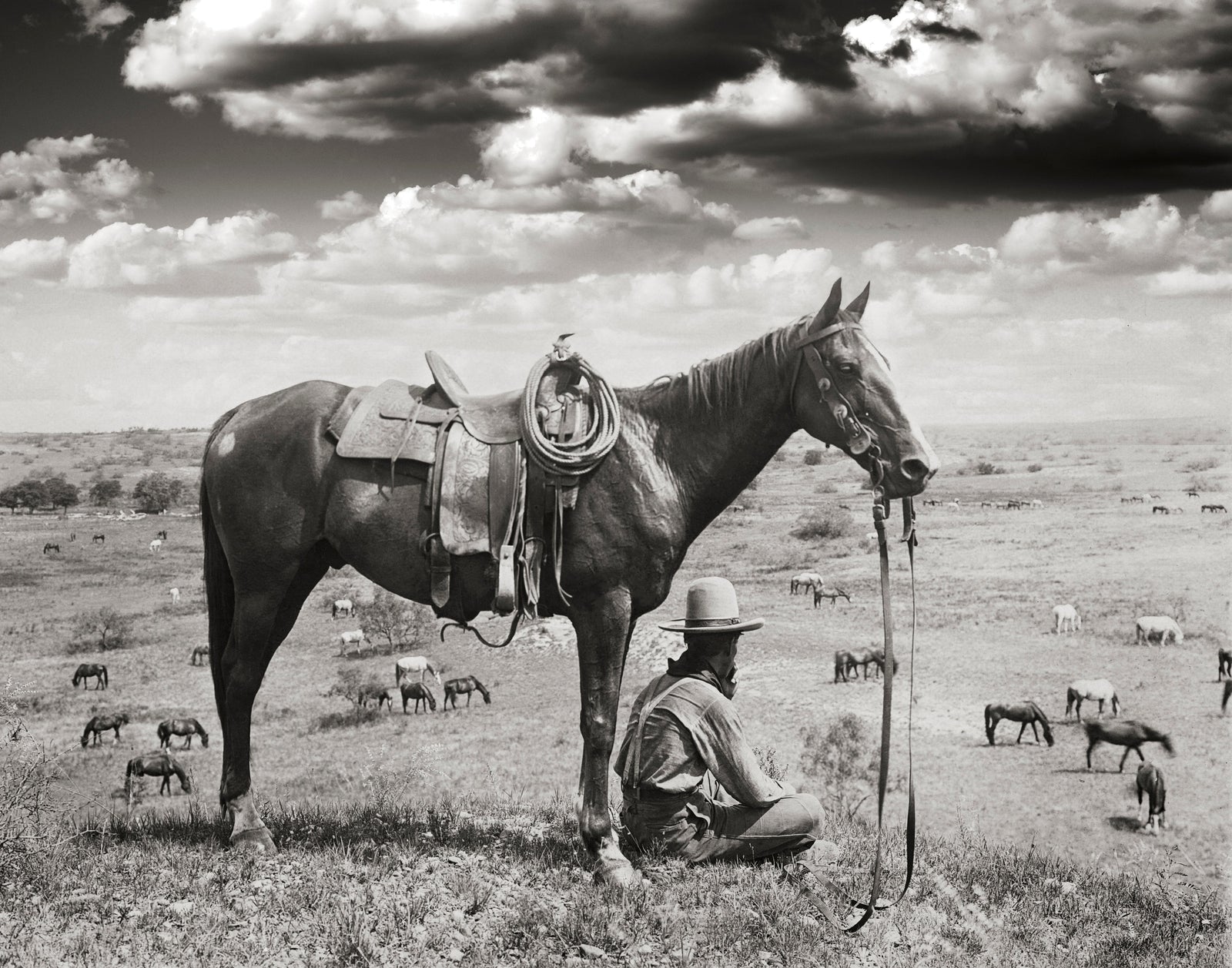

The Old West Never Really Ended
A cowboy on horseback overlooks the Dallas skyline in 1943—an image that seems to capture the Old West and modern America in a single frame. But the cowboy didn't disappear when the frontier closed. Discover how real working cowboys, rodeos, music and Hollywood carried the Old West into the 20th century.
Let customers speak for us
Gems
These short clips are gems. They are part of the history of music in America. Thank you for posting.
S. Kelley Chambers

Love the print and perfect decor for our n...
Love the print and perfect decor for our new apartment in Pittsburgh.
Chris P

5 stars review from Laura
5 stars review from Laura
Laura D

5 stars review from Geri
5 stars review from Geri
Geri L

5 stars review from Stephanie
5 stars review from Stephanie
Stephanie

5 stars review from Brookelynz
5 stars review from Brookelynz
Brookelynz
5 stars review from Deborah
5 stars review from Deborah
Deborah G

Spectacular!
Received as a gift and could not be happier with the quality of the print. Shipping container ensure this arrived in perfect condition.
John

5 stars review from Kayla
5 stars review from Kayla
Kayla G

5 stars review from Blondiee
5 stars review from Blondiee
Blondiee

5 stars review from April
5 stars review from April
April Y

5 stars review from Tracie
5 stars review from Tracie
Tracie C

Great quality and fast delivery!
Great quality and fast delivery!
Amanda C

5 stars review from Autumnrayne4
5 stars review from Autumnrayne4
Autumnrayne4

5 stars review from Traca
5 stars review from Traca
Traca B
