

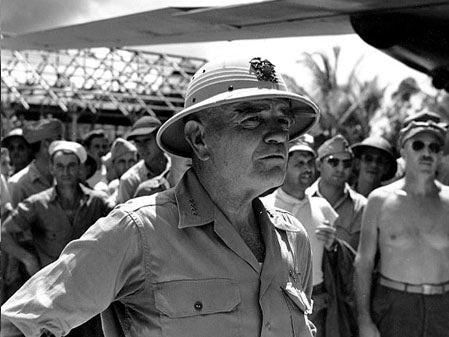

A Naval Hero

A Navel Hero
Michael Burgan, History Author and playwright
Admiral William Halsey earned his nickname “Bull” with a colorful personality and aggressive attitude. His favorite slogan summed up his approach to waging war: “Hit hard, hit fast, hit often.” During World War II, Halsey was one of America’s top admirals. His tactics helped stopped the advance of Japanese forces in the Pacific.
Halsey studied medicine before entering the Naval Academy in 1900. By 1909, he was commanding his own ship. He was a rear admiral and commander of the aircraft carrier Enterprise when World War II began. Bad weather kept Halsey from reaching Pearl Harbor, Hawaii, on December 7, 1941, where he and his ship would have been an easy target for attacking Japanese planes. Halsey then led raids on Japanese positions in the central Pacific. In late 1942, at the Battle of Guadalcanal, Halsey’s forces repulsed a Japanese attack. After that key victory, America began taking the offensive in the Pacific, and Halsey was later named commander of the U.S. Navy’s Third Fleet
Toward the end of the war, Halsey’s forces provided naval support during the invasion of the Philippines and at the Battle of Okinawa. In July 1945, ships and planes under Halsey’s command began to attack the Japanese mainland. Shortly after the war ended, Halsey was appointed fleet admiral. He retired in 1947.
Did you know...
In April 1942, William Halsey led the fleet that escorted Captain James Doolittle, his men, and their planes, for a daring raid on Tokyo.
Michael Burgan studied history at the University of Connecticut before embarking on his career of writing about history, current events, geography, science, and more for children. He worked at Weekly Reader for six years before becoming a freelance author. He is a member of Biographers International Organization and edits its monthly newsletter, The Biographer's Craft. A produced playwright, he is also a member of the Dramatists Guild.
Leave a comment
Comments will be approved before showing up.
Also in Time Capsule
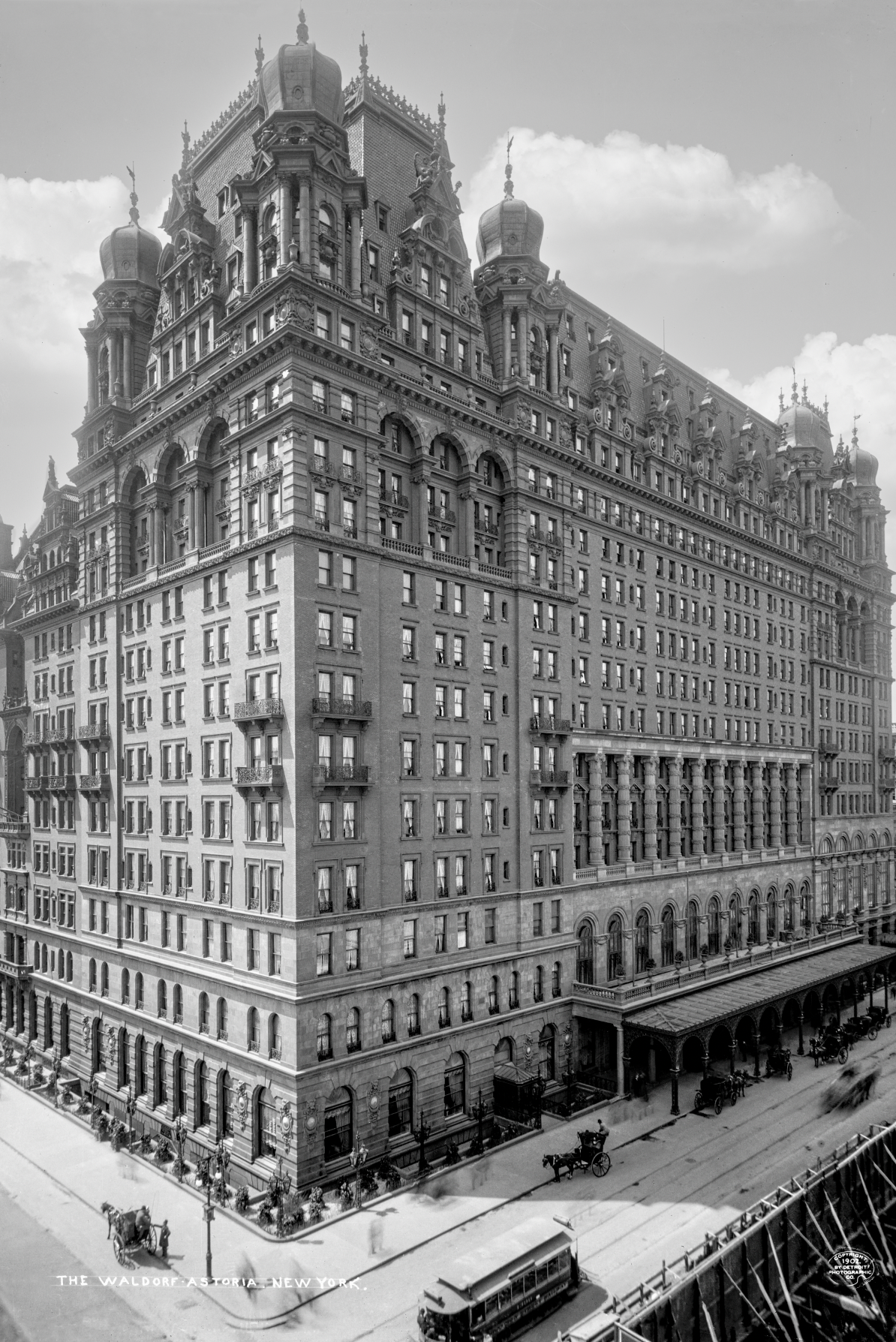

Six New York Landmarks That Changed the Manhattan Skyline
New York's skyline wasn't built overnight. Vintage photographs of Trinity Church, the Plaza, Waldorf-Astoria, Chrysler Building, Empire State Building and Rockefeller Center reveal how Manhattan grew from a city of church steeples and grand hotels into the skyscraper capital of the world.
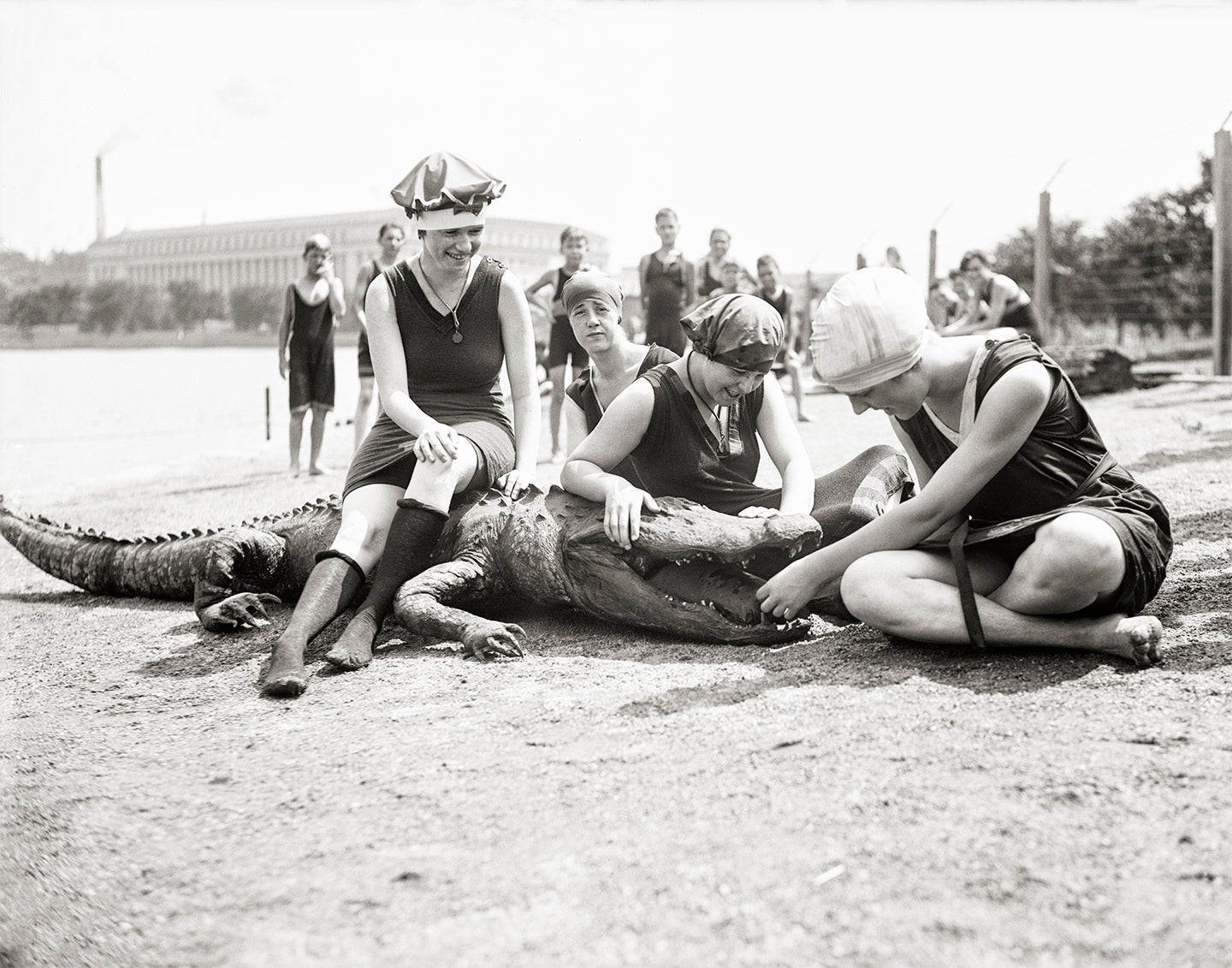

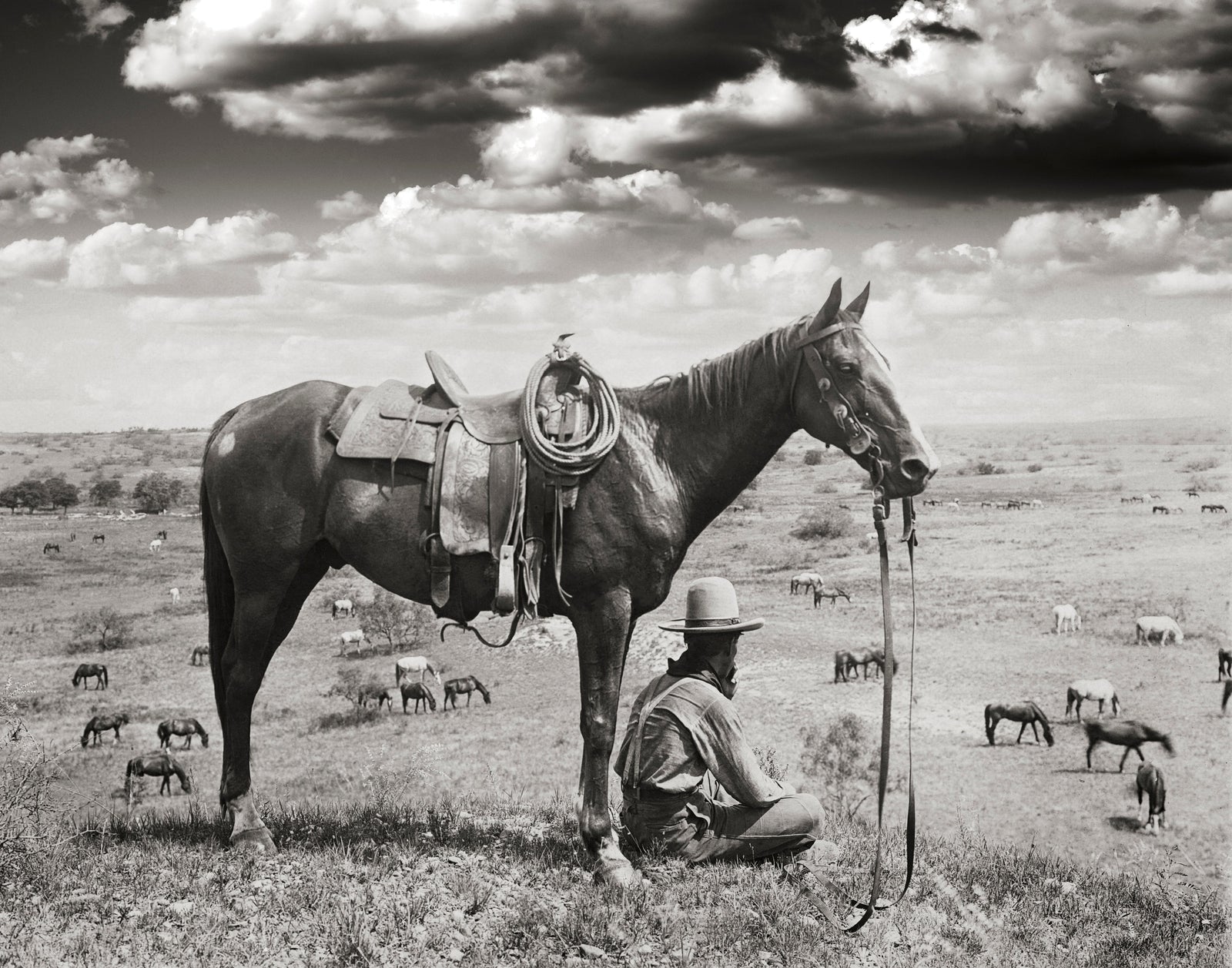

The Old West Never Really Ended
A cowboy on horseback overlooks the Dallas skyline in 1943—an image that seems to capture the Old West and modern America in a single frame. But the cowboy didn't disappear when the frontier closed. Discover how real working cowboys, rodeos, music and Hollywood carried the Old West into the 20th century.
Let customers speak for us
Gems
These short clips are gems. They are part of the history of music in America. Thank you for posting.
S. Kelley Chambers

Love the print and perfect decor for our n...
Love the print and perfect decor for our new apartment in Pittsburgh.
Chris P

5 stars review from Laura
5 stars review from Laura
Laura D

5 stars review from Geri
5 stars review from Geri
Geri L

5 stars review from Stephanie
5 stars review from Stephanie
Stephanie

5 stars review from Brookelynz
5 stars review from Brookelynz
Brookelynz
5 stars review from Deborah
5 stars review from Deborah
Deborah G

Spectacular!
Received as a gift and could not be happier with the quality of the print. Shipping container ensure this arrived in perfect condition.
John

5 stars review from Kayla
5 stars review from Kayla
Kayla G

5 stars review from Blondiee
5 stars review from Blondiee
Blondiee

5 stars review from April
5 stars review from April
April Y

5 stars review from Tracie
5 stars review from Tracie
Tracie C

Great quality and fast delivery!
Great quality and fast delivery!
Amanda C

5 stars review from Autumnrayne4
5 stars review from Autumnrayne4
Autumnrayne4

5 stars review from Traca
5 stars review from Traca
Traca B
