


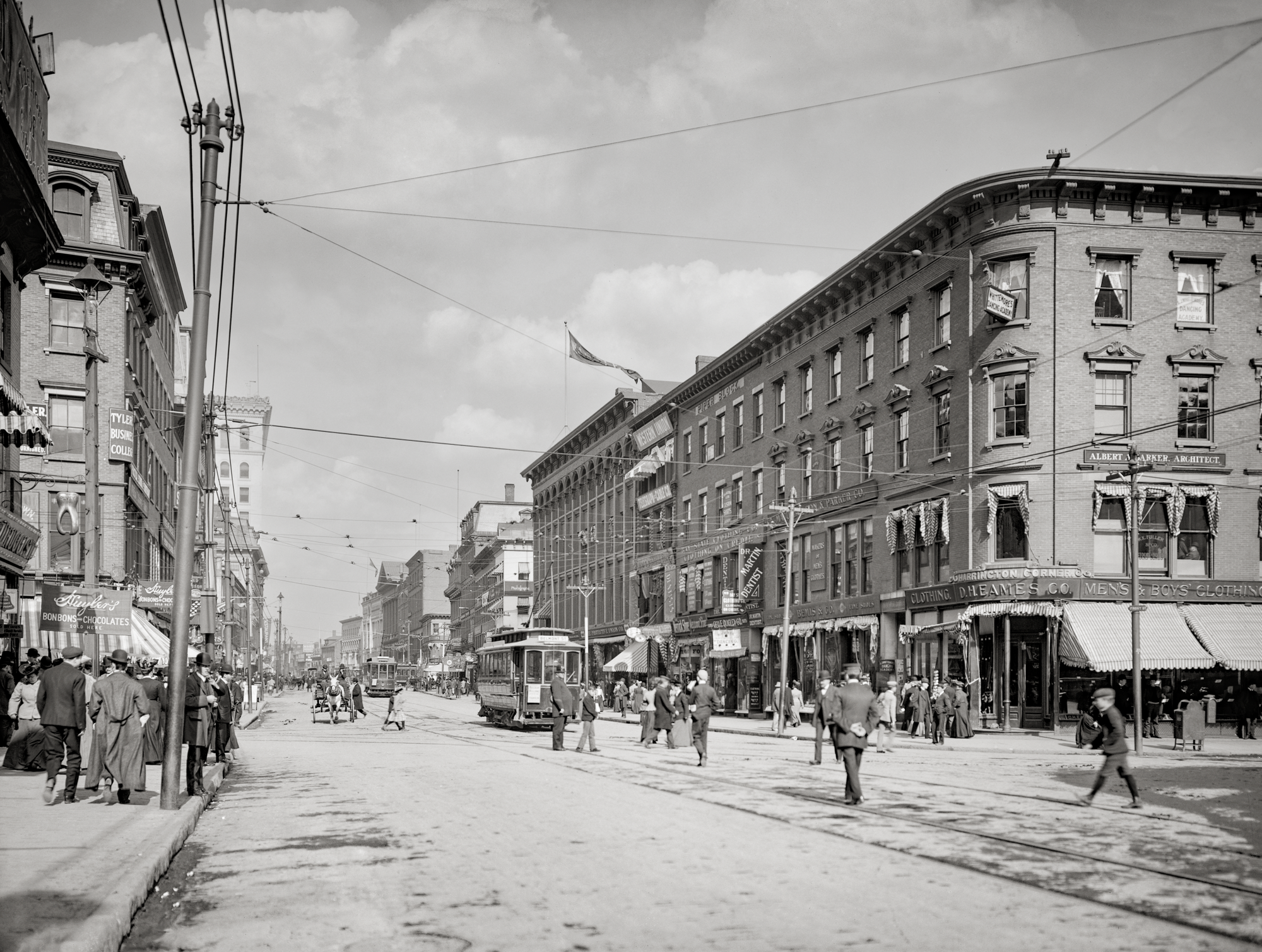


Worcester Massachusetts, Main Street, Circa 1906
$35.50 - $158.00
During the transition from the late 19th century into the early 20th century, Worcester, Massachusetts solidified its status as an industrial powerhouse in New England, characterized by remarkable industrial diversification, demographic evolution, and extensive urban development.
This era saw Worcester's economy thrive with a broad array of industries. The city was renowned for its machinery and tool manufacturing, playing a pivotal role in the mechanical innovation sphere. It was also a significant center for wire production, with companies like Washburn and Moen leading the industry, a testament to Worcester's capacity for industrial diversification.
Another hallmark of Worcester's industrial landscape was the Royal Worcester Corset Company, which, by the turn of the century, had grown to be the largest corset manufacturer globally, showcasing the city's prominence in the garment industry. Additionally, Worcester was home to the Morgan Construction Company, a leader in the creation of wire rod mill machinery, further underscoring the city's industrial versatility.
The burgeoning industrial sector drove population growth, with a substantial number of immigrants arriving from Europe, attracted by the promise of jobs in Worcester's factories and workshops. This influx, along with domestic migration, transformed the city's demographic profile and necessitated the expansion of housing and infrastructure to accommodate the growing workforce.
To support this expanding population and the burgeoning industrial sector, Worcester witnessed significant infrastructural developments, including improvements in transportation and the construction of public facilities. The city's educational and cultural institutions also flourished during this time, reflecting Worcester's evolving urban identity and providing a foundation for community life beyond the industrial economy.
This era saw Worcester's economy thrive with a broad array of industries. The city was renowned for its machinery and tool manufacturing, playing a pivotal role in the mechanical innovation sphere. It was also a significant center for wire production, with companies like Washburn and Moen leading the industry, a testament to Worcester's capacity for industrial diversification.
Another hallmark of Worcester's industrial landscape was the Royal Worcester Corset Company, which, by the turn of the century, had grown to be the largest corset manufacturer globally, showcasing the city's prominence in the garment industry. Additionally, Worcester was home to the Morgan Construction Company, a leader in the creation of wire rod mill machinery, further underscoring the city's industrial versatility.
The burgeoning industrial sector drove population growth, with a substantial number of immigrants arriving from Europe, attracted by the promise of jobs in Worcester's factories and workshops. This influx, along with domestic migration, transformed the city's demographic profile and necessitated the expansion of housing and infrastructure to accommodate the growing workforce.
To support this expanding population and the burgeoning industrial sector, Worcester witnessed significant infrastructural developments, including improvements in transportation and the construction of public facilities. The city's educational and cultural institutions also flourished during this time, reflecting Worcester's evolving urban identity and providing a foundation for community life beyond the industrial economy.