


Six New York Landmarks That Changed the Manhattan Skyline
There are cities with famous buildings, and then there is New York.
For generations, its architecture has been part of the city's identity. A glimpse of a familiar spire can tell you immediately where you are, whether it is the stainless-steel crown of the Chrysler Building, the unmistakable silhouette of the Empire State Building or the Gothic steeple of Trinity Church rising amid the towers of Lower Manhattan. These buildings have appeared in movies, welcomed millions of visitors and become landmarks in people's personal histories. For someone who grew up in New York, worked there, fell in love there or simply remembers the excitement of a first visit, an old photograph of the city can evoke considerably more than architectural history.
Yet the skyline we recognize today wasn't created all at once. New York grew upward in layers, and for a remarkable period from the late 19th century through the 1930s, each generation seemed determined to outdo the one before it. Churches that once towered over the city were dwarfed by office buildings. Grand hotels rose along fashionable avenues. Then came the skyscrapers—taller, sleeker and more audacious than anything the city had seen before. Six historic New York buildings tell that story particularly well.
Trinity Church: Old New York Meets the Skyscraper City
The Trinity Church, New York City, 1905 photograph captures a remarkable moment in Manhattan's transformation. When the present Gothic Revival church opened at Broadway and Wall Street in 1846, its soaring steeple made it one of the most prominent structures on the New York skyline. For decades, ships approaching Manhattan could see Trinity's spire rising above the surrounding city.
By the time this photograph was taken in 1905, however, New York had changed dramatically. Trinity Church was still there, but now it was dwarfed by the much larger commercial buildings rising around it. The photograph almost seems to contain two versions of New York in a single frame: the church and its historic graveyard representing an older, lower Manhattan, while the enormous buildings surrounding it announce the dense, vertical city that was rapidly taking its place.
That contrast makes the photograph particularly interesting for anyone fascinated by New York architecture. Trinity Church didn't shrink—the city around it simply grew enormously taller. Within another generation, buildings such as the Chrysler and Empire State would push Manhattan's skyline to heights that New Yorkers of 1846 could scarcely have imagined.

Above: Trinity Church, New York City, 1905.
By the time this photograph was taken, however, Manhattan was changing around it. Commercial buildings were climbing higher, and the value of land in the financial district encouraged developers to build upward rather than outward. Trinity's steeple, once visible from great distances, gradually found itself surrounded by taller neighbors.
That contrast is precisely what makes old photographs of Trinity Church so compelling. The church remained, but the city around it transformed. For someone with a connection to Lower Manhattan or Wall Street, the photograph isn't simply a portrait of a beautiful church. It captures a New York that was already disappearing.
The Waldorf-Astoria: Luxury Before the Empire State Building
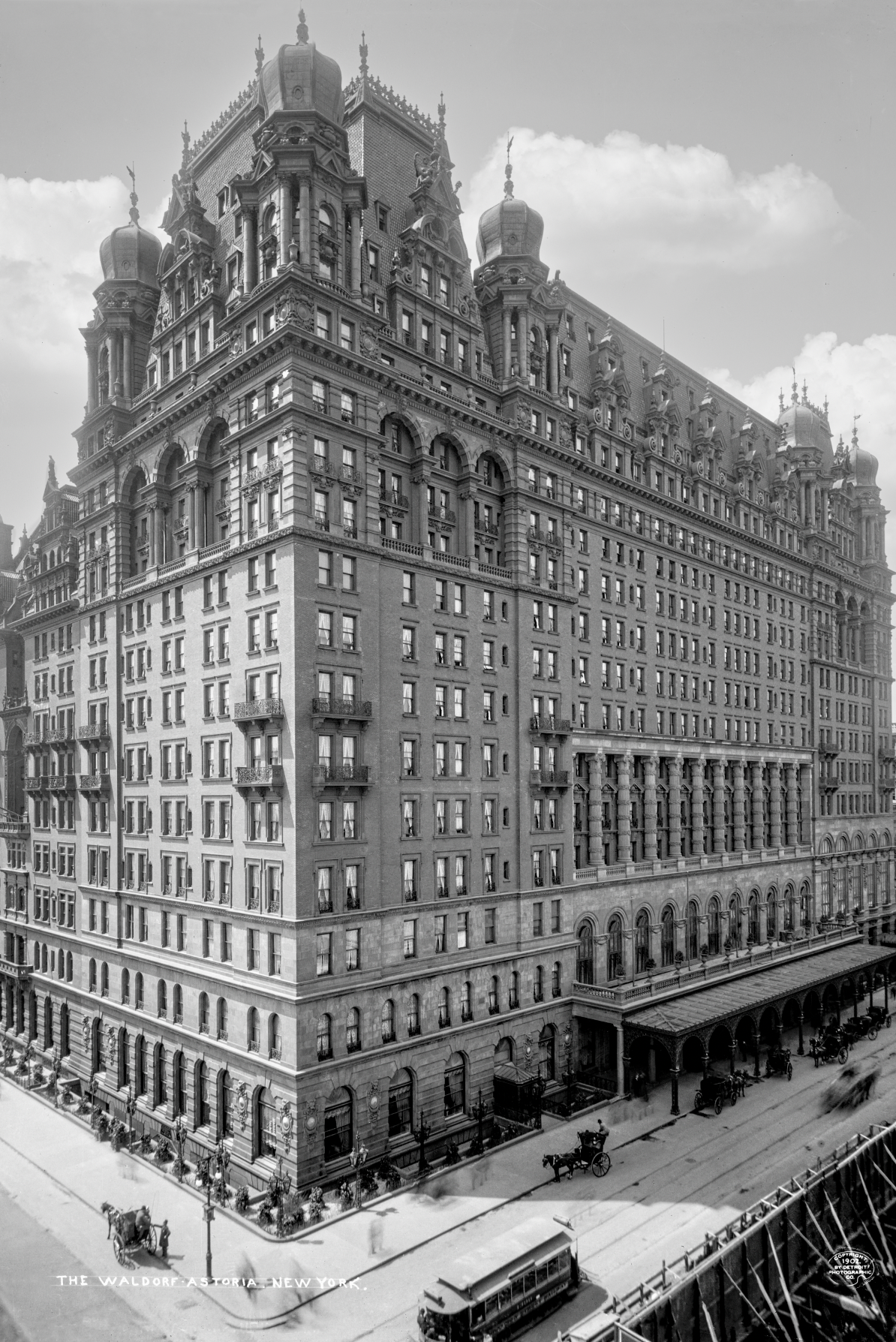
At Fifth Avenue and 34th Street once stood one of the grandest hotels in America: the original Waldorf-Astoria.
The photograph of the Waldorf-Astoria in 1902 shows a building designed to impress. The hotel grew from neighboring Waldorf and Astoria hotels associated with branches of the wealthy Astor family, eventually becoming synonymous with elaborate dinners, society gatherings and the kind of luxury associated with Gilded Age New York.

Above: The original Waldorf-Astoria Hotel at Fifth Avenue and 34th Street, New York City, 1902.
What makes this photograph particularly interesting today is not simply what is in it. It is what isn't there yet.
The original Waldorf-Astoria was eventually demolished, and on its former site New Yorkers watched something radically different rise into the sky: the Empire State Building. The hotel's name survived—the present Waldorf Astoria opened farther uptown on Park Avenue—but the old building disappeared from Fifth Avenue.
That makes the photograph a genuine piece of vanished New York. A person standing at Fifth Avenue and 34th Street today can look upward at one of the world's most famous skyscrapers without necessarily realizing that fashionable New Yorkers once arrived at this same address for dinner, dances and nights at the Waldorf. New York doesn't merely build. It builds over itself.
The Plaza: New York Looks Uptown
While the Waldorf represented fashionable New York around 34th Street, another grand hotel helped establish the glamour of Fifth Avenue farther north.
The present Plaza Hotel opened in 1907 at Fifth Avenue and Central Park South, occupying one of the most enviable locations in Manhattan. Designed by Henry Janeway Hardenbergh, its château-like exterior looked across toward Central Park while its lavish interiors attracted wealthy travelers, prominent New Yorkers and international visitors. The hotel quickly became more than lodging; it became part of New York's social stage.

Above: The Plaza Hotel in the early 20th century.
The photograph of the Plaza Hotel in the early 1900s captures something particularly appealing about historical New York photography: a famous place can be instantly recognizable and yet strangely unfamiliar at the same time. The building remains, but the streets, automobiles, clothing and neighboring structures tell us that we're looking into another New York.
For many people, the Plaza also carries a more personal kind of nostalgia. It may recall a visit to Central Park, Christmas in Manhattan, afternoon tea, a honeymoon, a favorite movie or simply the fantasy of glamorous old New York. Architecture becomes intertwined with memory, which is one reason photographs of familiar buildings can mean so much more than pictures of buildings we've never known.
The Chrysler Building and the Race for the Sky
Then New York architecture entered one of its most exhilarating periods.
By the late 1920s, developers and architects weren't merely constructing tall buildings. They were competing to create the tallest building in the world.
Walter P. Chrysler hired architect William Van Alen to create a skyscraper that would announce both Chrysler's success and the confidence of the modern industrial age. Construction began in 1929, and the building's extraordinary stainless-steel crown, triangular windows and automobile-inspired ornamentation made it one of the purest expressions of Art Deco architecture in America.

Above: The Chrysler Building and its unmistakable Art Deco crown.
Van Alen had another trick hidden inside the building: a steel spire assembled secretly within the tower and then raised into position. When completed in 1930, the Chrysler Building reached 1,048 feet and briefly became the tallest building in the world.
Briefly.
The Chrysler Building photo makes it easy to understand why the building remains so beloved even after losing its height record. There are taller buildings now, but few have a silhouette so unmistakably their own. The crown catches light differently throughout the day, giving the tower a quality that is both industrial and decorative—machinery transformed into architecture.
And waiting only a few blocks away was the building that would take its record.
The Empire State Building: The Skyscraper Becomes a Symbol
If the Chrysler Building represents Art Deco exuberance, the Empire State Building represents sheer ambition.
Construction began in 1930, at the beginning of the Great Depression, on the former site of the original Waldorf-Astoria. The project proceeded at astonishing speed. When the Empire State Building opened in 1931, it surpassed the Chrysler Building and became the tallest building in the world.
But height alone doesn't explain what happened next. The Empire State Building became a symbol.

Above: The Empire State Building illuminating the Manhattan night in 1937.
The photograph of the Empire State Building at night in 1937 captures the skyscraper when it was still startlingly new. That is easy to forget today. We have seen the Empire State Building so many thousands of times—in photographs, movies, advertisements and television—that it can feel as though it has always been there. In this image, it was only six years old.
Imagine being a New Yorker who remembered the old Waldorf-Astoria standing on the same ground. Within a few decades, Fifth Avenue had gone from grand Gilded Age hotel to a building rising more than a thousand feet into the sky.
That's the extraordinary thing about these photographs. We know what came next. The people in them didn't.
30 Rockefeller Center: Building a City Within the City
The final building in our group wasn't conceived simply as an isolated skyscraper. Rockefeller Center represented an even more ambitious idea: an entire coordinated urban complex devoted to business, broadcasting, entertainment, art and public space.
John D. Rockefeller Jr. originally became involved with the site in the late 1920s, when plans included a new home for the Metropolitan Opera. After the stock market crash disrupted those plans, the project evolved into Rockefeller Center. Construction of 30 Rockefeller Plaza began in 1932, in the depths of the Great Depression.

Above: 30 Rockefeller Center, 1933.
The photog of 30 Rockefeller Center in 1933 captures the building at the beginning of what would become an extraordinary cultural life. Radio City Music Hall was nearby, the observation deck opened to visitors, and the Rainbow Room would open in 1934. The larger Rockefeller Center project ultimately employed tens of thousands of people during one of the bleakest economic periods in American history.
Even one of New York's most beloved traditions began amid that construction. In 1931, workers at Rockefeller Center put up a Christmas tree at the site. The first official tree-lighting followed in 1933, beginning a tradition that would eventually become known around the world.
Today, Rockefeller Center can feel inseparable from New York itself. But this photograph allows us to see it before decades of Christmas trees, skating at the rink, television broadcasts and tourists turned it into an institution.
Six Buildings, One Changing City
Viewed separately, these six photographs document famous pieces of architecture. Viewed together, they tell a much larger story.
Trinity Church takes us back to a New York in which a church steeple could dominate the skyline. The Waldorf-Astoria and Plaza show the city's Gilded Age wealth and the migration of fashionable New York up Fifth Avenue. The Chrysler and Empire State buildings capture the extraordinary skyscraper race of the late 1920s and early 1930s. Rockefeller Center shows New York thinking beyond the individual tower and imagining an entire modern city within the city.
That's also what makes historic New York photographs so satisfying to collect as a group. Instead of choosing photographs simply because they look attractive together, a collection can have a story.
Someone fascinated by Art Deco New York might pair the Chrysler Building, Empire State Building and 30 Rockefeller Center. A collection devoted to old New York elegance could bring together the Plaza and Waldorf-Astoria. Trinity Church beside the later skyscrapers creates another theme entirely: the changing Manhattan skyline.
And a collection doesn't need to be completed at once. In fact, there is something particularly enjoyable about starting with one meaningful photograph and gradually finding others that belong with it.
Bringing Old New York Into a Room

Historical architectural photographs work particularly well as wall art because the buildings themselves provide strong lines, shapes and contrasts. A group of black-and-white New York photographs can look surprisingly contemporary when displayed in simple matching frames, even though the scenes themselves may be nearly a century old.
For a gallery wall, the Waldorf Astoria, Trinity Church and 30 Rockefeller Center make a natural trio. Their vertical forms work together, while each building is recognizable enough to hold its own. In a larger room, one dramatic architectural photograph can work equally well at a larger scale.

Interior designers can also use subject matter to create a connection between the artwork and the person who lives with it. New York photographs are particularly useful because so many people have their own New York story. The artwork can relate to where someone grew up, went to school, worked, married, vacationed or dreamed of living.
A Piece of Someone's New York
A vintage photograph can also make an unusually personal gift precisely because it doesn't have to be about the recipient's favorite thing. It can be about their favorite place.
Someone who worked for years near Rockefeller Center may see more than an Art Deco skyscraper in an old photograph of 30 Rock. A former New Yorker might recognize a neighborhood associated with childhood. Someone who honeymooned in Manhattan may remember walking past the Plaza. An architect may simply love the Chrysler Building because nothing else looks quite like it.
That's what separates a historical photograph from generic wall décor. Two people can look at exactly the same image and see entirely different things. One sees architecture, another sees home.
The Skyline Keeps Changing
New York has never been particularly sentimental about leaving its skyline alone. Buildings rise, buildings disappear and new towers eventually obscure structures that once seemed impossibly tall. The original Waldorf-Astoria vanished to make room for the Empire State Building. Trinity Church went from dominating Lower Manhattan to appearing almost miniature beside the skyscrapers around it. The Chrysler Building held the title of world's tallest building for less than a year. Yet those changes are precisely what make old photographs of New York so compelling.
A photograph freezes the city at a moment when nobody knew what its skyline would become. Streets are filled with buildings that may no longer exist. Famous landmarks appear startlingly new. Empty patches of sky reveal towers that later construction would hide. Even a building that survives essentially unchanged can look different when the city around it belongs to another era.
Perhaps that is why people who love New York so often love old photographs of it. We aren't simply looking at architecture. We're looking at someone's New York—a city remembered, inherited, discovered or imagined. And sometimes, hanging a photograph on the wall is a way of keeping a little piece of that New York close.
Leave a comment
Comments will be approved before showing up.
Also in Time Capsule


The Old West Never Really Ended
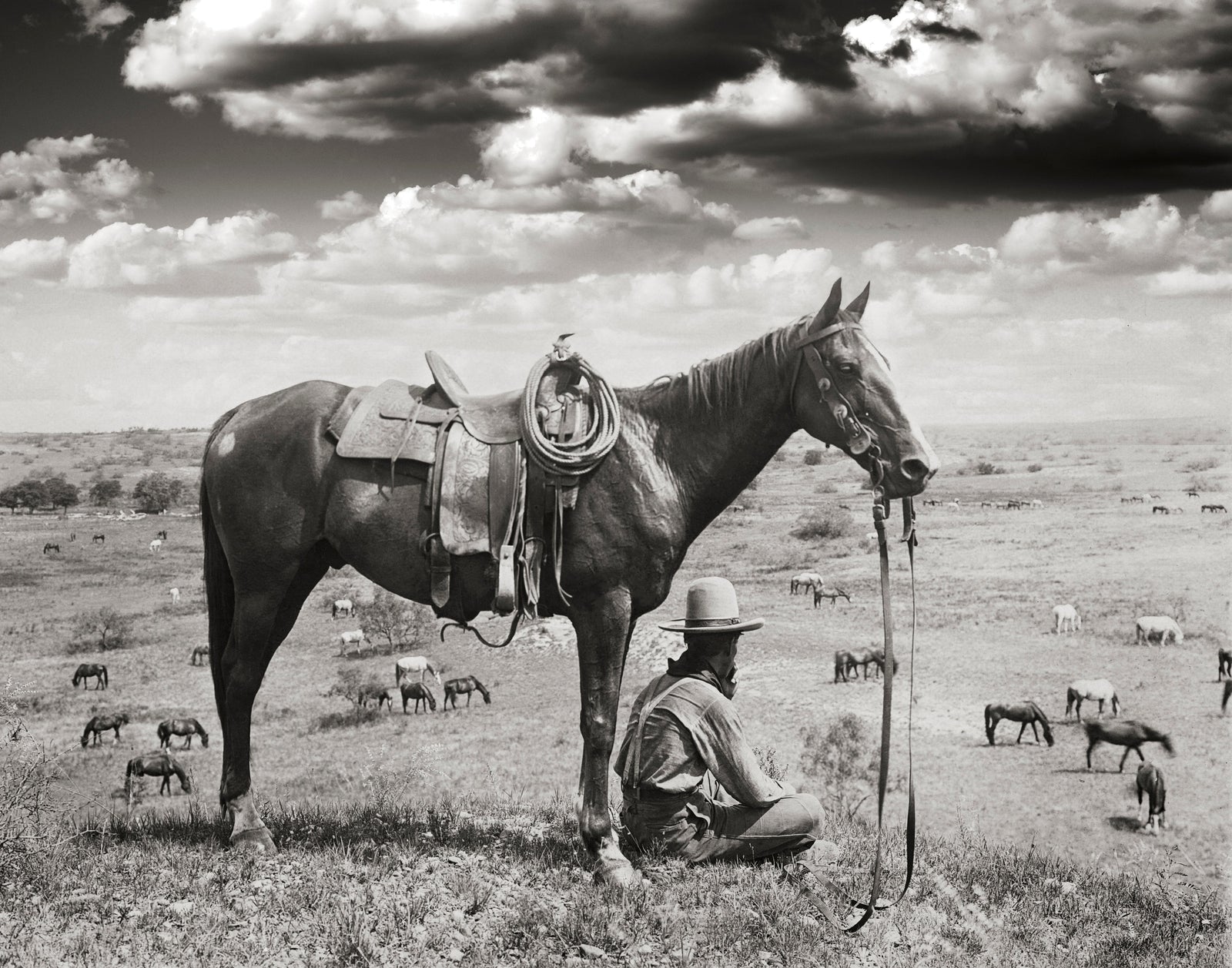
A cowboy on horseback overlooks the Dallas skyline in 1943—an image that seems to capture the Old West and modern America in a single frame. But the cowboy didn't disappear when the frontier closed. Discover how real working cowboys, rodeos, music and Hollywood carried the Old West into the 20th century.

Why Did Americans Stop Wearing Hats?
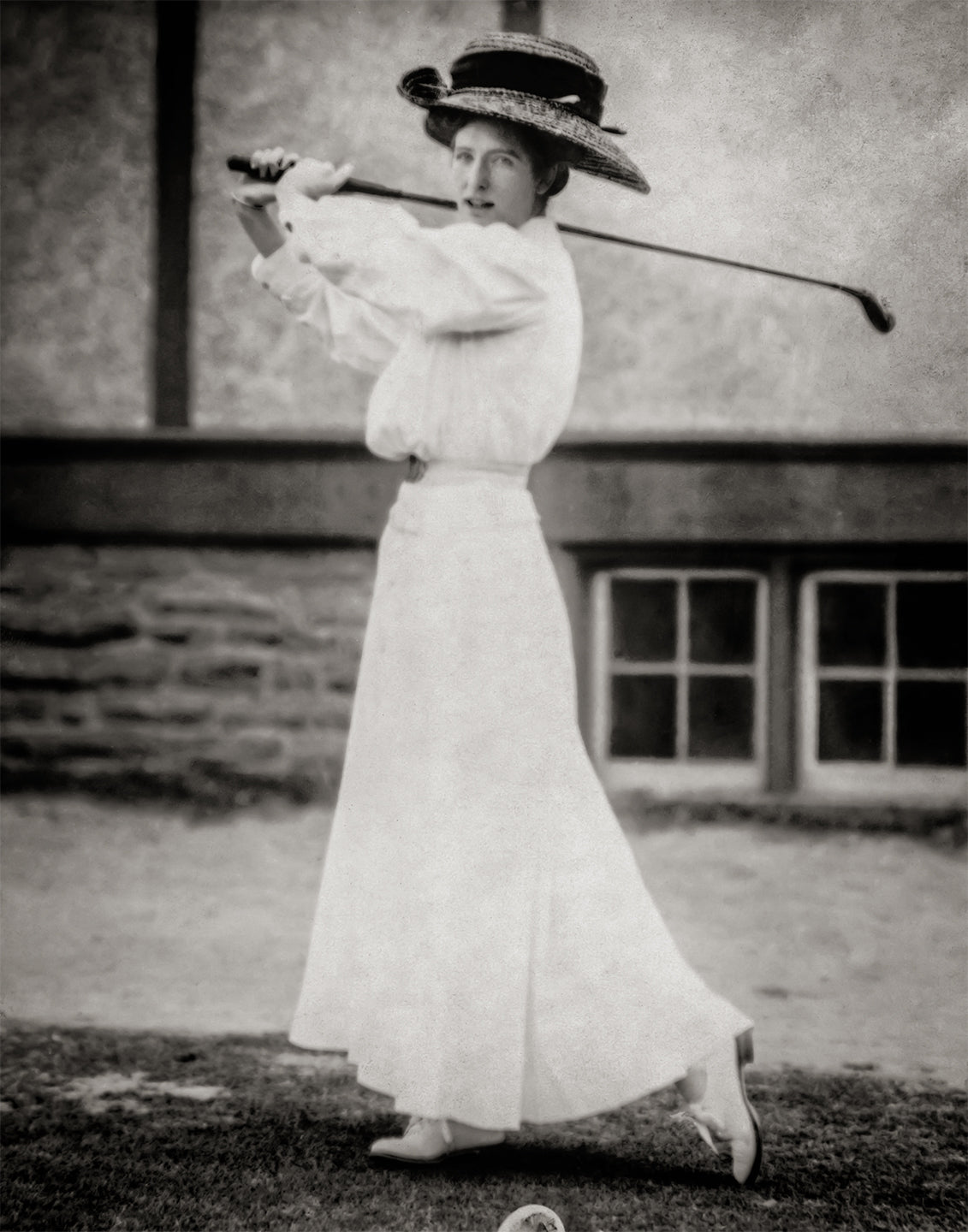
Look at almost any American street photograph from the early 1900s and nearly everyone is wearing a hat. So why did this once-essential part of getting dressed nearly disappear? From enormous Edwardian hats and 1920s cloches to automobiles, changing hairstyles, casual fashion, and the JFK myth, discover what really happened to America's hats.
Let customers speak for us
Gems
These short clips are gems. They are part of the history of music in America. Thank you for posting.
S. Kelley Chambers

Love the print and perfect decor for our n...
Love the print and perfect decor for our new apartment in Pittsburgh.
Chris P

5 stars review from Laura
5 stars review from Laura
Laura D

5 stars review from Geri
5 stars review from Geri
Geri L

5 stars review from Stephanie
5 stars review from Stephanie
Stephanie

5 stars review from Brookelynz
5 stars review from Brookelynz
Brookelynz
5 stars review from Deborah
5 stars review from Deborah
Deborah G

Spectacular!
Received as a gift and could not be happier with the quality of the print. Shipping container ensure this arrived in perfect condition.
John

5 stars review from Kayla
5 stars review from Kayla
Kayla G

5 stars review from Blondiee
5 stars review from Blondiee
Blondiee

5 stars review from April
5 stars review from April
April Y

5 stars review from Tracie
5 stars review from Tracie
Tracie C

Great quality and fast delivery!
Great quality and fast delivery!
Amanda C

5 stars review from Autumnrayne4
5 stars review from Autumnrayne4
Autumnrayne4

5 stars review from Traca
5 stars review from Traca
Traca B
