


Beneath the City: The Story of New York City’s Tiles

In a city defined by constant motion, noise, and towering structures, some of its most enduring stories are told quietly, just beneath the surface. Far below the streets of New York, in the vast network of tunnels and platforms that make up its subway system, a different kind of architecture exists—one made not of steel and glass, but of ceramic tile. These tiles, often overlooked by hurried commuters, form one of the most remarkable and extensive public art collections in the world. They are at once decorative and functional, historical and modern, and together they tell a story of design, identity, and resilience that spans more than a century.
The story of New York City’s tiles begins with the birth of the subway itself. When the first underground line opened in 1904 under the direction of the Interborough Rapid Transit Company, the designers faced a challenge that went beyond engineering. The subway would be used by millions of people, many of whom spoke different languages or could not read at all. The stations needed to be not only durable and easy to clean, but also instantly recognizable. Tiles became the solution, offering a medium that could withstand the harsh conditions of an underground environment while also providing clarity and beauty.
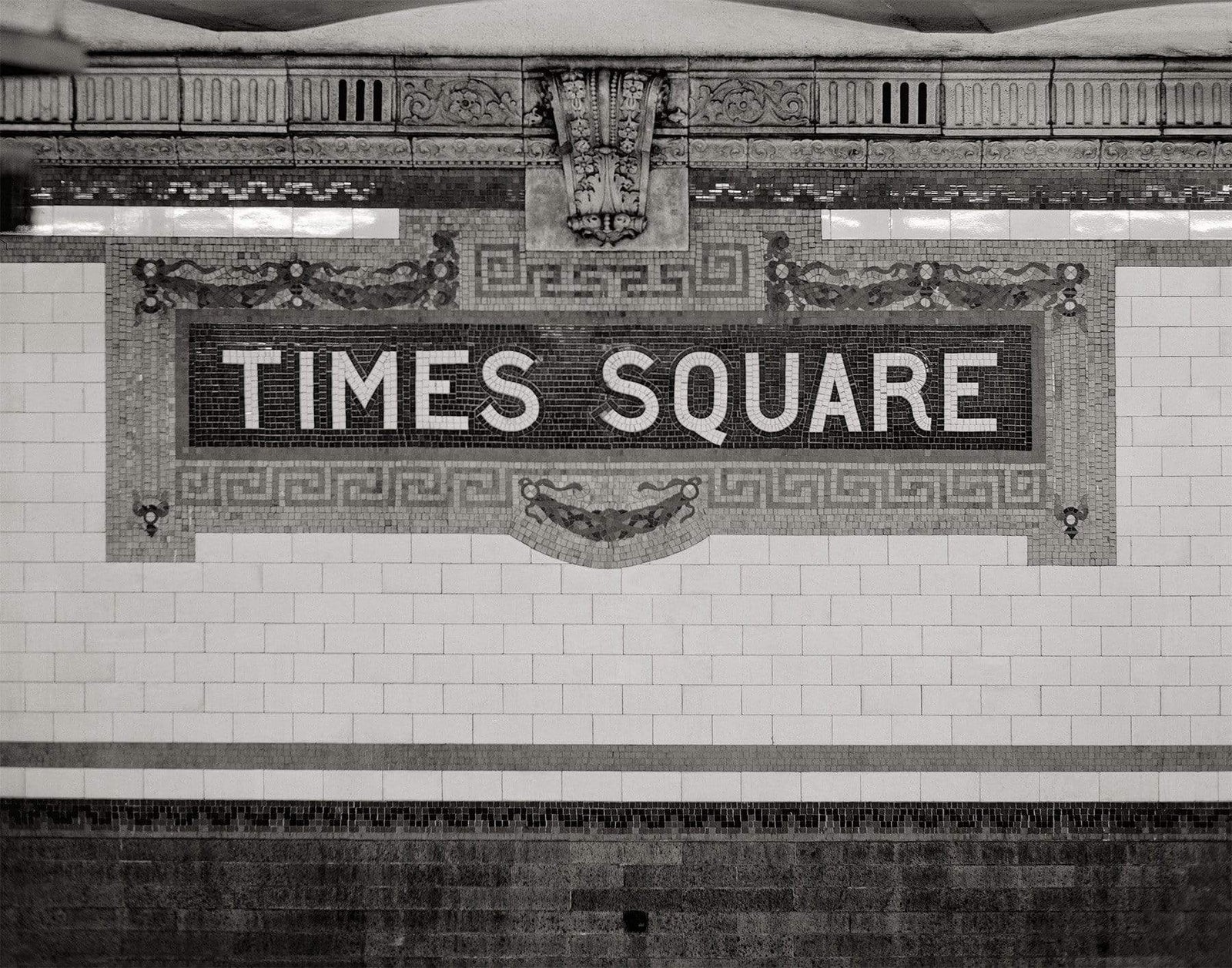
From the beginning, tile design in the subway was approached with intention and artistry. Stations were given distinct visual identities, often through the use of color, pattern, and imagery. Name tablets were rendered in bold mosaic lettering, framed by decorative borders that varied from station to station. In some cases, pictorial tiles were added to represent the neighborhood above. A station in an area once known for beavers might feature a stylized beaver, while another might include imagery tied to local landmarks or industries. These visual cues helped riders orient themselves in a time before digital signage and automated announcements, turning the subway into a kind of underground map written in ceramic.
The materials themselves were chosen with care. Glazed ceramic tiles were ideal for the subway environment because they were resistant to moisture, easy to clean, and capable of reflecting light in otherwise dim spaces. This was not a minor consideration, as early subway platforms relied heavily on artificial lighting that was far less efficient than what we have today. The reflective surfaces of the tiles helped brighten the stations, creating a sense of openness and safety that might otherwise have been difficult to achieve underground. At the same time, the durability of the material ensured that the designs would endure, even under the constant wear of millions of passengers.
Much of the early tile work was produced by the American Encaustic Tiling Company and the Grueby Faience Company, both of which were leaders in ceramic production at the time. Their work brought a level of craftsmanship to the subway that rivaled that of high-end architectural projects. Tiles were not simply mass-produced pieces; many were carefully designed, hand-glazed, and assembled into intricate mosaics that required both artistic skill and technical precision. The result was a system in which even the most utilitarian spaces were treated as opportunities for artistic expression.
As the subway expanded in the early twentieth century, so too did its tile vocabulary. New lines introduced variations in style, reflecting changing tastes and technological advancements. While the earliest stations featured richly detailed mosaics and decorative flourishes, later stations often adopted a more streamlined aesthetic, with simpler tile patterns and standardized signage. This shift was partly driven by cost considerations and the need to build quickly, but it also mirrored broader trends in architecture and design, where ornamentation gave way to modernism.
Despite these changes, the core idea remained the same. Tiles were not just decoration; they were a language. They conveyed information, created identity, and contributed to the overall experience of moving through the city. Even today, long after the introduction of digital displays and recorded announcements, the tiled names of stations remain one of the most reliable and recognizable features of the subway. A quick glance at a mosaic sign can confirm your location in a way that feels immediate and certain, a quiet reassurance in a system that can often feel overwhelming.
Over time, the tiles have also become historical artifacts, preserving fragments of the city’s past. Neighborhoods have changed, industries have disappeared, and demographics have shifted, but the tiles remain, offering glimpses into earlier eras. A decorative motif that once made perfect sense may now seem mysterious, prompting curiosity about what once existed above ground. In this way, the subway tiles function as a kind of archive, embedded in the very infrastructure of the city.
The preservation of these tiles has not always been guaranteed. Decades of neglect, budget constraints, and the sheer scale of the subway system have led to damage and deterioration in many stations. Water infiltration, vandalism, and the constant vibration of trains have taken their toll, leaving some mosaics cracked, stained, or partially lost. Yet, in recent decades, there has been a renewed effort to restore and protect this unique heritage. Restoration projects have carefully cleaned and repaired original tiles, while in some cases, missing sections have been recreated using traditional techniques to match the original designs as closely as possible.
At the same time, the role of tile in the subway has evolved to include contemporary art. Through programs such as MTA Arts & Design, new stations and renovated spaces often feature modern tile installations created by contemporary artists. These works build on the tradition established over a century ago, using ceramic and mosaic techniques to create pieces that reflect the diversity and complexity of the city today. While the styles may differ from the original mosaics, the underlying idea remains consistent: the subway is not just a means of transportation, but a space for artistic expression.
What makes New York City’s tiles particularly compelling is the way they bridge the gap between function and beauty. They are not confined to museums or galleries, nor are they separated from daily life. Instead, they exist in the flow of the city, encountered in moments of transition as people move from one place to another. A commuter rushing to catch a train may only register them subconsciously, while a visitor might pause to study their details more closely. In either case, the tiles are doing their work, shaping the environment in subtle but meaningful ways.
There is also something deeply democratic about this form of art. Unlike many cultural artifacts that require admission fees or specialized knowledge, subway tiles are accessible to anyone who passes through the system. They are part of the shared experience of the city, a common thread that connects millions of people across different backgrounds and neighborhoods. In a place as vast and varied as New York, that sense of shared visual language carries a quiet significance.
Looking closely at these tiles, one begins to appreciate not only their aesthetic qualities but also the labor and thought that went into their creation. Each mosaic is the result of countless individual pieces, assembled with care to form a cohesive whole. There is a parallel here to the city itself, which is likewise built from countless individual stories, experiences, and contributions. The tiles, in their own way, mirror the complexity and richness of New York, capturing it in a medium that is both enduring and adaptable.
As the city continues to evolve, the tiles remain a constant presence, linking past and present in a way that few other elements can. They remind us that even in the most utilitarian spaces, there is room for artistry and intention. They show that infrastructure can be more than functional, that it can also be meaningful, expressive, and even beautiful. And perhaps most importantly, they encourage us to look more closely at the world around us, to notice the details that might otherwise go unseen.
In the end, the story of New York City’s tiles is not just about ceramics or design. It is about how a city chooses to present itself, how it communicates with the people who move through it, and how it preserves its identity over time. Beneath the noise and motion of the streets above, these tiles continue to speak, quietly and persistently, telling a story that is as much about the people of New York as it is about the city itself. See photos of New York's subway system.
Leave a comment
Comments will be approved before showing up.
Also in Time Capsule


Six New York Landmarks That Changed the Manhattan Skyline
New York's skyline wasn't built overnight. Vintage photographs of Trinity Church, the Plaza, Waldorf-Astoria, Chrysler Building, Empire State Building and Rockefeller Center reveal how Manhattan grew from a city of church steeples and grand hotels into the skyscraper capital of the world.




The Old West Never Really Ended
A cowboy on horseback overlooks the Dallas skyline in 1943—an image that seems to capture the Old West and modern America in a single frame. But the cowboy didn't disappear when the frontier closed. Discover how real working cowboys, rodeos, music and Hollywood carried the Old West into the 20th century.
Let customers speak for us
Gems
These short clips are gems. They are part of the history of music in America. Thank you for posting.
S. Kelley Chambers

Love the print and perfect decor for our n...
Love the print and perfect decor for our new apartment in Pittsburgh.
Chris P

5 stars review from Laura
5 stars review from Laura
Laura D

5 stars review from Geri
5 stars review from Geri
Geri L

5 stars review from Stephanie
5 stars review from Stephanie
Stephanie

5 stars review from Brookelynz
5 stars review from Brookelynz
Brookelynz
5 stars review from Deborah
5 stars review from Deborah
Deborah G

Spectacular!
Received as a gift and could not be happier with the quality of the print. Shipping container ensure this arrived in perfect condition.
John

5 stars review from Kayla
5 stars review from Kayla
Kayla G

5 stars review from Blondiee
5 stars review from Blondiee
Blondiee

5 stars review from April
5 stars review from April
April Y

5 stars review from Tracie
5 stars review from Tracie
Tracie C

Great quality and fast delivery!
Great quality and fast delivery!
Amanda C

5 stars review from Autumnrayne4
5 stars review from Autumnrayne4
Autumnrayne4

5 stars review from Traca
5 stars review from Traca
Traca B
