

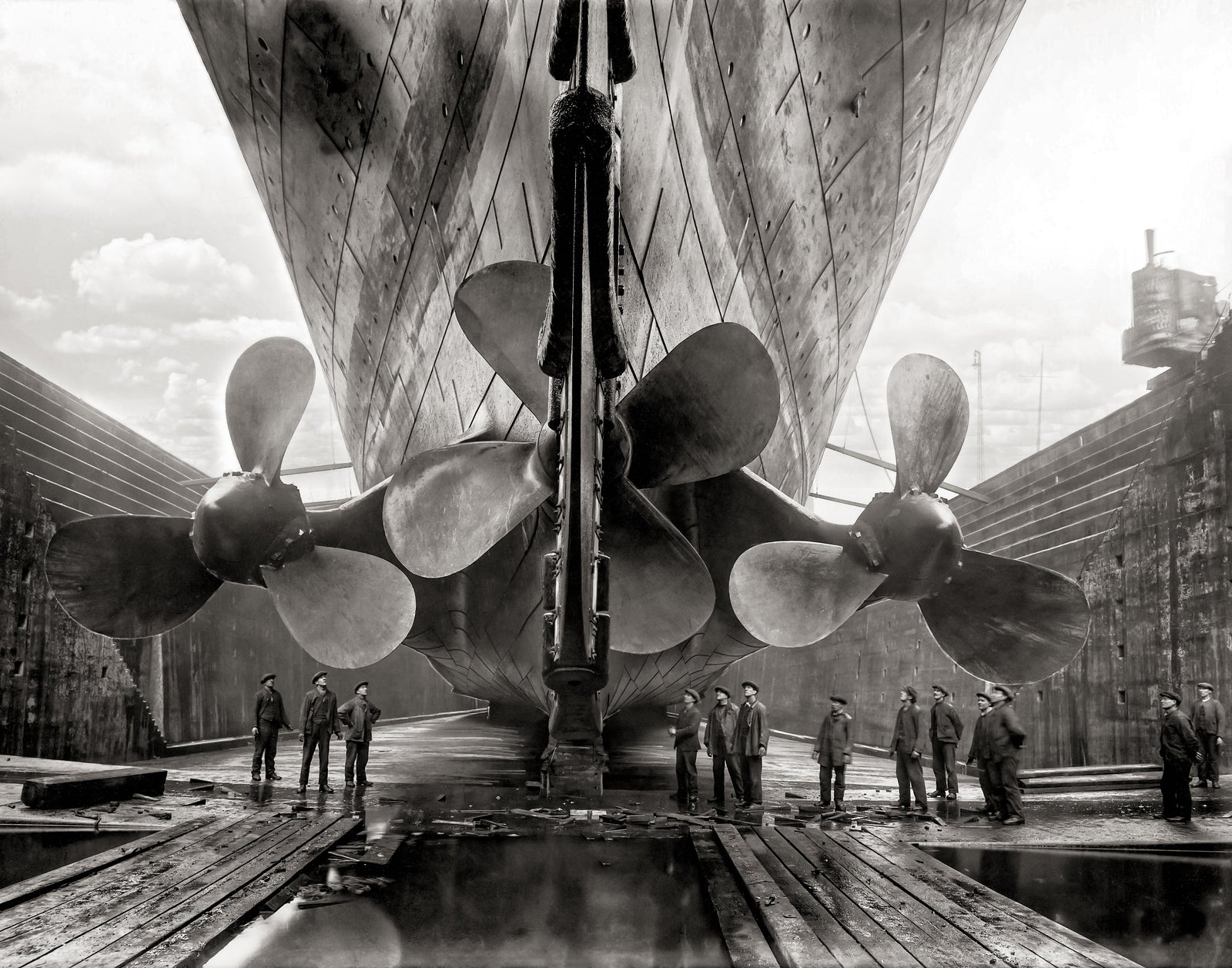

The Birth of a Floating Dream: Building the Titanic
At the dawn of the twentieth century, the world was gripped by a deep and unshakable faith in progress. Industry was expanding, cities were rising, and technology seemed to promise that no boundary was beyond human reach. It was in this atmosphere of confidence and ambition that the great transatlantic liners were conceived, not merely as vessels of transport, but as symbols of national pride, engineering mastery, and social order. Among these, none would become more famous, or more tragic, than the RMS Titanic, a ship born from fierce competition, immense wealth, and an unwavering belief that mankind had finally conquered the sea.
The Titanic was not an isolated project but part of a broader vision set in motion by the White Star Line, one of the most prominent shipping companies of the era. At the time, White Star faced intense rivalry from the Cunard Line, whose ships, such as the Lusitania and Mauretania, had captured public imagination with their speed and luxury. Rather than competing directly on speed, White Star chose a different path. The company would build ships that were larger, more comfortable, and more opulent than anything that had come before, transforming ocean travel into an experience of refinement rather than endurance. This decision would lead to the creation of the Olympic-class liners, of which Titanic would be the second.
The Visionaries Behind the Ship
The conception of Titanic cannot be understood without recognizing the partnership between White Star Line’s chairman, J. Bruce Ismay, and the influential financier J. P. Morgan, whose conglomerate, the International Mercantile Marine Company, controlled White Star. Morgan’s financial backing made possible the enormous investment required for ships of unprecedented scale, while Ismay’s ambition drove the project forward with a clear goal: to dominate the Atlantic passenger trade through luxury and size.
Equally critical to the ship’s creation was the Belfast-based shipbuilding firm Harland and Wolff, one of the most advanced shipyards in the world. Under the leadership of Lord Pirrie and the chief designer Thomas Andrews, Harland and Wolff had already established a reputation for precision and innovation. Andrews, in particular, would become deeply associated with Titanic, overseeing every aspect of its design and construction with meticulous care. He approached the ship not as a spectacle, but as a complex system in which structure, safety, and comfort had to coexist seamlessly.
Designing a Giant of the Sea
The design of Titanic was both ambitious and methodical, shaped by the demands of scale and the expectations of an elite clientele. At over 882 feet in length and weighing more than 46,000 tons, Titanic was among the largest moving objects ever created at the time. Its size alone presented unprecedented engineering challenges, requiring careful planning of weight distribution, propulsion, and structural integrity.
One of the ship’s most celebrated features was its system of watertight compartments, designed to prevent catastrophic flooding. Sixteen major compartments, separated by bulkheads, could be sealed off in the event of damage, allowing the ship to remain afloat even if several sections were breached. This system contributed to the widespread belief that Titanic was virtually unsinkable, a perception that would later take on a haunting significance.
The ship’s propulsion system combined both tradition and innovation. Powered by a combination of two massive reciprocating engines and a central turbine, Titanic was capable of reaching speeds of over 20 knots, though speed was never its primary selling point. Instead, emphasis was placed on smoothness and reliability, ensuring that passengers experienced a steady and comfortable journey across the Atlantic.
The Shipyard: A Monument of Industry
The construction of Titanic began on March 31, 1909, in Belfast, Ireland, at the sprawling facilities of Harland and Wolff. The shipyard itself was a marvel of industrial organization, employing thousands of workers who labored under demanding and often dangerous conditions. Two enormous gantry cranes, known as the Arrol Gantry, dominated the skyline, providing the infrastructure necessary to assemble the ship’s vast framework.
The building process began with the keel, the backbone of the ship, laid down with precision and care. From this foundation, the steel skeleton of Titanic began to rise, piece by piece, as workers riveted together more than three million individual components. Riveting was a grueling task, requiring teams of men to heat, position, and hammer steel rivets into place with remarkable speed and accuracy. The noise of this work was deafening, and the physical demands were immense, yet it was through this labor that the ship’s strength was forged.
As the hull took shape, its immense scale became apparent. Towering above the shipyard, Titanic was a presence that could not be ignored, drawing attention from locals and visitors alike. For many, it represented the pinnacle of human achievement, a testament to what could be accomplished through industry and ingenuity.
Crafting Luxury at Sea
While the exterior of Titanic was a triumph of engineering, its interior was a masterpiece of design and craftsmanship. White Star Line had made it clear that this ship would set a new standard for luxury, and no expense was spared in achieving that goal. The interiors were modeled after grand European hotels and estates, featuring ornate woodwork, marble accents, and intricate decorative details.
First-class accommodations were particularly lavish, offering passengers access to amenities that had never before been seen on a ship. These included a grand staircase with a sweeping dome, richly decorated dining saloons, a smoking room, a library, and even a swimming pool and Turkish bath. Each space was designed to evoke a sense of permanence and stability, reinforcing the illusion that the ocean itself had been tamed.
Second- and third-class accommodations, while less opulent, were still considered superior to those found on many other ships. White Star Line understood that comfort across all classes would enhance its reputation and attract a broader range of passengers. In this way, Titanic was not only a symbol of wealth, but also a reflection of the social hierarchy of the time, with each class occupying its own distinct world within the ship.
Launching the Titanic
After two years of construction, Titanic was ready to be launched. On May 31, 1911, a massive crowd gathered in Belfast to witness the event. The launch itself was a carefully orchestrated operation, involving the controlled release of the ship from its supports into the River Lagan. Unlike many launches, no champagne bottle was ceremonially broken against its hull, a detail that would later be noted with a sense of foreboding.
As Titanic slid into the water, it did so with remarkable grace, a testament to the precision of its construction. The event marked a significant milestone, but it was far from the end of the process. Following the launch, the ship was towed to a fitting-out basin, where work continued for nearly a year. During this phase, the engines were installed, interiors were completed, and final adjustments were made to ensure that the ship met the highest standards of quality.
The Final Preparations
By early 1912, Titanic was nearing completion. Trials were conducted to test its performance, including speed, maneuverability, and safety systems. These tests were largely successful, reinforcing confidence in the ship’s capabilities. On April 2, 1912, Titanic officially passed its sea trials and was deemed ready for service.
The ship was then prepared for its maiden voyage, scheduled to depart from Southampton on April 10, 1912. Supplies were loaded, crew members were assigned, and final inspections were carried out. For those involved in its creation, this moment represented the culmination of years of effort and ambition. Titanic was no longer a project or a vision; it was a fully realized vessel, ready to take its place in the world.
A Reflection on Creation and Confidence
The building of Titanic stands as one of the most remarkable achievements of early twentieth-century engineering. It brought together thousands of workers, vast financial resources, and cutting-edge technology to create a ship that embodied the aspirations of its time. Every rivet, every beam, and every carefully crafted detail spoke to a belief that progress was unstoppable and that human ingenuity could overcome any challenge.
Yet, even in its construction, there were subtle reminders of the limits of that belief. The sheer scale of the project required compromises, and the emphasis on luxury sometimes overshadowed considerations of safety. The watertight compartments, while innovative, did not extend high enough to prevent flooding in extreme circumstances. Lifeboat capacity, dictated by outdated regulations, fell short of what would later be recognized as necessary.
These details, largely overlooked at the time, would become central to the story that followed. The Titanic was not merely a ship; it was a reflection of an era that placed immense faith in technology and progress, often without fully accounting for the risks that accompanied them.
The Legacy of Its Construction
In the years since its sinking, Titanic has become a symbol of both human achievement and human fallibility. Its construction remains a subject of fascination, not only for the scale of the project, but for what it reveals about the values and priorities of the time. The ship was built with extraordinary care and expertise, yet it was also shaped by assumptions that would ultimately prove flawed.
Today, the story of Titanic’s construction continues to captivate historians, engineers, and the public alike. It serves as a reminder that even the greatest accomplishments are not immune to error, and that progress, while powerful, must always be approached with humility. The ship that once stood as a monument to human ingenuity now stands as a testament to the complexity of that ingenuity, a legacy forged in steel and remembered in history. See the photo of the propellers on the Titanic.
Leave a comment
Comments will be approved before showing up.
Also in Time Capsule
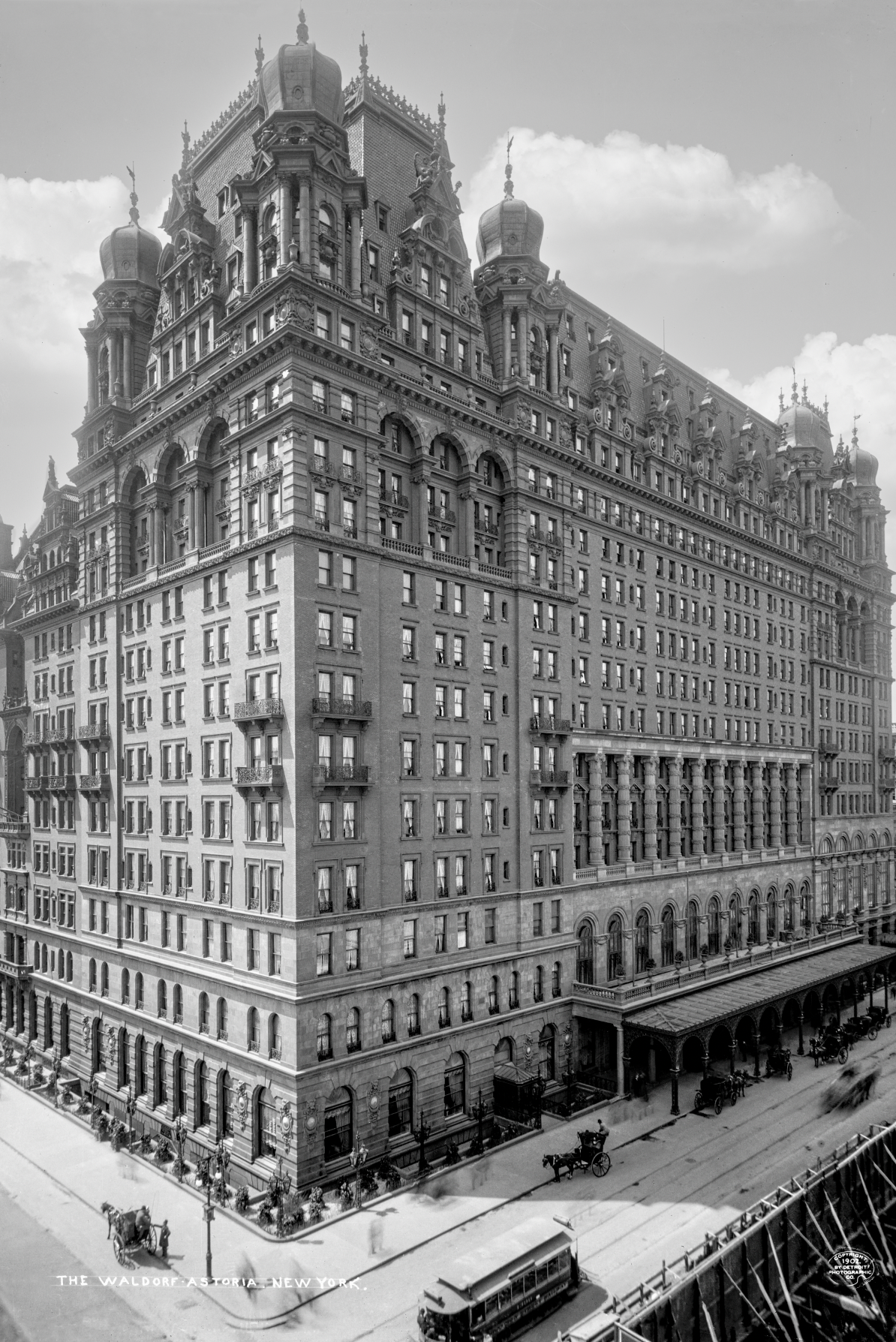

Six New York Landmarks That Changed the Manhattan Skyline
New York's skyline wasn't built overnight. Vintage photographs of Trinity Church, the Plaza, Waldorf-Astoria, Chrysler Building, Empire State Building and Rockefeller Center reveal how Manhattan grew from a city of church steeples and grand hotels into the skyscraper capital of the world.



The Old West Never Really Ended
A cowboy on horseback overlooks the Dallas skyline in 1943—an image that seems to capture the Old West and modern America in a single frame. But the cowboy didn't disappear when the frontier closed. Discover how real working cowboys, rodeos, music and Hollywood carried the Old West into the 20th century.
Let customers speak for us
Gems
These short clips are gems. They are part of the history of music in America. Thank you for posting.
S. Kelley Chambers

Love the print and perfect decor for our n...
Love the print and perfect decor for our new apartment in Pittsburgh.
Chris P

5 stars review from Laura
5 stars review from Laura
Laura D

5 stars review from Geri
5 stars review from Geri
Geri L

5 stars review from Stephanie
5 stars review from Stephanie
Stephanie

5 stars review from Brookelynz
5 stars review from Brookelynz
Brookelynz
5 stars review from Deborah
5 stars review from Deborah
Deborah G

Spectacular!
Received as a gift and could not be happier with the quality of the print. Shipping container ensure this arrived in perfect condition.
John

5 stars review from Kayla
5 stars review from Kayla
Kayla G

5 stars review from Blondiee
5 stars review from Blondiee
Blondiee

5 stars review from April
5 stars review from April
April Y

5 stars review from Tracie
5 stars review from Tracie
Tracie C

Great quality and fast delivery!
Great quality and fast delivery!
Amanda C

5 stars review from Autumnrayne4
5 stars review from Autumnrayne4
Autumnrayne4

5 stars review from Traca
5 stars review from Traca
Traca B
