


The Lincoln Memorial: A Monument Built in Stone—and Intention
On the western edge of the National Mall in Washington, D.C., the Lincoln Memorial stands with a quiet authority that feels both timeless and deliberate. Its columns, its steps, and the solitary seated figure within have become so familiar that it is easy to forget how long and complicated the journey was to bring it into existence. The story of the memorial is not just about architecture. It is about memory, politics, symbolism, and the unresolved tensions of the nation that chose to build it.
The idea of honoring Abraham Lincoln with a grand national monument began almost immediately after his assassination in 1865. The country was still reeling from the Civil War, and Lincoln’s role in preserving the Union and ending slavery placed him in a unique position in American history. Yet, despite widespread admiration, there was no consensus on how he should be remembered. Early proposals varied wildly, from simple statues to elaborate architectural complexes. Congress debated funding, location, and purpose for decades, unable to agree on a plan that matched Lincoln’s significance.
By the late nineteenth century, a statue of Lincoln had been placed near the Capitol, but many felt it lacked the presence and symbolic weight that his legacy demanded. Advocates continued to push for something larger, something that would reflect not just Lincoln the man, but Lincoln as a national ideal. The movement gained momentum slowly, carried forward by those who believed that memory required permanence.
Choosing the site for the memorial was one of the most consequential decisions in the entire process. The location at the western end of the National Mall was far from obvious. At the time, the area was marshy and underdeveloped, and critics argued that placing the memorial there would isolate it from the center of political life. Others raised concerns about the engineering challenges of building on unstable ground. But supporters saw something different. They envisioned a grand, symbolic axis stretching from the Capitol to the Potomac River, with the Lincoln Memorial anchoring its western edge. It would not be hidden. It would stand as a destination, a place people would move toward with intention.
The design of the memorial was entrusted to architect Henry Bacon, who chose a form inspired by ancient Greek temples. This was not simply an aesthetic decision. The Greek temple evoked ideals of democracy, civic responsibility, and permanence. It linked Lincoln to a broader tradition of governance and philosophy, suggesting that his legacy belonged not only to American history but to a longer human story.
Inside the structure, sculptor Daniel Chester French created the now-iconic seated figure of Lincoln. Rather than depicting him in triumph, French chose a posture of reflection. Lincoln sits, hands resting, gaze forward, as if burdened by the weight of the decisions he had made. On the walls surrounding him are inscriptions of the Gettysburg Address and the Second Inaugural Address, words that continue to define his presidency. Even the number of columns—thirty-six—was intentional, representing the number of states in the Union at the time of Lincoln’s death.
The laying of the cornerstone on February 12, 1915, marked the moment when the memorial moved from idea to reality. The date was chosen to coincide with Lincoln’s birthday, reinforcing the connection between the man and the monument. The ceremony was presided over by President Woodrow Wilson and attended by members of Congress, dignitaries, and the public. It was formal, patriotic, and reflective of the ceremonial traditions of the early twentieth century.

Yet the cornerstone ceremony was more than a procedural step in construction. It was a symbolic act, a declaration that the nation was committing itself to a particular version of its past. At the time, the United States stood on the edge of entering World War I, and the country was undergoing rapid industrial and social change. At the same time, it remained deeply segregated. African Americans, whose freedom Lincoln had helped secure, were largely excluded from meaningful participation in the ceremony. The ideals being honored and the reality being lived were not aligned.
This contradiction would follow the memorial long after the cornerstone was laid. The structure itself, grounded in stone, represented unity, freedom, and national purpose. But the society around it continued to struggle with the very principles it claimed to celebrate. In this way, the cornerstone was not just the beginning of a building. It was the foundation of an ongoing conversation about what the nation believed and what it had yet to achieve.
Constructing the memorial presented significant engineering challenges. The site near the Potomac River required a stable foundation capable of supporting the massive weight of the structure. Engineers drove deep piles into the ground and created a platform strong enough to hold the building. Materials were sourced from across the country, including Indiana limestone for the exterior and marble from Colorado and Tennessee for the interior. The memorial became, in a literal sense, a national project, assembled from resources drawn from multiple regions.
The years of construction that followed required careful coordination and craftsmanship. Workers raised the columns, shaped the interior chamber, and prepared the space for French’s statue. The statue itself was carved with the assistance of the Piccirilli brothers, master artisans who translated French’s design into stone. The result was a figure that felt both monumental and human, capturing not only Lincoln’s importance but also his complexity.
When the memorial was dedicated in 1922, it was presented as a symbol of unity and national pride. Yet even then, the contradictions persisted. African American attendees were segregated during the ceremony, a stark reminder that the country had not yet fulfilled the promises associated with Lincoln’s legacy. The memorial stood complete, but the work it represented remained unfinished.
Over time, the meaning of the Lincoln Memorial began to evolve. It became more than a tribute to a past president. It became a stage upon which the nation confronted its present. In 1939, Marian Anderson performed on its steps after being denied the opportunity elsewhere, turning the memorial into a symbol of inclusion and resilience. In 1963, Martin Luther King Jr. delivered his “I Have a Dream” speech from the same location, connecting Lincoln’s legacy to the ongoing struggle for civil rights.
Looking back, the cornerstone laid in 1915 can be understood as both a beginning and a challenge. It marked the start of a structure that would come to embody some of the highest ideals of the nation. At the same time, it revealed the distance between those ideals and reality. The stone set into place that day anchored not only a building, but a set of expectations—about unity, equality, and the role of memory in shaping the future.
The Lincoln Memorial endures because it holds these tensions rather than resolving them. It invites reflection not only on who Lincoln was, but on what the country has become since his time. The cornerstone, though hidden from view, remains at the base of that invitation, a quiet reminder that every monument begins with a decision about what is worth remembering—and what remains to be done. See the laying of the Cornerstone photo.
Leave a comment
Comments will be approved before showing up.
Also in Time Capsule
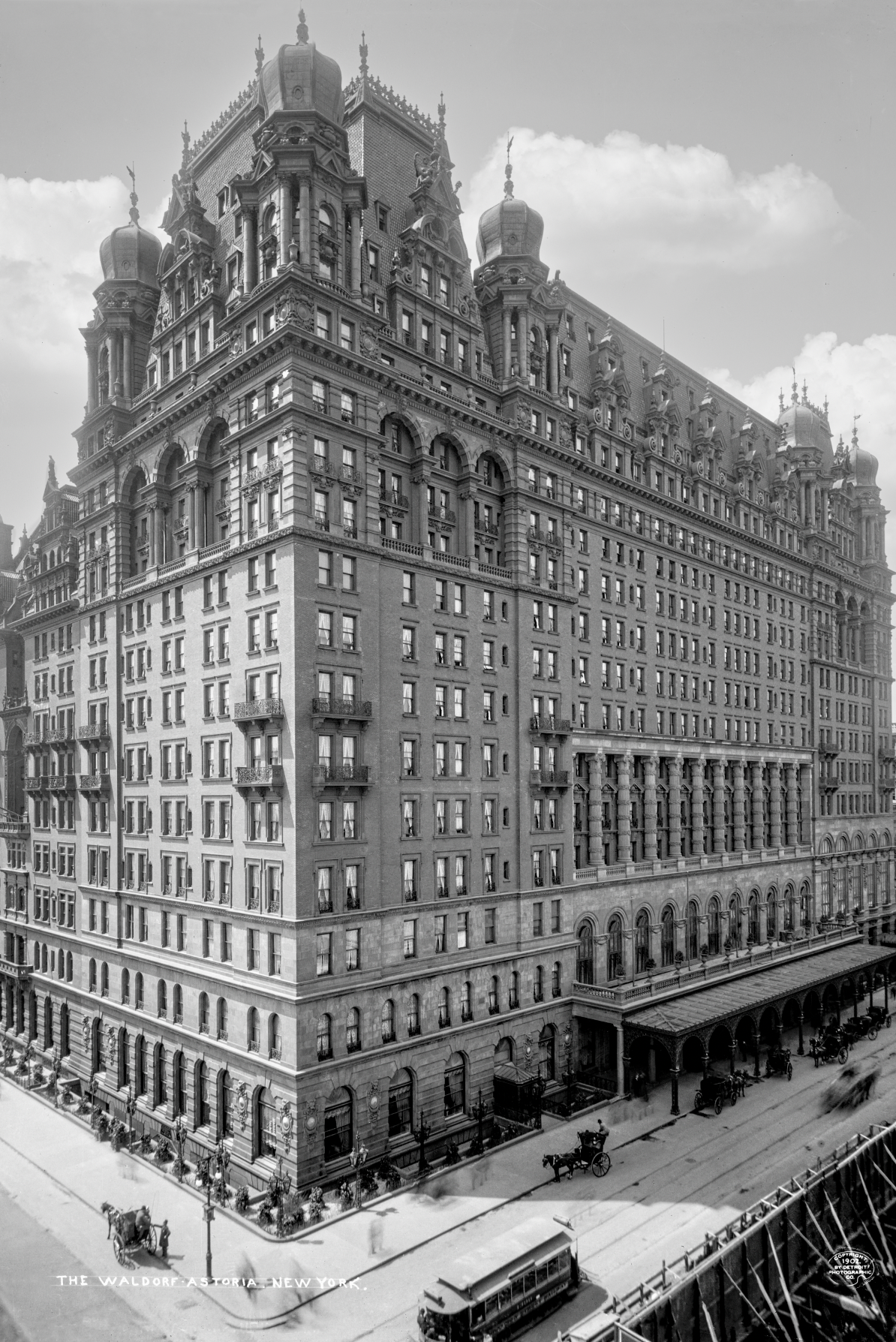

Six New York Landmarks That Changed the Manhattan Skyline
New York's skyline wasn't built overnight. Vintage photographs of Trinity Church, the Plaza, Waldorf-Astoria, Chrysler Building, Empire State Building and Rockefeller Center reveal how Manhattan grew from a city of church steeples and grand hotels into the skyscraper capital of the world.

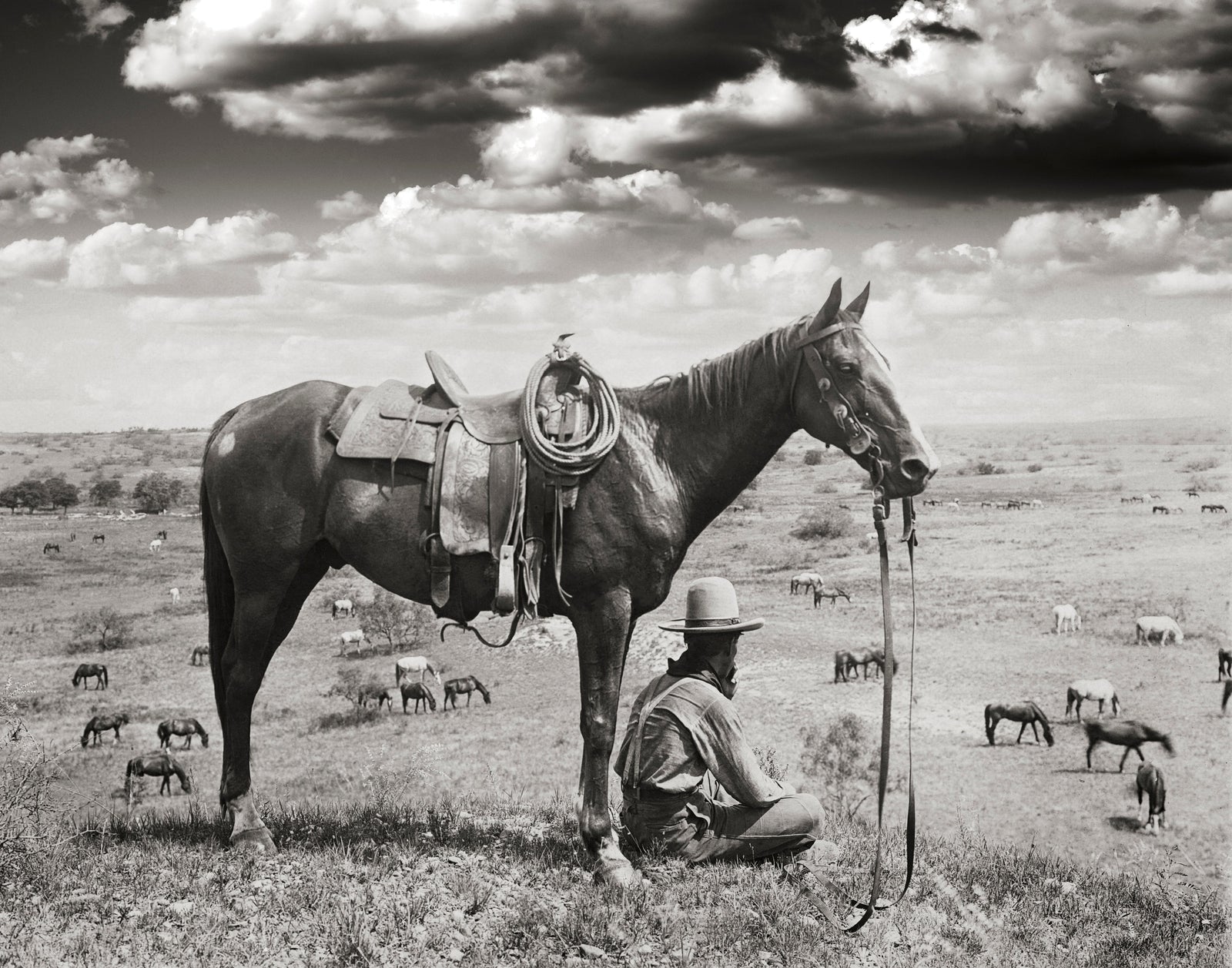

The Old West Never Really Ended
A cowboy on horseback overlooks the Dallas skyline in 1943—an image that seems to capture the Old West and modern America in a single frame. But the cowboy didn't disappear when the frontier closed. Discover how real working cowboys, rodeos, music and Hollywood carried the Old West into the 20th century.
Let customers speak for us
Gems
These short clips are gems. They are part of the history of music in America. Thank you for posting.
S. Kelley Chambers

Love the print and perfect decor for our n...
Love the print and perfect decor for our new apartment in Pittsburgh.
Chris P

5 stars review from Laura
5 stars review from Laura
Laura D

5 stars review from Geri
5 stars review from Geri
Geri L

5 stars review from Stephanie
5 stars review from Stephanie
Stephanie

5 stars review from Brookelynz
5 stars review from Brookelynz
Brookelynz
5 stars review from Deborah
5 stars review from Deborah
Deborah G

Spectacular!
Received as a gift and could not be happier with the quality of the print. Shipping container ensure this arrived in perfect condition.
John

5 stars review from Kayla
5 stars review from Kayla
Kayla G

5 stars review from Blondiee
5 stars review from Blondiee
Blondiee

5 stars review from April
5 stars review from April
April Y

5 stars review from Tracie
5 stars review from Tracie
Tracie C

Great quality and fast delivery!
Great quality and fast delivery!
Amanda C

5 stars review from Autumnrayne4
5 stars review from Autumnrayne4
Autumnrayne4

5 stars review from Traca
5 stars review from Traca
Traca B
