


Giants of Time: The History of Sequoia Trees and Sequoia National Park

There are places in the world where time feels compressed, where everything moves quickly and the present overwhelms the past. And then there are places like Sequoia National Park, where time stretches outward in the opposite direction, where the living landscape quietly holds memories that predate modern civilization by thousands of years. At the center of this experience stand the giant sequoias, some of the oldest and largest living organisms on Earth, trees that have witnessed the rise and fall of cultures, the shifting of climates, and the transformation of an entire continent.
To stand among these trees is to confront a scale that resists ordinary understanding. Their trunks rise with a kind of inevitability, their bark thick and furrowed like ancient armor, their branches reaching into a canopy that seems less like a forest and more like a cathedral. Yet these giants, so imposing in their presence, began as something almost impossibly small, a seed no larger than a grain of oatmeal. The story of the sequoia is not just one of size, but of survival, adaptation, and an enduring relationship with the natural forces that shaped them.
Ancient Origins of the Sequoias
The lineage of sequoias stretches back millions of years, long before humans ever set foot on the North American continent. Fossil evidence suggests that relatives of modern sequoias once spread across vast regions of the Northern Hemisphere, thriving in climates that were warmer and more humid than those of today. Over time, as the Earth cooled and conditions changed, these ancient forests retreated, leaving behind isolated pockets where the environment remained suitable for their survival.
The species known today as the giant sequoia, or Sequoiadendron giganteum, found its refuge along the western slopes of California’s Sierra Nevada mountains. Here, a combination of elevation, snowfall, and seasonal moisture created a narrow band of habitat in which these trees could continue to grow. Unlike their coastal relatives, the coast redwoods, which rely on fog for moisture, giant sequoias depend on winter snowpack and summer runoff, tying their existence closely to the rhythms of the mountain environment.
What allowed these trees to endure where others vanished was not simply luck, but a set of remarkable adaptations. Their bark, which can grow more than two feet thick, protects them from fire, insects, and disease. Their roots, though relatively shallow, spread wide and interconnect with those of neighboring trees, creating a network of support that helps stabilize them against storms. And perhaps most intriguingly, their reproductive cycle is closely linked to fire, a force that might seem destructive but is, in fact, essential to their renewal.
Fire and Renewal in the Sequoia Forest
For much of their history, sequoias have lived in a landscape shaped by periodic fire. These fires, often sparked by lightning, would sweep through the forest at intervals, clearing away underbrush and competing vegetation while leaving the massive sequoias largely unharmed. The heat from these fires plays a crucial role in opening the trees’ cones, releasing seeds onto soil that has been freshly cleared and enriched by ash.
Without fire, the conditions necessary for sequoia regeneration become increasingly rare. Shade-tolerant species can crowd out young seedlings, and the forest floor can become choked with debris. In this sense, fire is not an enemy of the sequoia, but a partner in its life cycle, a reminder that even the most enduring forms of life depend on processes that appear, at first glance, to be destructive.
This relationship with fire has shaped not only the biology of the trees, but also the way humans have come to understand and manage these forests. In the early years of forest conservation, fires were aggressively suppressed, seen as threats to be eliminated. Over time, however, it became clear that this approach disrupted the natural balance of the ecosystem. Today, controlled burns are used within Sequoia National Park to mimic the natural fire cycles that these trees have depended on for millennia, ensuring that new generations can continue to take root.
The Discovery and Early Exploitation

When European settlers first encountered the giant sequoias in the nineteenth century, their reaction was one of astonishment. The sheer size of the trees defied belief, leading to widespread fascination and, unfortunately, exploitation. Some of the earliest interactions with these forests were driven by a desire to prove their existence to a skeptical public. Sections of bark were stripped and transported across the country for exhibition, while entire trees were felled simply to demonstrate their scale.
Logging operations soon followed, though the wood of the giant sequoia proved less useful than expected. Brittle and prone to splitting, it was not well suited for many construction purposes. Even so, significant numbers of trees were cut down before a growing awareness of their uniqueness and ecological importance began to shift public opinion. The loss of these ancient giants sparked early conservation efforts, helping to lay the groundwork for the creation of protected areas.
The Birth of Sequoia National Park
In 1890, Sequoia National Park was established, becoming the second national park in the United States after Yellowstone. Its creation marked a turning point in the preservation of these remarkable trees, setting aside land specifically to protect the remaining groves from further destruction. The park was later expanded, and nearby areas, including Kings Canyon, were incorporated into a broader protected landscape.
The establishment of the park was not only about preserving trees, but about redefining the relationship between people and the natural world. It reflected a growing recognition that certain places held value beyond their immediate economic use, that they were worthy of protection simply because of what they represented. In the case of the sequoias, this meant safeguarding a living connection to a distant past, a reminder of the Earth’s long and complex history.
Automobiles and the Experience of Scale
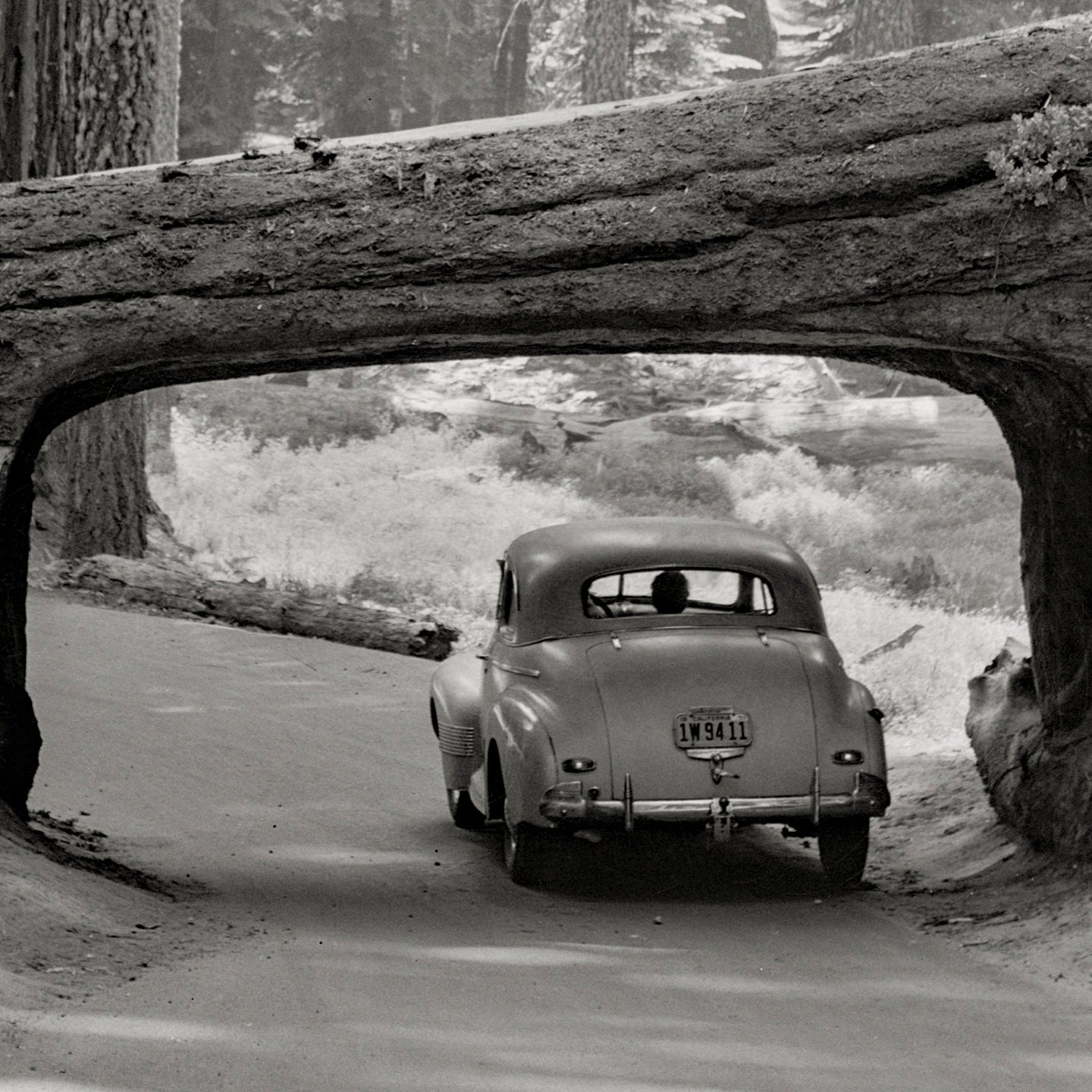
As the twentieth century progressed, the development of roads and the rise of automobile travel transformed the way people experienced national parks. Sequoia National Park became accessible to a broader public, allowing visitors to encounter these trees not as distant curiosities, but as part of a personal journey. One of the most iconic features of this experience has been the opportunity to drive through or alongside the massive trunks of fallen sequoias.
The Tunnel Log, a fallen giant that now spans a roadway, has become a symbol of this intersection between nature and human ingenuity. Each year, tens of thousands of vehicles pass beneath its hollowed trunk, offering a moment of direct interaction with the immense scale of these trees. While exact numbers vary over time, it is estimated that millions of visitors have driven through or under sequoia trunks since the early days of automobile tourism, making it one of the most photographed and memorable experiences in the park.
These drive-through features, while popular, also reflect a changing philosophy in park management. In earlier years, more intrusive modifications were made to accommodate vehicles, including carving tunnels through standing trees. Today, such practices are no longer pursued, as greater emphasis is placed on preserving the natural integrity of the forest. The existing tunnel features remain as historical artifacts, reminders of a time when the balance between access and preservation was understood differently.
The Trees Themselves: Living Monuments
Among the many sequoias within the park, some have achieved individual recognition for their extraordinary size and age. The General Sherman Tree, often cited as the largest tree on Earth by volume, stands as a focal point for visitors. Its immense trunk, rising with quiet authority, embodies the characteristics that define the species: strength, resilience, and a kind of enduring presence that transcends human timescales.
These trees are not the tallest in the world, nor are they the oldest in absolute terms, but their combination of height, girth, and longevity places them in a category of their own. Many have lived for more than two thousand years, growing slowly but steadily through cycles of drought, fire, and changing climate. Their rings record these changes, offering scientists valuable insights into environmental conditions over centuries.
What is perhaps most remarkable is not just their size, but their persistence. Despite their age, sequoias show no inherent limit to growth. As long as conditions allow, they continue to add new layers, expanding outward and upward in a process that can span millennia. In this sense, they are not relics of the past, but active participants in the present, still growing, still adapting, still enduring.
A Continuing Legacy
Sequoia National Park today stands as both a sanctuary and a living laboratory, a place where the interplay of natural forces can be observed in a relatively undisturbed setting. Visitors come not only to marvel at the size of the trees, but to experience a landscape that operates on a different scale of time and change. The park’s management reflects an ongoing effort to balance access with preservation, ensuring that future generations will have the opportunity to encounter these giants in much the same way.
The story of the sequoias is, in many ways, a story about perspective. It challenges the human tendency to measure importance by immediacy, reminding us that some of the most significant processes unfold slowly, over spans that extend far beyond a single lifetime. In the presence of these trees, the concerns of the moment can seem small, not because they lack meaning, but because they exist within a much larger context.
To walk among the sequoias is to step into that context, to become briefly aware of the vastness of time and the resilience of life. It is an experience that does not demand attention, but rewards it, offering a quiet, enduring reminder that the world is older, larger, and more intricate than we often allow ourselves to imagine. See the sequoia photos.
Leave a comment
Comments will be approved before showing up.
Also in Time Capsule





The Birth of a Floating Dream: Building the Titanic
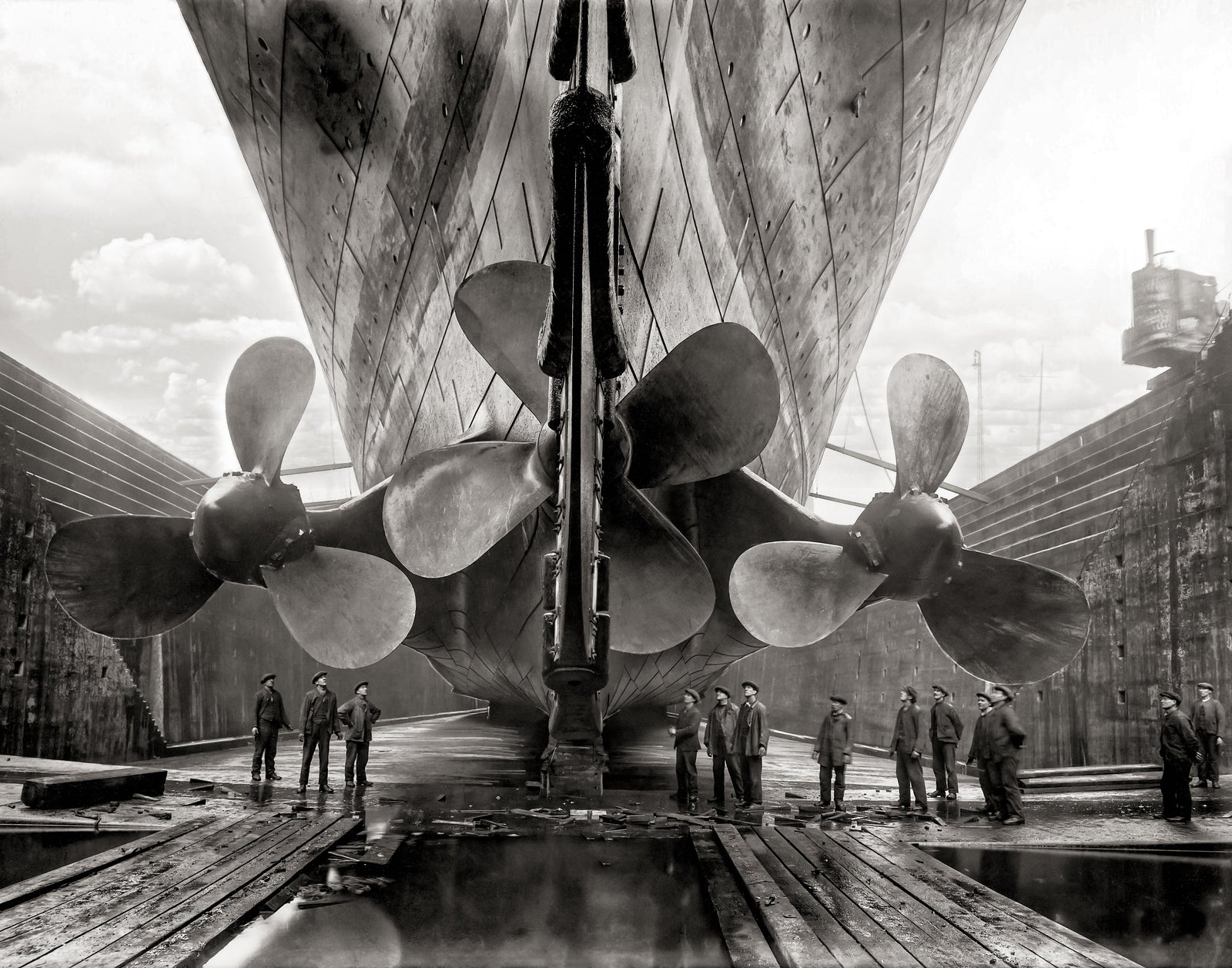
In the years since its sinking, Titanic has become a symbol of both human achievement and human fallibility. Its construction remains a subject of fascination, not only for the scale of the project, but for what it reveals about the values and priorities of the time. The ship was built with extraordinary care and expertise, yet it was also shaped by assumptions that would ultimately prove flawed.
Let customers speak for us
Gems
These short clips are gems. They are part of the history of music in America. Thank you for posting.
S. Kelley Chambers

Love the print and perfect decor for our n...
Love the print and perfect decor for our new apartment in Pittsburgh.
Chris P

5 stars review from Laura
5 stars review from Laura
Laura D

5 stars review from Geri
5 stars review from Geri
Geri L

5 stars review from Stephanie
5 stars review from Stephanie
Stephanie

5 stars review from Brookelynz
5 stars review from Brookelynz
Brookelynz
5 stars review from Deborah
5 stars review from Deborah
Deborah G

Spectacular!
Received as a gift and could not be happier with the quality of the print. Shipping container ensure this arrived in perfect condition.
John

5 stars review from Kayla
5 stars review from Kayla
Kayla G

5 stars review from Blondiee
5 stars review from Blondiee
Blondiee

5 stars review from April
5 stars review from April
April Y

5 stars review from Tracie
5 stars review from Tracie
Tracie C

Great quality and fast delivery!
Great quality and fast delivery!
Amanda C

5 stars review from Autumnrayne4
5 stars review from Autumnrayne4
Autumnrayne4

5 stars review from Traca
5 stars review from Traca
Traca B
