

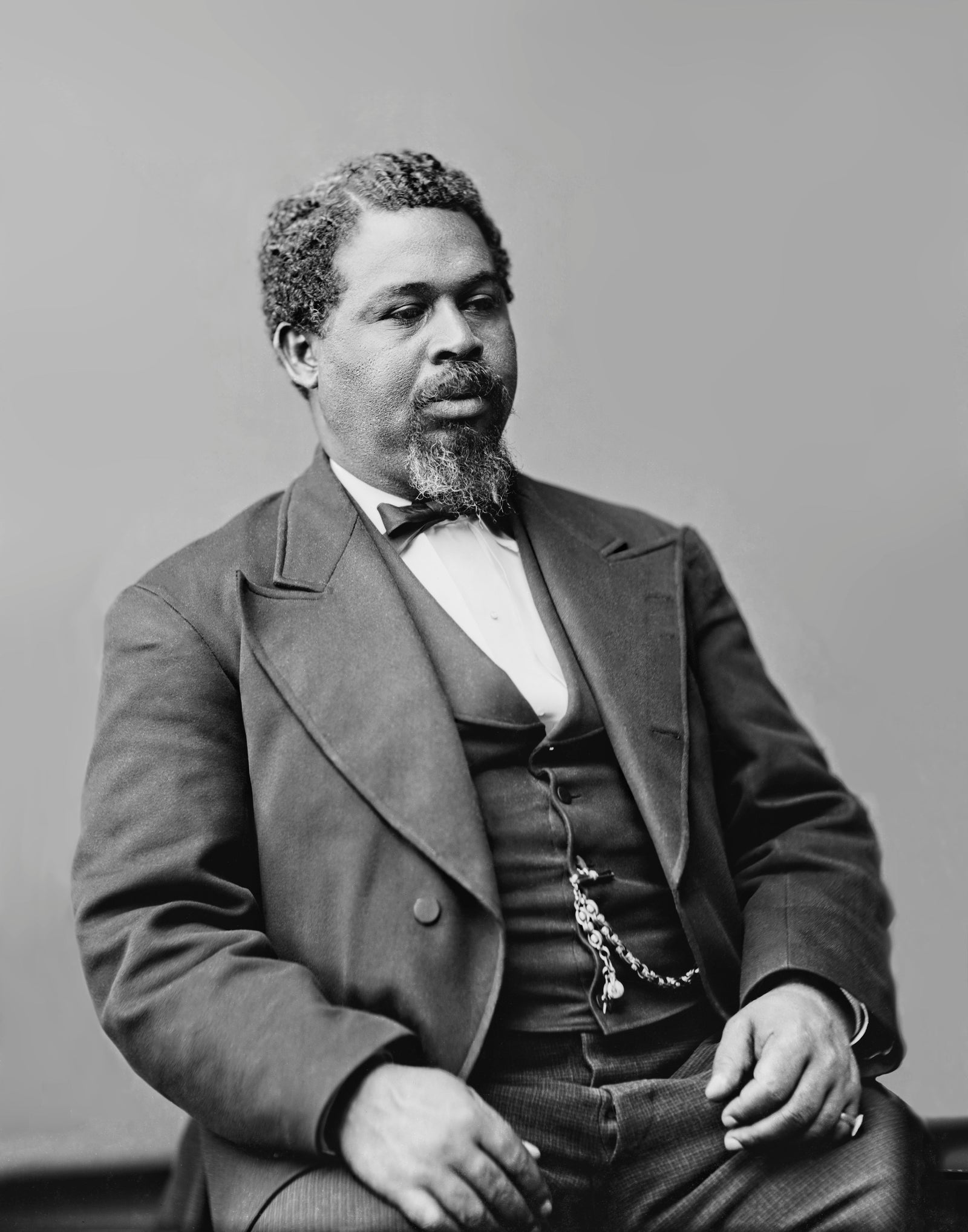

Robert Smalls: From Enslavement to Statesman
In the early hours of May 13, 1862, a Confederate transport ship eased out of Charleston Harbor. At the helm stood a Black man in a captain’s hat, giving the correct signals as the vessel passed Fort Sumter and other heavily armed checkpoints. The officers who might have questioned him were asleep ashore. The man at the wheel was not the ship’s captain. He was enslaved. His name was Robert Smalls, and by sunrise he had delivered the ship, its artillery, and his family to the United States Navy. That single act would alter not only his own life, but the course of American history.
Early Life in Beaufort
Robert Smalls was born in 1839 in Beaufort, South Carolina, into slavery. His mother, Lydia Polite, worked in the household of Henry McKee. Like many enslaved children growing up in a port town, Smalls saw ships daily—commerce vessels, naval ships, and steamers navigating the coastal waters. Charleston Harbor was one of the South’s most important maritime hubs. Even in bondage, proximity to ships meant proximity to skill.
As a teenager, Smalls was sent to Charleston and hired out as labor. He worked in various jobs before finding steady employment on the docks. Over time, he became a skilled seaman and eventually a pilot. In practical terms, this meant he learned the waterways intimately—the tides, sandbars, signals, and routines of harbor defense. In strategic terms, it meant he possessed knowledge that few enslaved men were expected to hold.
The Daring Escape of the Planter
When the Civil War erupted in 1861, Charleston became the epicenter of rebellion. Confederate forces commandeered ships, including a sidewheel steamer called the Planter. Smalls was assigned as the wheelman aboard the vessel. Though officially enslaved crew were not granted rank, Smalls effectively piloted the ship.
On the night of May 12–13, 1862, Smalls and his fellow enslaved crew members enacted a carefully planned escape. After the white officers went ashore, Smalls donned the captain’s coat and hat. In the dim light, at a distance, he resembled the commander closely enough to avoid suspicion. He steered the Planter past Confederate checkpoints, giving the correct whistle signals at each post. At a predetermined point, his wife Hannah and their children, along with other family members, were brought aboard.
As dawn approached, Smalls guided the vessel toward the Union blockade. He replaced the Confederate flags with a white sheet of surrender and delivered the ship intact to the Union Navy. The Planter carried artillery and valuable military intelligence about Confederate fortifications. The Union Navy welcomed them as free people.
The event electrified the North. Smalls became a symbol of courage, intelligence, and self-determination. His act was not spontaneous bravery; it was calculated strategy grounded in competence. That distinction matters. Smalls did not merely flee; he executed a military maneuver.
Service to the Union and a Commissioned Officer
Following the escape, Smalls provided Union commanders with critical intelligence about Charleston’s defenses. He later served as a pilot for the Union Navy and participated in multiple engagements. During one encounter in December 1863, when the white captain of his ship abandoned his post under fire, Smalls assumed command and safely navigated the vessel out of danger.
His performance led to an extraordinary milestone. In 1864, Smalls was commissioned as a captain in the Union Army, becoming one of the first Black men to command a U.S. vessel during the Civil War. His pay and recognition, however, were initially unequal to that of white officers. Smalls advocated for parity and eventually secured it.
His service embodied a broader transformation taking place within the war: enslaved people were not passive recipients of freedom; they were agents of their own liberation. Smalls’ actions strengthened arguments for the enlistment of Black soldiers and for emancipation as a war aim.
Reconstruction and Political Leadership
After the war, Smalls returned to Beaufort, where he purchased the former home of his enslaver. That fact alone carries historical weight: a man once considered property now owned property on his own terms.
During Reconstruction, Smalls entered politics. He served in the South Carolina House of Representatives and later in the State Senate. In 1874, he was elected to the United States House of Representatives. Over multiple terms, he advocated for public education, civil rights, and economic development in the postwar South.
Smalls was a Republican aligned with the Reconstruction agenda, which sought to rebuild Southern states and extend full citizenship to formerly enslaved people. He supported legislation promoting equal access to public accommodations and protections under the law. He also worked to establish a public school system in South Carolina, understanding that literacy and education were foundational to long-term freedom.
Reconstruction was turbulent and violent. White supremacist groups sought to undermine Black political participation. Smalls himself was accused of bribery in what many historians consider a politically motivated prosecution. He was convicted but later pardoned. The episode reflects the intense backlash against Black political power during that era.
Later Years and Legacy
As federal support for Reconstruction waned and Jim Crow laws took hold, Smalls’ political influence diminished, but his stature did not. He continued to serve in public roles, including as U.S. Collector of Customs for the Port of Beaufort.
He died in 1915, long before the modern Civil Rights Movement. Yet his life bridged foundational chapters in American history: slavery, war, Reconstruction, and the rise of segregation. His story demonstrates that the fight for freedom did not begin in the twentieth century. It was waged, in part, by men like Smalls who took immense personal risk for structural change.
Today, Robert Smalls is increasingly recognized as a central figure in Civil War history. Schools, ships, and monuments bear his name. Historians view the seizure of the Planter not only as an act of individual heroism but as a strategic contribution to Union victory.
His life challenges simplified narratives. He was not merely a runaway slave, nor solely a war hero, nor only a politician. He was a strategist, a family man, a military officer, and a lawmaker. His arc—from enslavement to congressional office—embodies both the possibilities and the unfinished promises of American democracy.
Robert Smalls did not wait for history to grant him agency. He took it. And in doing so, he forced a nation to reckon with what freedom truly meant.
Leave a comment
Comments will be approved before showing up.
Also in Time Capsule
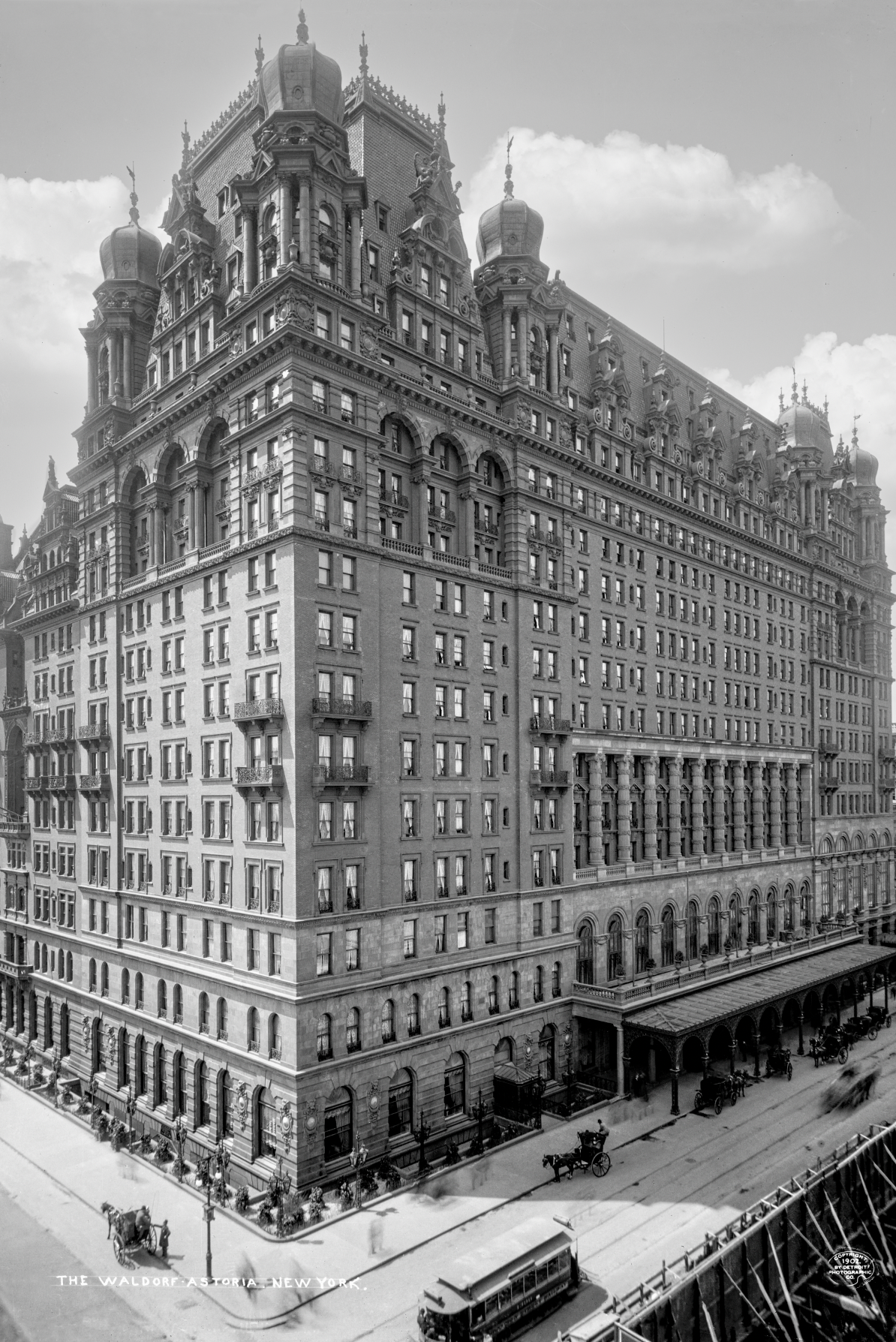

Six New York Landmarks That Changed the Manhattan Skyline
New York's skyline wasn't built overnight. Vintage photographs of Trinity Church, the Plaza, Waldorf-Astoria, Chrysler Building, Empire State Building and Rockefeller Center reveal how Manhattan grew from a city of church steeples and grand hotels into the skyscraper capital of the world.

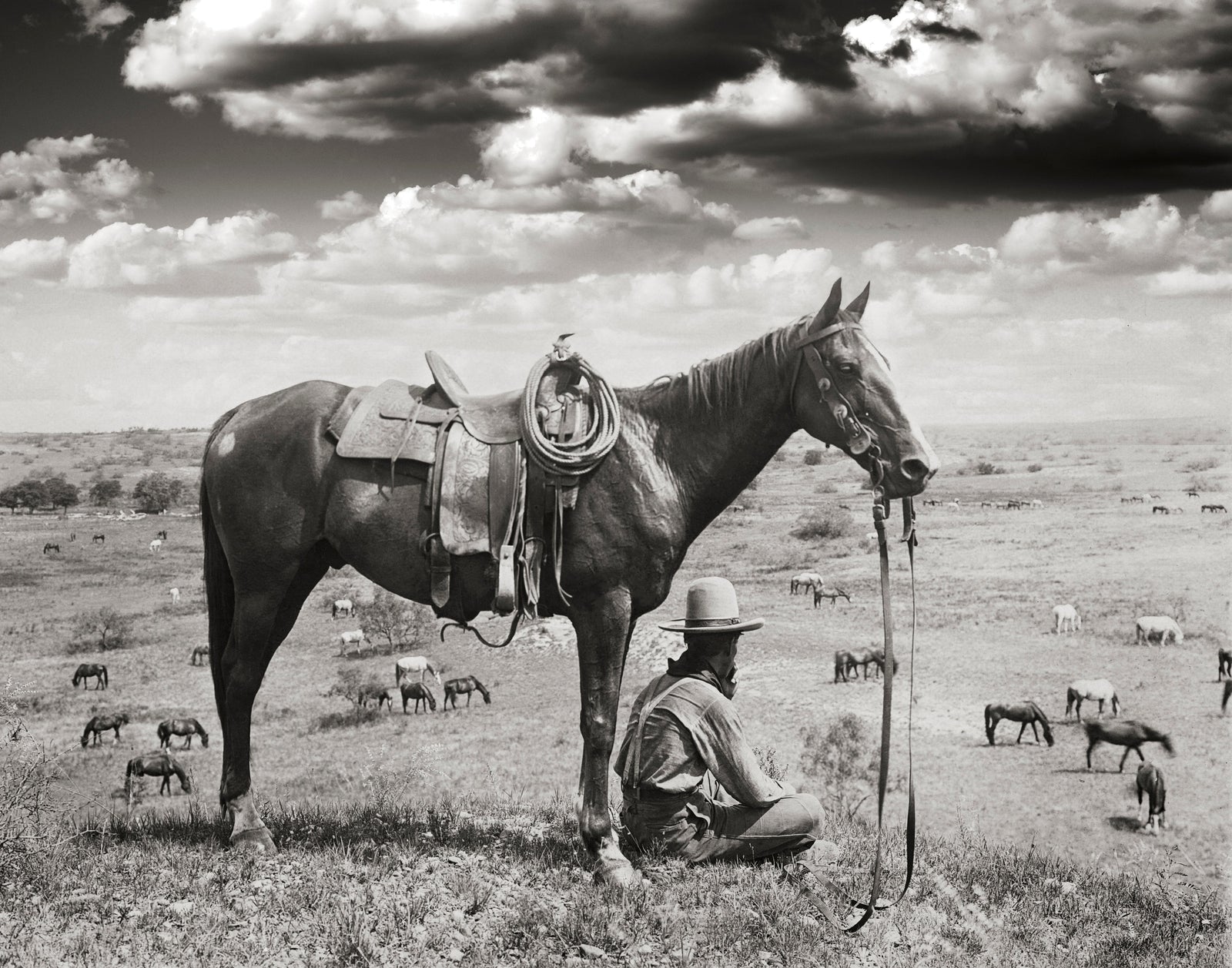

The Old West Never Really Ended
A cowboy on horseback overlooks the Dallas skyline in 1943—an image that seems to capture the Old West and modern America in a single frame. But the cowboy didn't disappear when the frontier closed. Discover how real working cowboys, rodeos, music and Hollywood carried the Old West into the 20th century.
Let customers speak for us
Gems
These short clips are gems. They are part of the history of music in America. Thank you for posting.
S. Kelley Chambers

Love the print and perfect decor for our n...
Love the print and perfect decor for our new apartment in Pittsburgh.
Chris P

5 stars review from Laura
5 stars review from Laura
Laura D

5 stars review from Geri
5 stars review from Geri
Geri L

5 stars review from Stephanie
5 stars review from Stephanie
Stephanie

5 stars review from Brookelynz
5 stars review from Brookelynz
Brookelynz
5 stars review from Deborah
5 stars review from Deborah
Deborah G

Spectacular!
Received as a gift and could not be happier with the quality of the print. Shipping container ensure this arrived in perfect condition.
John

5 stars review from Kayla
5 stars review from Kayla
Kayla G

5 stars review from Blondiee
5 stars review from Blondiee
Blondiee

5 stars review from April
5 stars review from April
April Y

5 stars review from Tracie
5 stars review from Tracie
Tracie C

Great quality and fast delivery!
Great quality and fast delivery!
Amanda C

5 stars review from Autumnrayne4
5 stars review from Autumnrayne4
Autumnrayne4

5 stars review from Traca
5 stars review from Traca
Traca B
