


Why Did Americans Stop Wearing Hats?

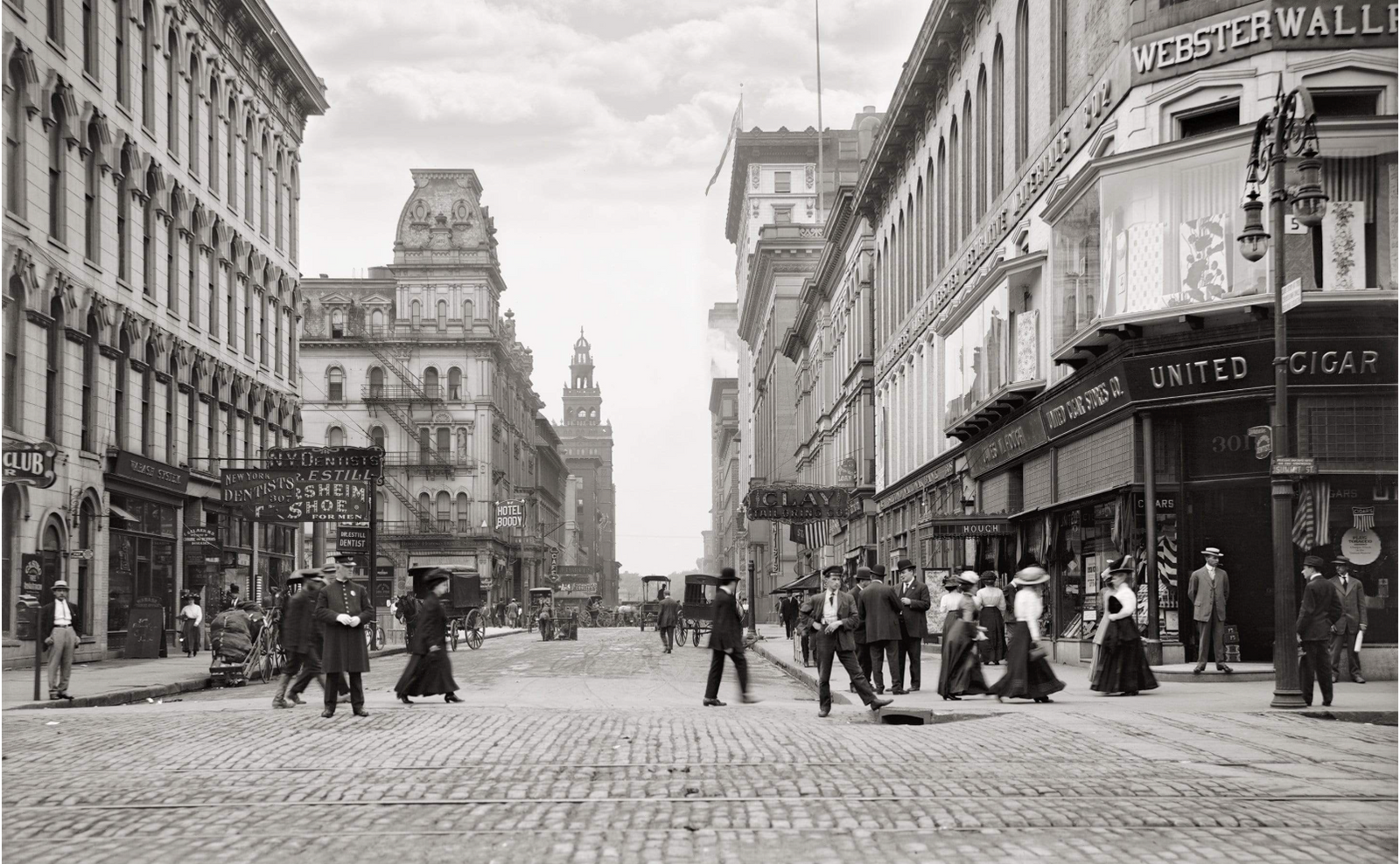
See the Photo: Madison Street, Toledo, Ohio
Look at almost any American street photograph from the early 1900s and one detail is difficult to miss: nearly everyone is wearing a hat. Men in bowlers, derbies, flat caps, fedoras, and straw boaters crowd the sidewalks, while women appear beneath hats decorated with ribbons, flowers, feathers, and sometimes astonishing amounts of ornament.
Today, putting on a hat before leaving the house is a choice. A century ago, for many Americans, not putting one on was the choice that would have attracted attention.
So what happened? How did something that had been an ordinary part of getting dressed for generations nearly disappear from everyday American life?
The answer isn't one event, one fashion designer, or even one president. The decline of the hat tells a larger story about how Americans changed during the 20th century: how they traveled, styled their hair, dressed for work, viewed social rules, and eventually decided that being properly dressed didn't have to mean being formally dressed.
When a Hat Was Part of Getting Dressed
At the beginning of the 20th century, a hat wasn't merely something worn for warmth or protection from the sun. Headwear was part of the social language of clothing. Different styles could suggest a person's gender, occupation, social position, age, or the occasion for which he or she was dressed.
You can see this wonderfully in historical street photographs. In a 1900 photograph of a Mardi Gras parade on Canal Street in New Orleans, the crowd seems to form a sea of hats. They aren't attending a funeral or formal ceremony; they're outside watching a parade. The hats are simply part of their everyday clothing.
The same thing appears in a HistoricalPix photograph of a frozen fountain on Washington Avenue in Detroit around 1917. A man standing beside the icy fountain wears a bowler hat as naturally as he wears his coat. His female companion is dressed for winter as well, and the photograph provides a wonderful reminder that headwear was simply expected when people went out in public.

See Photo: Katharine Harley, US Golf Champion, 1908
Women's Hats Became Enormous
If men's hats were an essential part of respectable dress, women's hats around the turn of the century could become spectacular fashion statements.
Edwardian women wore broad-brimmed hats designed to sit atop the large, carefully arranged hairstyles fashionable at the time. They might be decorated with silk flowers, ribbons, lace, bows, feathers, and other ornaments. Historical photographs can make some of these hats look almost comically large to modern eyes, but they were serious fashion. Your own HistoricalPix article on women's fashion from 1900 to 1930 shows how elaborate these hats could become See: Time Capsule: Women's Fashion from 1900 to 1930.
There was also a darker side to the fashion. The demand for feathers and entire birds to decorate women's hats became enormous. The Smithsonian notes that by the 1890s, women were sometimes wearing whole birds or substantial bird parts on their hats. Ornithologist Frank Chapman famously observed 700 women's hats in New York in 1886 and found feathers or bird parts representing 40 native bird species.
The destruction of wild birds for the millinery trade became part of the growing conservation movement. Federal laws including the Lacey Act of 1900 and Migratory Bird Treaty Act of 1918 eventually provided important protections against the trade and killing of wild birds. Ostrich farming also developed partly to satisfy the enormous demand for decorative feathers without relying entirely on wild birds.

See the photo: Train to Florida, early 1900s
Fashion, in other words, was already beginning to change because of concerns that sound surprisingly modern.

See the Photo: Coney Island Bathers, 1900
The 1920s Changed the Shape of the Hat
Then women's hair changed dramatically.
The bob became one of the defining fashions of the 1920s, and the huge hats of the Edwardian period no longer made much sense sitting over short, close-cut hairstyles. Hats became smaller and followed the shape of the head. The cloche—the bell-shaped hat pulled low over the forehead—became one of the era's most recognizable styles.
This is an important point because throughout the history of hats, hairstyles and hats affected each other. When hair changed, hats changed with it. Eventually that relationship would help hasten the disappearance of everyday hats altogether.
Men's headwear was changing too. The extremely formal top hat had already become increasingly associated with formal occasions, while softer hats suited the modern business suit and everyday city life. Fedoras, homburgs, bowlers, flat caps, and seasonal straw hats offered men plenty of choices, but the underlying rule remained remarkably persistent: when a properly dressed man went outdoors, he generally put something on his head.

See the photo: New York Street Vendors
Hats Survived Depression and War
The Great Depression did not eliminate the hat. Neither did World War II.
Women's hats in the 1930s and 1940s came in an extraordinary range of shapes, from small tilted designs to large-brimmed picture hats. The Metropolitan Museum of Art describes hats as required accessories for well-dressed women during the 1930s, 1940s, and early 1950s. Successful American milliners such as Sally Victor and John-Frederics created hats for prominent women and Hollywood stars, while designers experimented with unusual forms and materials.
Wartime shortages even encouraged creativity. John-Frederics and other designers incorporated unconventional materials into fashionable accessories when traditional materials were scarce. Women doing industrial or manual work also adopted practical head coverings such as scarves, kerchiefs, and snoods.
After the war, hats were still very much alive. Photographs from the late 1940s and 1950s show men in business districts wearing fedoras and women leaving home in coordinated dresses, gloves, handbags, and hats.
But underneath the fashionable surface, American life was changing.

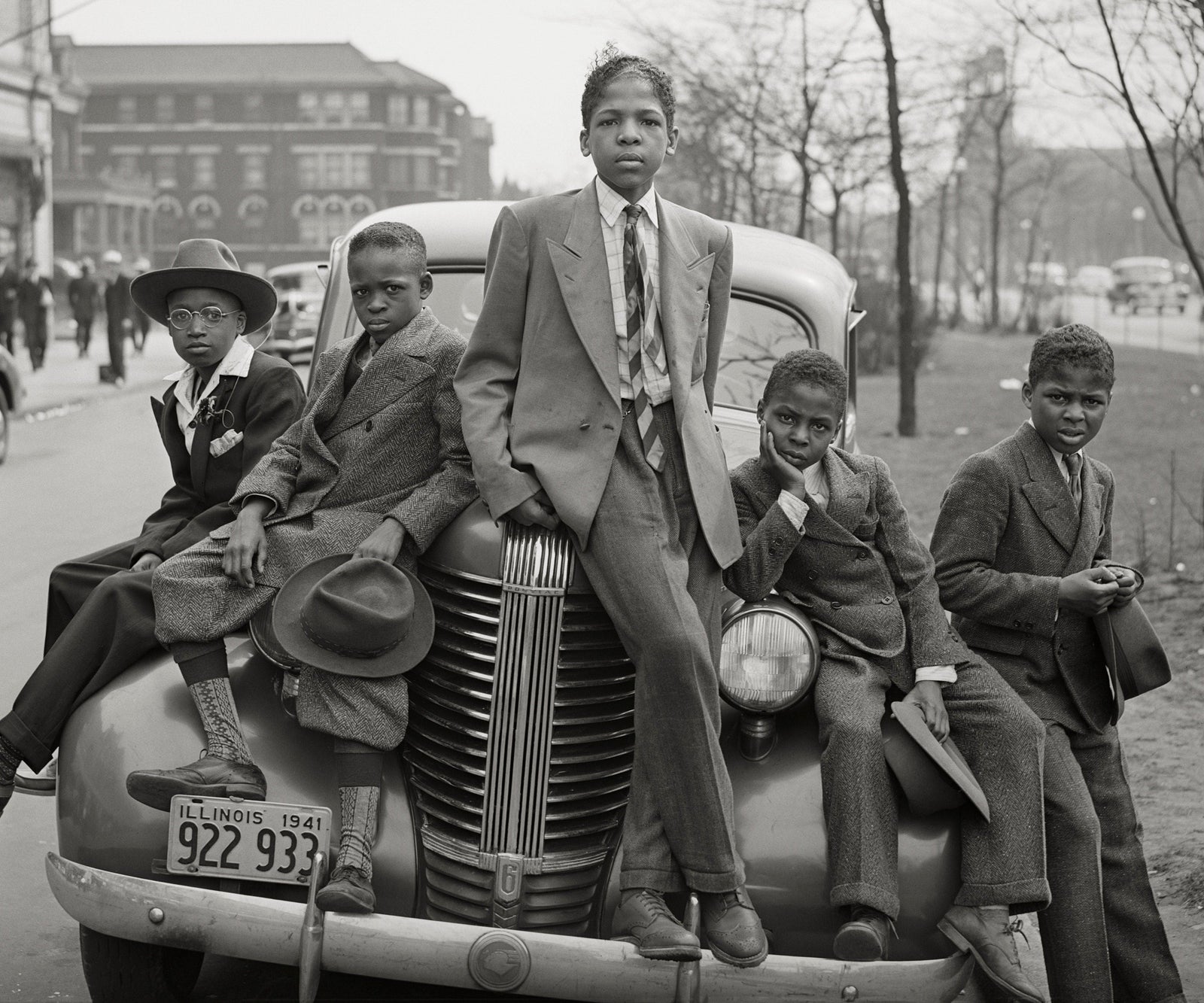
See the Print: Chicago 1941 Easter Sunday at the movies
Then Came the Automobile
One of the most convincing explanations for the decline of the everyday hat has nothing to do with fashion.
Americans got into cars.
Think about how people traveled in 1900. They walked to stores, stood waiting for streetcars, rode in open or drafty vehicles, and spent considerably more time exposed to rain, wind, snow, and sun. A hat wasn't merely decorative; it served a practical purpose.
Postwar Americans increasingly traveled from their homes to stores, offices, and shopping centers in enclosed automobiles. The practical need for a hat diminished, while the hat itself could become an inconvenience. Automobile rooflines were lower than those of carriages and early cars, and a brimmed or tall hat could be awkward inside one. Smithsonian Magazine identifies rising automobile ownership as one of the likely contributors to the decline in men's hat wearing.
The suburbs changed things too. Instead of walking several blocks down a city street or waiting on a train platform, a commuter might walk from his house to his car, drive to work, and walk across a parking lot. There was less reason to put on a hat simply to travel between buildings.
A small change in transportation helped produce a large change in clothing.
Women Had Another Problem: Their Hair
For women, the hat ran headlong into another powerful force during the late 1950s and 1960s: the hairstyle.
Bouffants, beehives, teased hair, and other carefully constructed styles were meant to be seen. Putting a fitted hat over them could flatten or hide the very hairstyle a woman had spent considerable time creating.
By 1960, the change was obvious enough that Vogue was commenting on women being fashionably dressed without hats. The FIDM Museum notes that etiquette during most of the 1950s had still called for women to wear hats on all but the most informal occasions, but increasing informality and larger hairstyles were already undermining the custom by the end of the decade.
This wasn't simply a new kind of hat replacing an old one. The social requirement itself was disappearing.
Did John F. Kennedy Kill the Hat?
This brings us to one of the most persistent stories in American fashion history.
According to the legend, American men stopped wearing hats because John F. Kennedy didn't wear one. The young, handsome president appeared bareheaded, American men copied him, and the hat industry collapsed.
It's a wonderful story. It just isn't a very convincing explanation.
Kennedy actually did wear the traditional top hat at his 1961 inauguration. Smithsonian records him as the last president to wear the traditional stovepipe-style inaugural hat, although photographs from the day also show him carrying it or appearing bareheaded.
Kennedy's youthful, frequently hatless public image may well have reinforced a fashion trend that was already underway, but he didn't create it. Men's hat wearing had been declining before he entered the White House, while automobile culture, changing hairstyles, and increasingly casual clothing were simultaneously making hats less useful and less socially necessary.
JFK didn't kill the hat. America was already taking it off.
The 1960s Broke the Rules
The deeper reason hats disappeared may be the same reason so many other clothing rules weakened during the 1960s: younger Americans simply stopped accepting them as rules.
Why did a man need a fedora to be properly dressed? Why did a woman need a hat and gloves to go shopping? Why should clothing announce a person's social position or conformity to an established dress code?
Youth culture favored a more informal appearance, and fashion increasingly celebrated individuality rather than conformity. Men's hair grew longer. Women's hairstyles grew larger or became deliberately casual. Jeans and sportswear moved into situations where earlier generations would have dressed more formally.
By the end of the 1960s, women's hats had largely ceased to be a requirement of mainstream fashion. Men's hats followed a similar trajectory, becoming something worn for particular jobs, weather, sports, outdoor activities, or personal style rather than an automatic part of leaving the house.
The hat hadn't disappeared. The obligation to wear one had.
What Old Photographs Show Us
This is why hats are such useful clues when looking at historical photographs.
A crowd scene from 1900 can immediately look different from a crowd scene from 1970 even before we notice the cars or buildings. The human silhouette has changed. Hundreds of little shapes that once appeared above people's heads have vanished.
And hats can tell us more than the decade. A battered workman's cap, a gentleman's bowler, a fashionable woman's enormous feathered hat, a child's sailor hat, or a man's straw boater each provides clues about season, occupation, social customs, fashion, and sometimes class.
Once you start looking for hats in old photographs, you see them everywhere.
Then, almost suddenly, you don't.
We Didn't Really Stop Wearing Hats
There is one final twist to the story: Americans never actually abandoned headwear.
Baseball caps are everywhere. People wear knit caps in winter, sun hats at the beach, cowboy hats, bucket hats, fishing hats, and countless forms of practical or fashionable headwear. Formal hats still appear at weddings, churches, races, and ceremonial events, while vintage styles periodically return to fashion.
What disappeared was something much more specific: the idea that a respectable adult was not completely dressed for public life without a hat.
That change is why photographs from a century ago can seem simultaneously familiar and foreign. The streets are recognizable. People are shopping, commuting, talking with friends, watching parades, and going to work just as we do.
But almost everyone remembered one last thing before walking out the door.
They put on a hat.
Sources & Further Reading
The Metropolitan Museum of Art, Costume Institute — The Met's millinery collection is especially useful for understanding how essential hats remained to women's wardrobes through the 1930s, '40s, and early '50s. Explore a Sally Victor hat and the Met's historical notes
Smithsonian National Museum of American History — Feather Trade and Millinery — Fascinating material on the enormous demand for bird feathers in women's hats and the conservation laws that followed. Read about the feather trade and American millinery
Smithsonian Magazine — John F. Kennedy and the Hat Myth — A useful examination of the often-repeated claim that Kennedy caused American men to stop wearing hats. Read about JFK and the decline of the hat
FIDM Museum — Balenciaga Hat, 1960 — Particularly helpful for understanding the moment when women's elaborate hairstyles and increasingly informal clothing began making the hat optional rather than obligatory. Read about women's hats at the beginning of the 1960s
Leave a comment
Comments will be approved before showing up.
Also in Time Capsule

Toledo in 1900: Life on the Streets of the Glass City
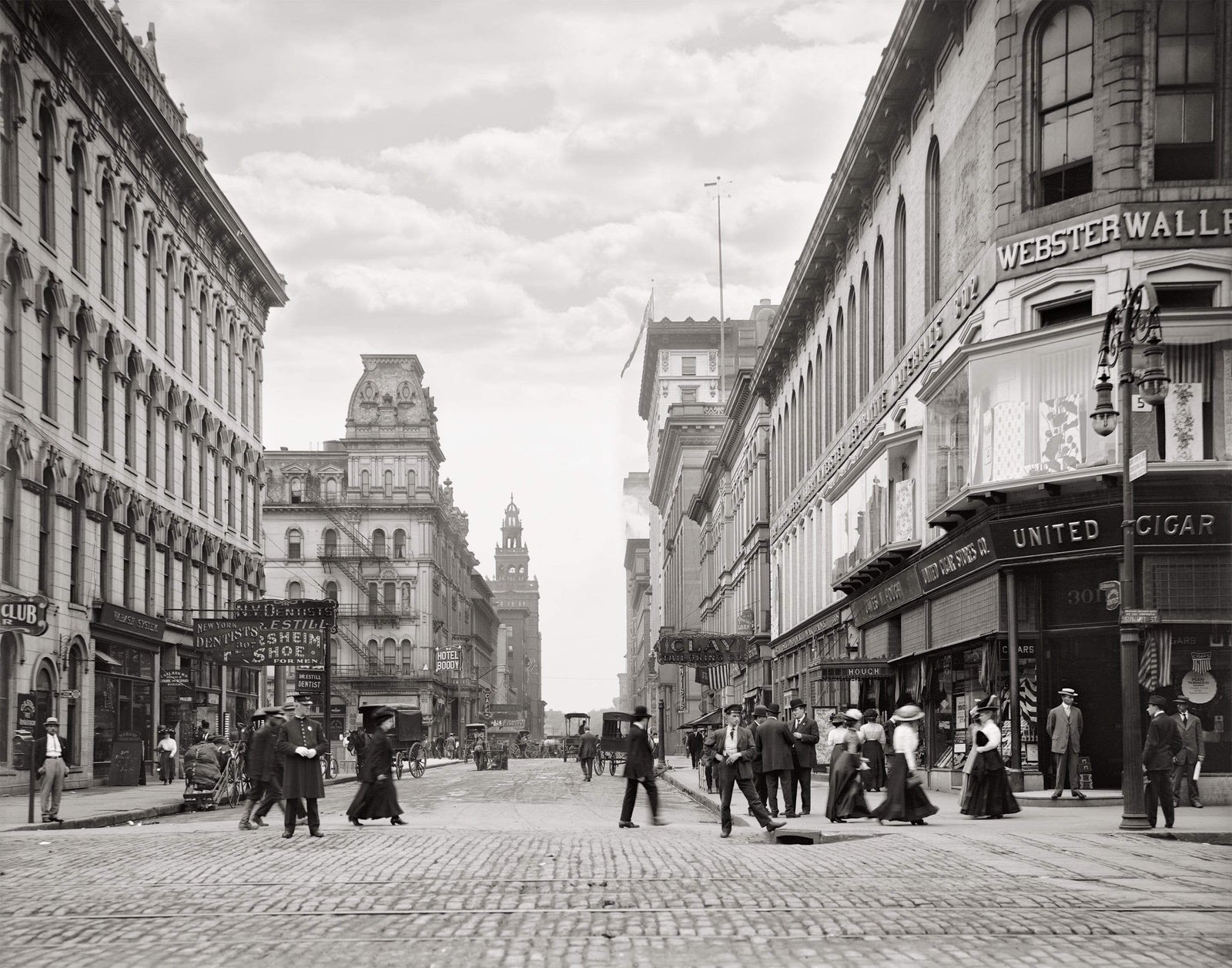
Step onto the streets of Toledo, Ohio, around 1900, when horse-drawn carriages, bicycles, and electric streetcars shared a bustling downtown. Vintage photographs of Summit Street and Madison Avenue reveal the shops, hotels, businesses, and everyday life of the city as Toledo emerged as America’s Glass City.


Eugene Debs and America’s Long Debate Over Socialism
More than a century before democratic socialism returned to American headlines, Eugene V. Debs was asking who should hold power in a democracy: workers, corporations or the government. Historical photographs reveal the world that made his five presidential campaigns possible.

Let customers speak for us
Gems
These short clips are gems. They are part of the history of music in America. Thank you for posting.
S. Kelley Chambers

Love the print and perfect decor for our n...
Love the print and perfect decor for our new apartment in Pittsburgh.
Chris P

5 stars review from Laura
5 stars review from Laura
Laura D

5 stars review from Geri
5 stars review from Geri
Geri L

5 stars review from Stephanie
5 stars review from Stephanie
Stephanie

5 stars review from Brookelynz
5 stars review from Brookelynz
Brookelynz
5 stars review from Deborah
5 stars review from Deborah
Deborah G

Spectacular!
Received as a gift and could not be happier with the quality of the print. Shipping container ensure this arrived in perfect condition.
John

5 stars review from Kayla
5 stars review from Kayla
Kayla G

5 stars review from Blondiee
5 stars review from Blondiee
Blondiee

5 stars review from April
5 stars review from April
April Y

5 stars review from Tracie
5 stars review from Tracie
Tracie C

Great quality and fast delivery!
Great quality and fast delivery!
Amanda C

5 stars review from Autumnrayne4
5 stars review from Autumnrayne4
Autumnrayne4

5 stars review from Traca
5 stars review from Traca
Traca B
