


Eugene Debs and America’s Long Debate Over Socialism
Historical photographs that explain why we’re still arguing about the same issues 100 years later.
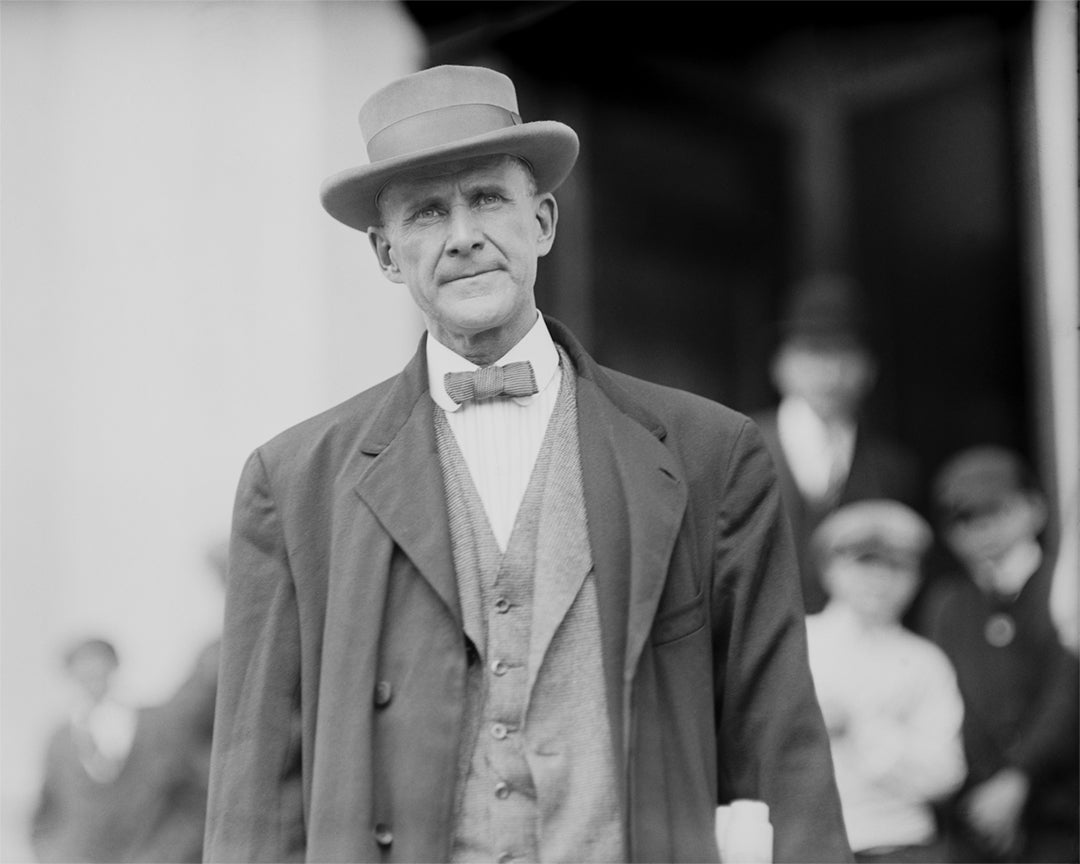
In a formal portrait from 1912, Eugene V. Debs looks every inch a presidential candidate: carefully dressed, composed and direct. But Debs was not a conventional politician. He was a former railroad worker, a union organizer and the Socialist Party’s nominee for president—and in 1912, nearly 900,000 Americans voted for him.

That represented about six percent of the popular vote, an extraordinary showing for a candidate outside the two major parties. Debs received no electoral votes and never came close to entering the White House. Yet many of the questions at the center of his campaigns never disappeared. How much power should employers have over workers? What does a fair wage look like? Should necessities and essential services be left entirely to private companies? When wealth becomes concentrated, can political power remain equal? And how far may a government go in suppressing dissent during wartime?
These questions sound current because they are current. They were also current in Debs’s America.
A railroad worker becomes a national labor leader
Eugene Victor Debs was born in Terre Haute, Indiana, in 1855. He left school at fourteen and found work on the railroads, first cleaning grease from locomotive trucks and later working as a fireman. Railroads were among the largest and most powerful businesses in the country, but the people who kept them running faced long hours, dangerous work and little protection when they were injured or dismissed.
Debs initially believed skilled workers could improve their lives through brotherhoods organized by trade. Over time, he came to favor “industrial unionism”: bringing many kinds of workers within one large union so they could bargain together. In 1893, he helped establish the American Railway Union.

The strength of the growing labor movement can be felt in this photograph of a Labor Day parade in Buffalo in 1900. Spectators fill the sidewalks, windows and trolley cars. Labor was not a narrow workplace subject. It was a public movement—and a major force in American civic life.
The strike that changed Debs
The defining confrontation of Debs’s early career came in 1894 at the Pullman Palace Car Company near Chicago. During a severe economic depression, Pullman cut wages but did not make corresponding reductions in the rents charged to workers living in its company town. When negotiations failed, Pullman employees walked out.
Members of Debs’s American Railway Union voted to support them by refusing to handle trains carrying Pullman cars. The boycott spread across the national rail system. President Grover Cleveland’s administration obtained a federal injunction and sent troops to Chicago, arguing that the disruption interfered with the movement of the U.S. mail and interstate commerce. Violence followed, the strike collapsed, and Debs went to jail for violating the injunction.
The experience pushed him toward socialism. Debs concluded that workers could not achieve lasting economic power through unions alone while corporations exercised such great influence over government and the courts.

The scale of the industrial system is visible in this 1915 view of Pittsburgh’s rail yards and river barges. Railroads did more than carry passengers: they connected mines, mills, farms, factories and ports. A nationwide railroad stoppage could therefore become a contest over who had the authority to halt—or restart—the American economy.
What did Debs mean by socialism?
The word socialism has never had only one universally accepted meaning. Debs’s politics grew out of the labor conflicts and extreme inequality of the Gilded Age. He argued that major industries should serve the public rather than a small owning class, and that working people should have far more control over both the economy and their government.
He pursued those ideas through elections, public speaking, organizing and a political party. In that broad sense, his movement belongs to the democratic and electoral history from which modern American democratic socialism also draws. But it would be misleading to treat every current proposal associated with “democratic socialism” as Debs’s program, or to assume that Debs would fit neatly into today’s political categories. The language, coalitions and policies have changed over more than a century.
What has endured is the underlying dispute: when does private economic power become public power, and what should democracy do about it?
Photographs of the working world
Political movements can become abstract when reduced to platforms and speeches. The photographs of Debs’s era show why labor reform attracted support.
In 1911, photographer Lewis Hine recorded a fourteen-year-old girl working in a cotton mill in Roanoke, Virginia. Hine’s child-labor photographs gave reformers visual evidence of conditions that many Americans never saw firsthand.

That same year, Hine photographed workers during the noon hour at a coal breaker in South Pittston, Pennsylvania. Coal powered factories, trains and homes, but the labor behind it was dirty, hazardous and often performed by boys. Arguments over child-labor restrictions pitted reformers against employers and others who resisted federal intervention in local labor practices.

These pictures do not prove that every worker supported Debs, or that socialism was the only response to industrial conditions. Progressive reformers, union members, religious activists and politicians from several parties proposed different remedies. The photographs do show the conditions within which those arguments occurred.
Work, voting rights and equal pay
The struggle over economic power also involved political power. Women could work in factories, shops, offices and homes while being denied a vote in much of the country.
In this HistoricalPix photograph, suffragists travel toward Boston with a blunt message displayed on their vehicle: “8,000,000 Working Women Need The Vote For Equal Pay for Equal Work.” The sign joins two demands that are sometimes remembered separately—political equality and economic equality.

The Socialist Party supported women’s suffrage well before ratification of the Nineteenth Amendment in 1920, although the movement’s record on gender and race was neither simple nor uniform. Suffragists themselves came from different political traditions. What the photograph makes unmistakable is that some women understood the ballot not only as a symbol of citizenship, but as a practical tool for changing the conditions of work.
Five campaigns—and one from prison
Debs ran for president five times: in 1900, 1904, 1908, 1912 and 1920. His strongest percentage came in the four-way election of 1912, when Woodrow Wilson defeated President William Howard Taft, former president Theodore Roosevelt and Debs. The Socialist candidate received roughly six percent of the national popular vote.
Debs opposed U.S. entry into World War I. In June 1918, he delivered an antiwar speech in Canton, Ohio. Federal prosecutors charged him under the Espionage Act of 1917, and a jury convicted him. The Supreme Court unanimously upheld the conviction in 1919. Debs was sentenced to ten years in federal prison and temporarily lost his right to vote.
Then came one of the strangest presidential campaigns in American history. In 1920, the Socialist Party nominated Debs again, and Federal Prisoner No. 9653 ran for president from the Atlanta penitentiary. He received more than 900,000 votes.
His imprisonment placed two democratic principles in tension: the government’s claimed wartime need to protect military recruitment, and the freedom to criticize war and government policy. That conflict remains part of the American debate over national security and civil liberties.
President Warren G. Harding commuted Debs’s sentence in December 1921. Debs was released on Christmas Day and went to the White House to meet Harding.
“Debs is free—why not my daddy?”
One of the most affecting photographs in the HistoricalPix collection carries Debs’s story beyond his own release. In 1922, women and children traveled to Washington as part of the Children’s Crusade for Amnesty, seeking freedom for people still imprisoned under wartime laws. The children carried signs asking why Debs had been released while their fathers remained behind bars.

The image is not simply a portrait of Debs. It is a photograph of the consequences of political punishment spreading through families. It also shows how one prominent prisoner’s release could sharpen public attention on the less famous people who remained confined.
Why the argument did not end
Debs died in 1926. He did not live to see the Great Depression, the New Deal, the rapid growth of industrial unions in the 1930s or many of the federal labor protections that followed. He also never saw the United States become a socialist country. His party faded as a national electoral force.
But several ideas once treated as radical became familiar parts of American life, while others remained outside the political mainstream. The eight-hour day, restrictions on child labor, workplace-safety rules, collective bargaining, old-age insurance and public regulation of powerful industries developed through different movements, laws and court decisions—not through Debs alone. Their histories nevertheless belong to the same long argument about freedom: whether freedom means primarily protection from government power, or whether it must also include some protection from economic dependence and concentrated private power.
That is why Debs still appears whenever Americans argue about unions, billionaires, public ownership, health care, wages, inequality, war or democratic socialism. The details have changed. The vocabulary has shifted. The central questions remain recognizable.
Historical photographs do not settle those questions. They do something equally valuable: they show us the people who were living inside them.
Related photographs and stories at HistoricalPix
Sources and further reading
Leave a comment
Comments will be approved before showing up.
Also in Time Capsule

Six New York Landmarks That Changed the Manhattan Skyline
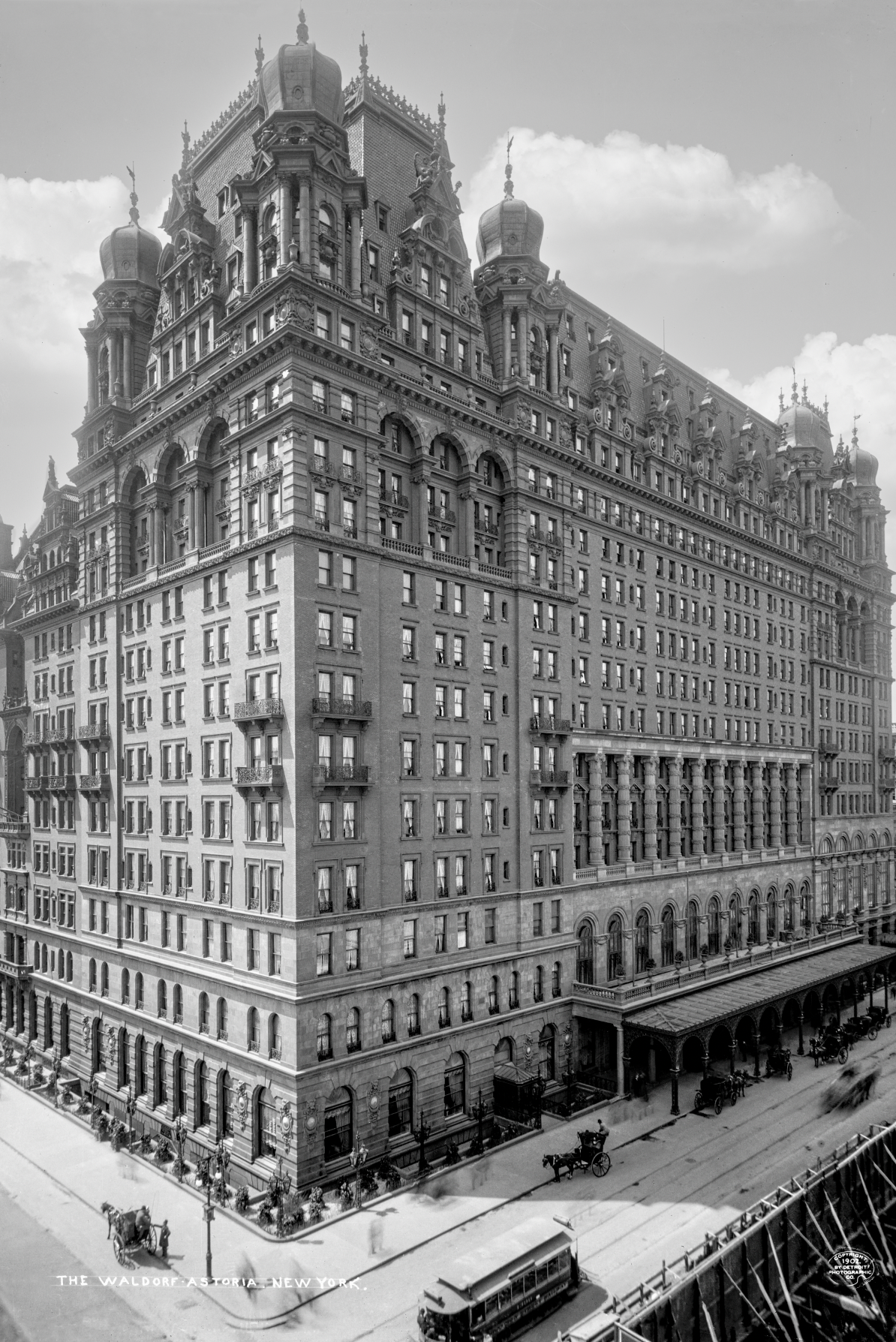
New York's skyline wasn't built overnight. Vintage photographs of Trinity Church, the Plaza, Waldorf-Astoria, Chrysler Building, Empire State Building and Rockefeller Center reveal how Manhattan grew from a city of church steeples and grand hotels into the skyscraper capital of the world.


The Old West Never Really Ended
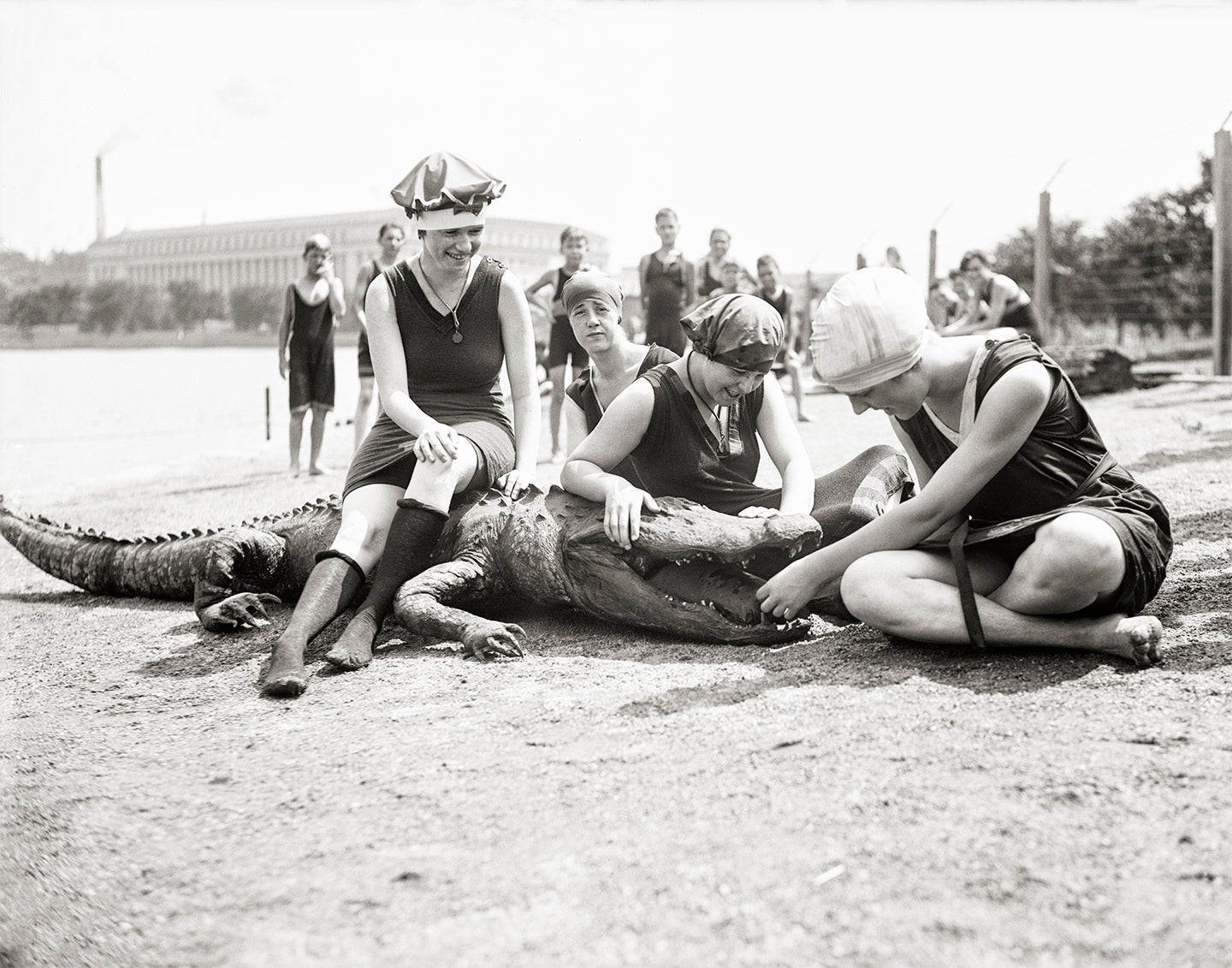
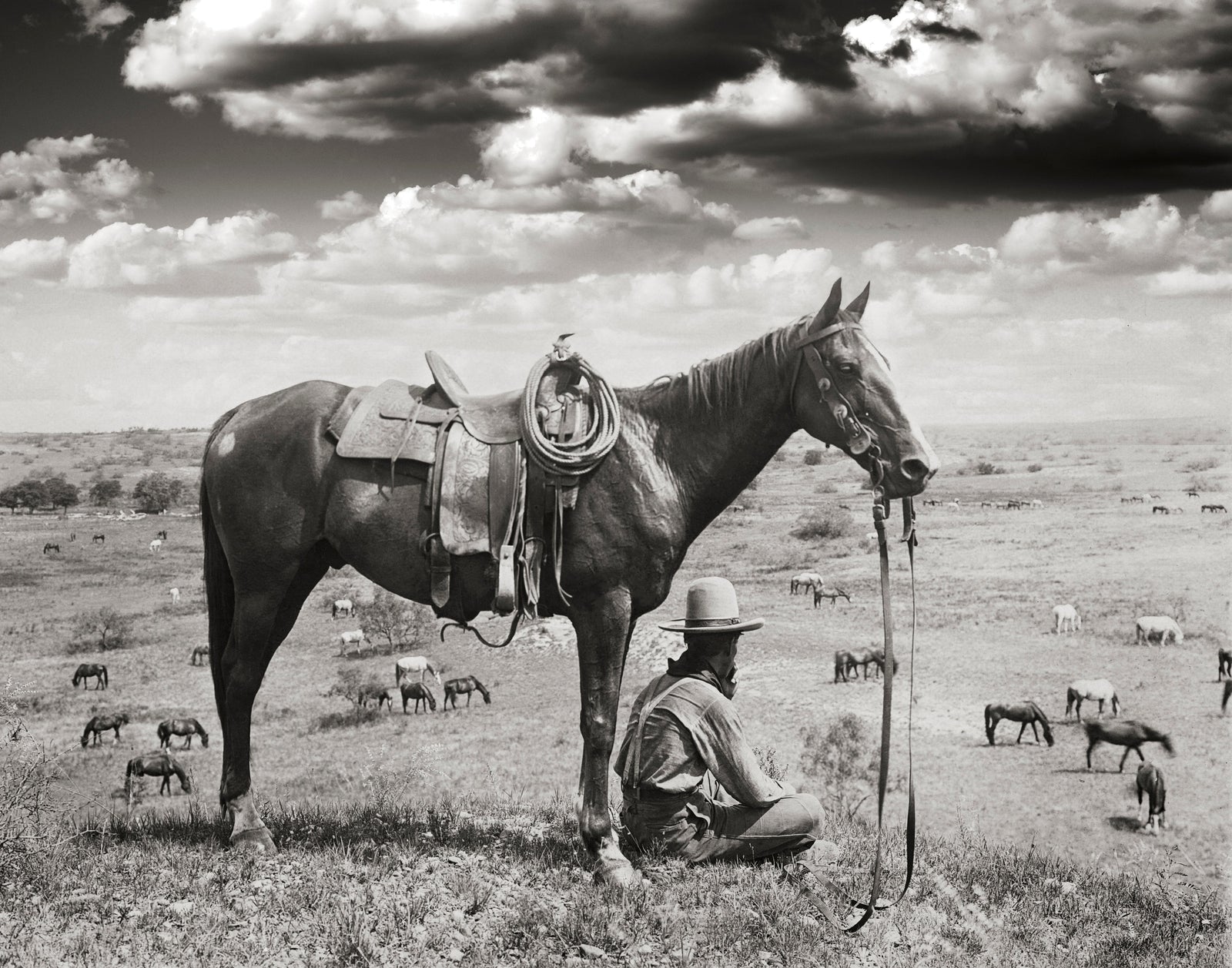
A cowboy on horseback overlooks the Dallas skyline in 1943—an image that seems to capture the Old West and modern America in a single frame. But the cowboy didn't disappear when the frontier closed. Discover how real working cowboys, rodeos, music and Hollywood carried the Old West into the 20th century.
Let customers speak for us
Gems
These short clips are gems. They are part of the history of music in America. Thank you for posting.
S. Kelley Chambers

Love the print and perfect decor for our n...
Love the print and perfect decor for our new apartment in Pittsburgh.
Chris P

5 stars review from Laura
5 stars review from Laura
Laura D

5 stars review from Geri
5 stars review from Geri
Geri L

5 stars review from Stephanie
5 stars review from Stephanie
Stephanie

5 stars review from Brookelynz
5 stars review from Brookelynz
Brookelynz
5 stars review from Deborah
5 stars review from Deborah
Deborah G

Spectacular!
Received as a gift and could not be happier with the quality of the print. Shipping container ensure this arrived in perfect condition.
John

5 stars review from Kayla
5 stars review from Kayla
Kayla G

5 stars review from Blondiee
5 stars review from Blondiee
Blondiee

5 stars review from April
5 stars review from April
April Y

5 stars review from Tracie
5 stars review from Tracie
Tracie C

Great quality and fast delivery!
Great quality and fast delivery!
Amanda C

5 stars review from Autumnrayne4
5 stars review from Autumnrayne4
Autumnrayne4

5 stars review from Traca
5 stars review from Traca
Traca B
