

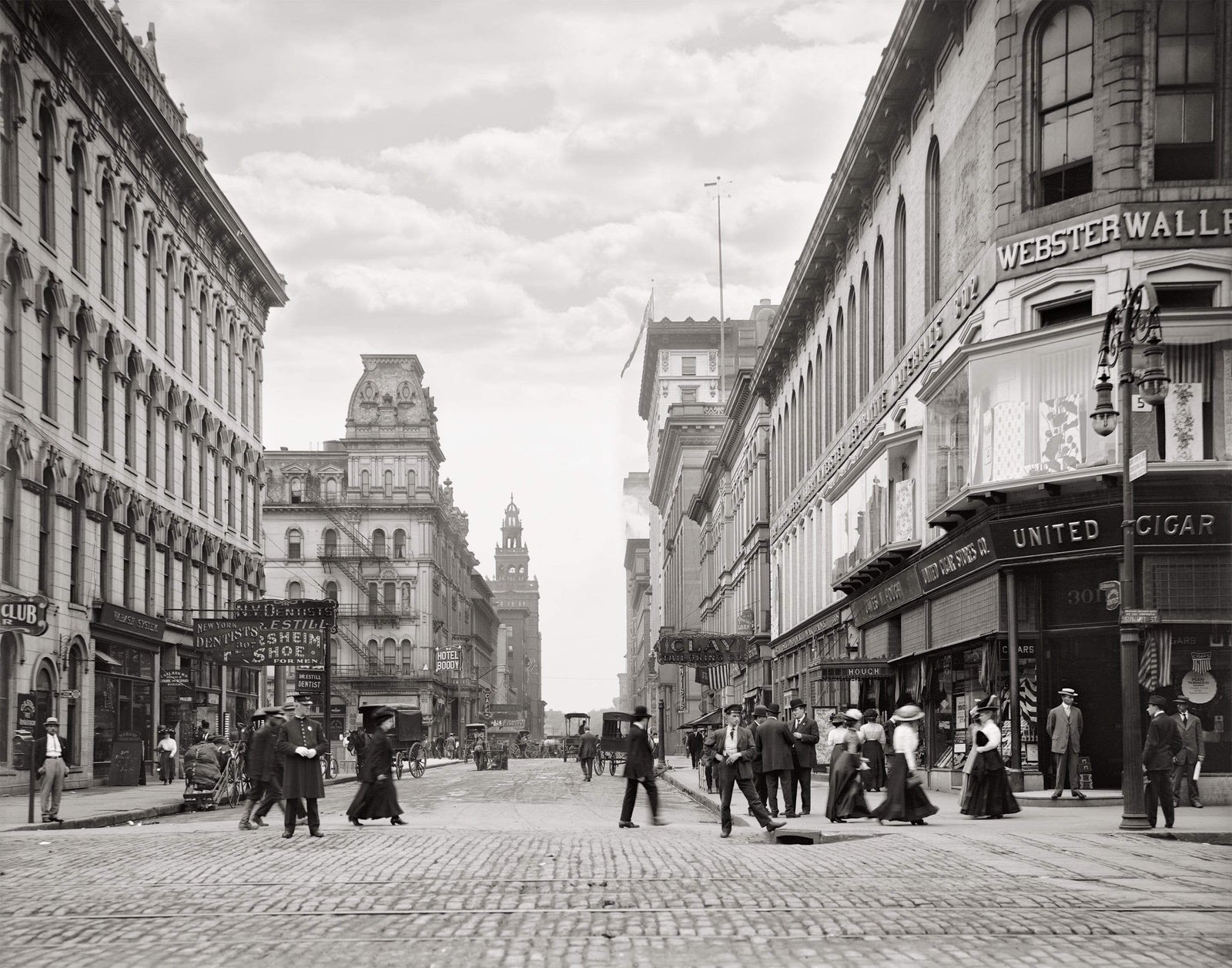

Toledo in 1900: Life on the Streets of the Glass City
Look closely at a photograph of downtown Toledo at the turn of the 20th century and something remarkable happens: the past stops looking quite so distant. A horse and buggy travels down the middle of Summit Street while an electric streetcar approaches on steel rails. Bicycles lean against storefronts, shoppers crowd the sidewalks beneath canvas awnings, and enormous advertisements compete for attention overhead. Horse, bicycle, and electric trolley all occupy the same street, capturing Toledo at the moment the 19th century was giving way to the modern age.
A City on the Rise
Toledo had good reason to be bustling. Its location on the Maumee River near Lake Erie made it an important transportation and commercial center, with access to waterways and an expanding network of railroads. By the closing decades of the 19th century, factories, shops, hotels, and substantial office buildings were transforming what had once been a much smaller city.
The population illustrates just how quickly Toledo was changing. The city had roughly 50,000 residents in 1880, but by 1900 its population had climbed to more than 130,000. That meant tens of thousands of new residents in only two decades, all of whom needed homes, transportation, shops, schools, and places to work.
One industry in particular would become so closely associated with Toledo that it would give the city a nickname it still carries today.
Becoming the Glass City
In 1888, businessman Edward Drummond Libbey moved the New England Glass Company from Massachusetts to Toledo. Local businessmen were actively recruiting manufacturers and offered Libbey incentives to relocate, while Toledo's transportation connections and access to inexpensive natural gas made the city attractive for glass production. A train carrying glass workers and equipment arrived in August 1888, and four years later the company became the Libbey Glass Company.

That relocation helped establish an industrial network that would make Toledo nationally important in glass manufacturing. Companies and innovators associated with Toledo eventually helped revolutionize the production of bottles, windows, automotive glass, and fiberglass. The industry's importance became so great that Toledo earned its enduring nickname: the Glass City.
Statistics tell us Toledo was booming, but photographs show us what that boom actually looked like.
A Busy Day on Summit Street
A remarkable photograph taken around 1900 preserves Summit Street in extraordinary detail. The catalog information for the image identifies several businesses visible along the street, including Mockett's Men's Furnishings, Albany Dental Parlor, Granger Merchant Tailor, and Adams Express Company.

The first thing that strikes you is how intensely commercial the street already was. Large signs project from buildings, awnings stretch over sidewalks, merchandise fills storefront windows, and advertisements occupy nearly every available space. On the left, Mockett's announces itself with an elaborate oval sign hanging above the sidewalk. Across the street, an enormous ADAMS EXPRESS COMPANY sign projects from a building, while another advertisement promises passersby that they can “BURN LESS MONEY” by purchasing cigars at cut prices.
This was clearly not a sleepy Midwestern town. Downtown Toledo was crowded, competitive, noisy, and full of people doing business.
Three Eras of Transportation in One Photograph
One of the most revealing details in the Summit Street photograph is easy to overlook. Within the same scene we can see horse-drawn transportation, bicycles, and an electric streetcar. The trolley tracks run directly down the street beneath a web of electrical wires, while horses and wheeled vehicles continue to travel alongside them.
For the people in this photograph, electricity wasn't an artifact from history; it was relatively new technology that was changing the way they moved around their city. Toledo's electric street railway system expanded during the 1890s, allowing people to live farther from their workplaces and travel through the growing city more easily. Yet the horse had certainly not disappeared, and the automobile had not yet taken over. Toledo was living through a fascinating transitional period when several generations of transportation shared the same streets.
Within another couple of decades, the balance would change dramatically. Automobiles would become increasingly common, streets would be redesigned around them, and eventually Toledo's streetcars themselves would disappear. The photograph therefore records a transportation system that was modern and exciting in 1900 but would itself eventually become obsolete.
Shopping on Summit Street
The storefronts provide another glimpse into everyday life. Mockett's sold men's furnishings, while Granger catered to men looking for tailored clothing. Period records describe V. W. Granger & Co. as drapers and tailors offering gentlemen's furnishings, showing just how specialized downtown shopping could already be.
There were dentists, tailors, clothing stores, cigar sellers, delivery businesses, and countless other services within walking distance. Large department stores and shopping malls were still in the future, so streets like Summit functioned as Toledo's shopping center. Customers walked from business to business, and merchants used increasingly elaborate signs, window displays, and advertisements to persuade them to come inside.
The photograph's catalog record also associates the scene with Christmas, which raises an intriguing possibility. Decorations or merchandise appear to be hanging outside several businesses on the right side of the street. Although the photograph alone doesn't allow us to say with certainty that it was taken during the Christmas shopping season, the cataloging makes that possibility worth noticing.
The FedEx of 1900
The enormous Adams Express Company sign is particularly interesting because the business performed a service that feels surprisingly modern. Before UPS and FedEx trucks appeared on American streets, express companies carried packages, money, documents, and valuable merchandise between cities, relying heavily on America's rapidly expanding railroad network.
Adams Express was a major national operation by this period. A Supreme Court case from the 1890s described a network covering nearly 30,000 miles of rail and water routes. A Toledo resident walking into the Adams Express office with a package around 1900 was therefore doing something quite familiar to us today: sending something to a person hundreds or perhaps thousands of miles away. The transportation network was different, but the need was much the same.
For anyone who sells and ships things today, there is something wonderfully recognizable about seeing that enormous delivery-company sign looming over Summit Street more than 120 years ago.
Around the Corner on Madison Avenue

Another surviving photograph takes us nearby to Madison Avenue, photographed from the vicinity of Summit Street during roughly the same period. Once again, the photograph shows a dense downtown filled with substantial commercial buildings, hotels, signs, street traffic, and pedestrians. Rather than viewing the Summit and Madison photographs as unrelated scenes, we can think of them as adjoining pieces of the same downtown neighborhood.

Among the prominent buildings in this area was the Boody House, a well-known Toledo hotel at Madison Avenue and St. Clair Street. Opened in 1872, the hotel offered 133 guest rooms, each reportedly equipped with its own fireplace, while hot and cold running water in every room was considered an impressive luxury. The Boody House remained a Toledo landmark for decades before being demolished in 1928.
Farther along Madison stood the Nasby Building, completed in 1892. Rising nine stories above downtown, it was regarded as Toledo's first skyscraper. Its original tower and ornate roofline made it considerably more dramatic than the building appears today, illustrating another difficulty in identifying structures in old photographs: sometimes the building survives, but the building we see today no longer looks like the one our ancestors knew.
Look Past the Buildings
Old city photographs naturally make us search for landmarks, but the most interesting parts are often the ordinary people. Look closely at Summit Street and the photograph begins to feel surprisingly familiar. Someone may be late for work, another person is shopping, someone has a package to send, and others may simply be waiting for the streetcar. People stop at shop windows, bicycles rest near the curb, and merchants have pulled awnings over their storefronts.
None of these people knew that more than a century later someone would enlarge the photograph and study what they were doing. They weren't posing for a historical record or deliberately showing us how people lived in 1900. They were simply going about an ordinary day in Toledo.
And that may be exactly why photographs like this are so valuable. Famous events were carefully documented, but everyday life rarely announces that it is worth preserving.
Toledo Was Just Getting Started
The industrial transformation visible in these photographs would continue well into the 20th century. Michael J. Owens, who worked with Libbey in Toledo, developed machinery that dramatically changed glass manufacturing, including automated bottle-making technology. Toledo's glass industry subsequently expanded into window glass, automotive glass, fiberglass, and other products that reached far beyond Ohio.
Meanwhile, the city itself kept changing. Automobiles replaced horses and eventually displaced the streetcars. Buildings that had seemed permanent were demolished, remodeled, or stripped of their towers and ornamentation. Businesses whose enormous signs once dominated Summit Street disappeared from everyday memory, while new roads and development changed the appearance of downtown.
Yet the photographs survived.
They preserve the trolley coming toward the photographer, the horse traveling down the street, the bicycles resting beside the sidewalk, the advertisements hanging from buildings, and the shoppers moving from store to store. Most importantly, they preserve ordinary Toledoans going about their lives in a city that was becoming modern before their eyes.
They weren't photographing history. They were photographing everyday life—and everyday life became history.
Explore More Historic Toledo Photographs
The streets and buildings of Toledo have changed dramatically since these photographs were made, but the original images preserve an extraordinary record of the city at the beginning of the 20th century. Explore the HistoricalPix collection of vintage Toledo, Ohio photographs to see more views of the Glass City as it once appeared.
Sources & Further Reading
-
Toledo Lucas County Public Library — Local History Digital Collections. An excellent archive of more than 36,000 photographs, maps, books, documents, oral histories, and other materials relating to Toledo and northwestern Ohio.
Explore the Toledo Local History Digital Collections -
University of Toledo, Ward M. Canaday Center — “A City Built of Glass.” An especially useful history of Edward Drummond Libbey, the arrival of the New England Glass Company in Toledo in 1888, Michael Owens, and the development of Toledo's glass industry.
Read A City Built of Glass -
University of Toledo — Owens-Illinois and the Glass Industry in Toledo Timeline. A year-by-year chronology covering Libbey Glass, Michael Owens, the automatic bottle machine, Edward Ford Plate Glass, Libbey-Owens-Ford, and other milestones in Toledo's emergence as the Glass City.
View the Toledo glass-industry timeline -
University of Toledo — Libbey-Owens-Ford Glass Company Records. For readers interested in digging deeper, the Canaday Center preserves an extensive collection of corporate records, photographs, advertisements, newsletters, reports, and other material documenting Toledo's glass industry.
Explore the Libbey-Owens-Ford collections - University of Toledo — Wholly Toledo. This digital exhibition explores the businesses and industries that shaped Toledo and includes original archival material relating to the city's commercial and industrial development.
Leave a comment
Comments will be approved before showing up.
Also in Time Capsule
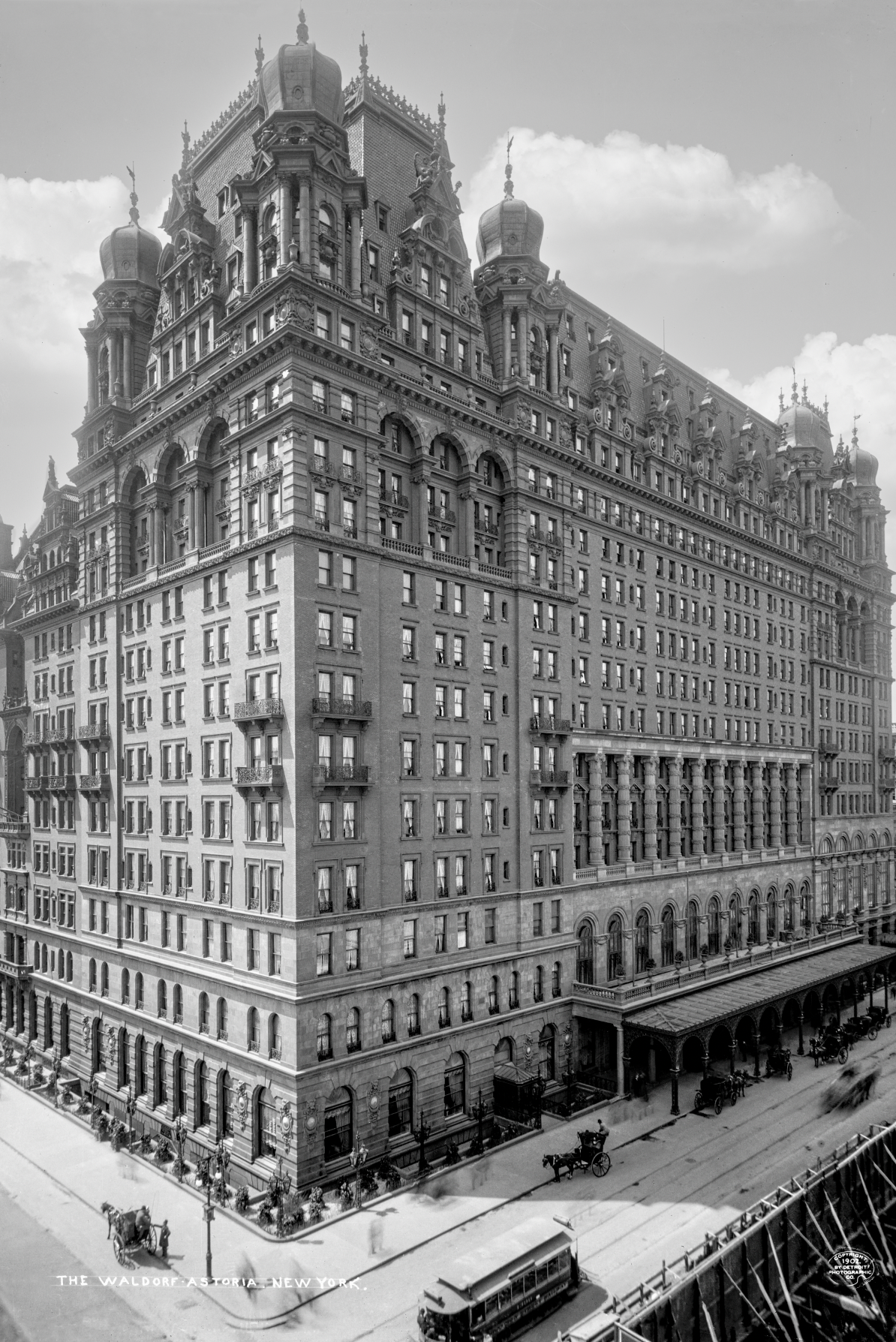

Six New York Landmarks That Changed the Manhattan Skyline
New York's skyline wasn't built overnight. Vintage photographs of Trinity Church, the Plaza, Waldorf-Astoria, Chrysler Building, Empire State Building and Rockefeller Center reveal how Manhattan grew from a city of church steeples and grand hotels into the skyscraper capital of the world.

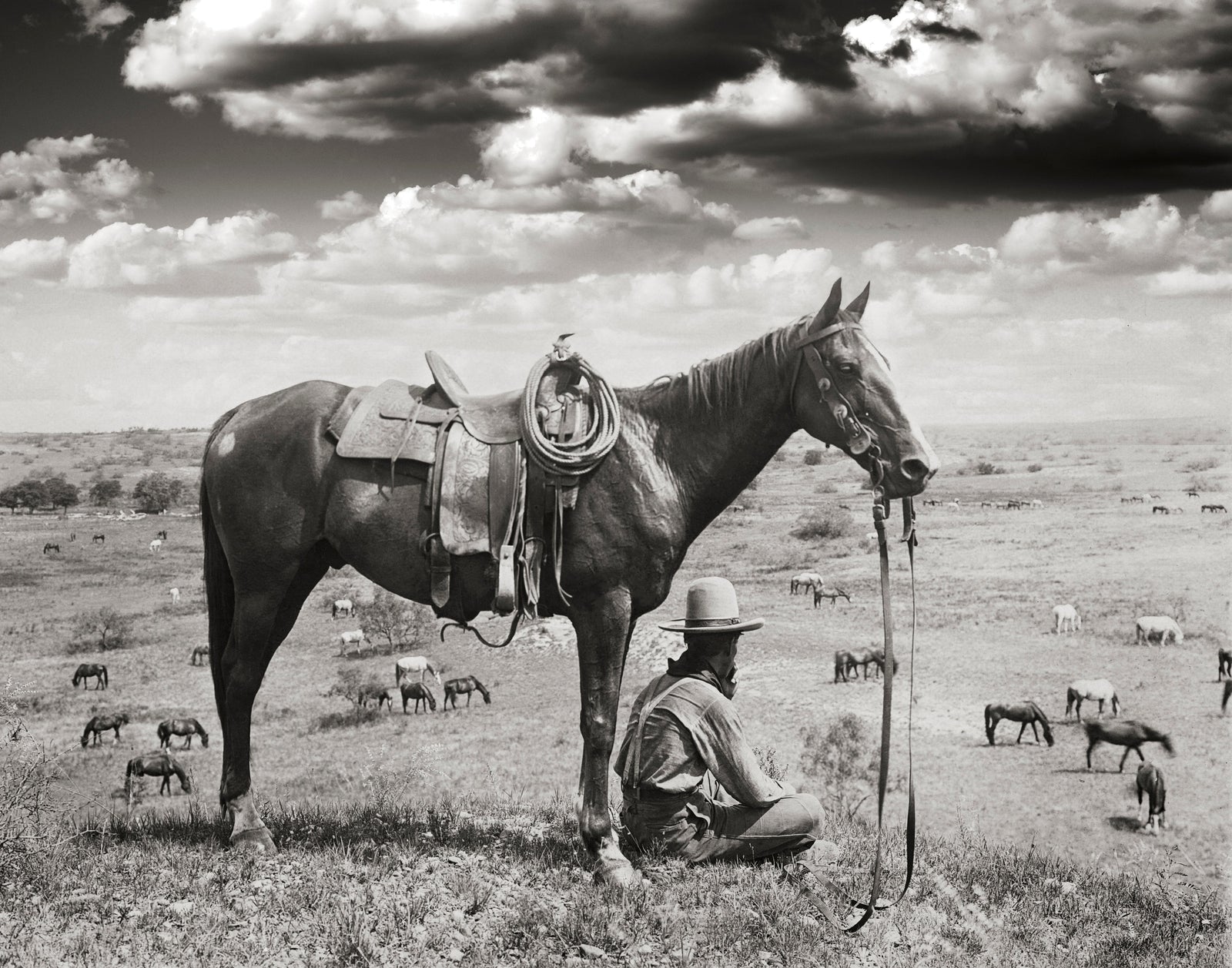

The Old West Never Really Ended
A cowboy on horseback overlooks the Dallas skyline in 1943—an image that seems to capture the Old West and modern America in a single frame. But the cowboy didn't disappear when the frontier closed. Discover how real working cowboys, rodeos, music and Hollywood carried the Old West into the 20th century.
Let customers speak for us
Gems
These short clips are gems. They are part of the history of music in America. Thank you for posting.
S. Kelley Chambers

Love the print and perfect decor for our n...
Love the print and perfect decor for our new apartment in Pittsburgh.
Chris P

5 stars review from Laura
5 stars review from Laura
Laura D

5 stars review from Geri
5 stars review from Geri
Geri L

5 stars review from Stephanie
5 stars review from Stephanie
Stephanie

5 stars review from Brookelynz
5 stars review from Brookelynz
Brookelynz
5 stars review from Deborah
5 stars review from Deborah
Deborah G

Spectacular!
Received as a gift and could not be happier with the quality of the print. Shipping container ensure this arrived in perfect condition.
John

5 stars review from Kayla
5 stars review from Kayla
Kayla G

5 stars review from Blondiee
5 stars review from Blondiee
Blondiee

5 stars review from April
5 stars review from April
April Y

5 stars review from Tracie
5 stars review from Tracie
Tracie C

Great quality and fast delivery!
Great quality and fast delivery!
Amanda C

5 stars review from Autumnrayne4
5 stars review from Autumnrayne4
Autumnrayne4

5 stars review from Traca
5 stars review from Traca
Traca B
