

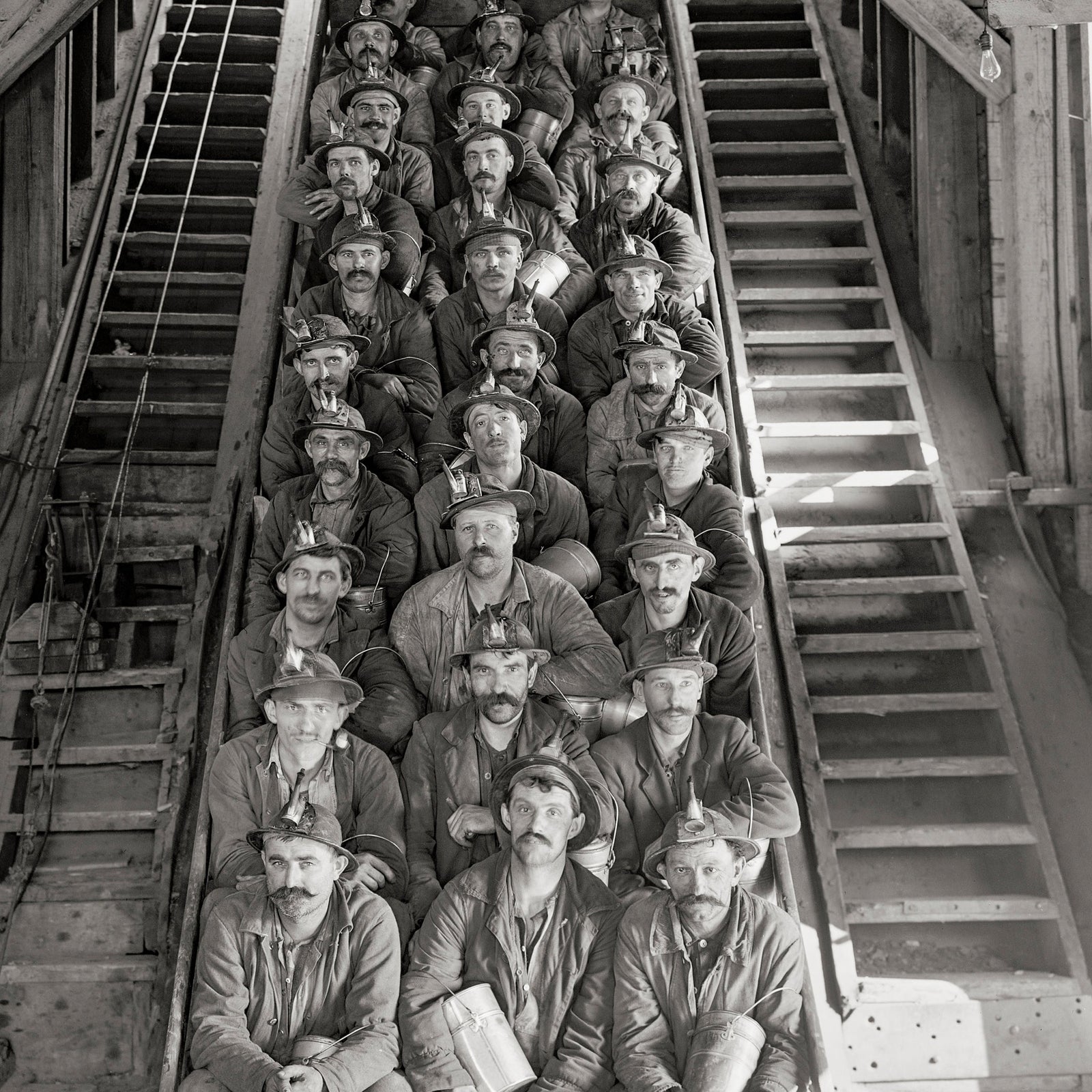

Black Diamonds in the North: Coal Miners in Michigan
When people think of Michigan mining at the turn of the twentieth century, they usually picture iron ranges in the Upper Peninsula or copper mines along Lake Superior. Coal rarely comes to mind. Yet coal mining did exist in Michigan, and for a brief but intense period around 1880 to 1920, it played a meaningful role in the state’s industrial development. The story of Michigan’s coal miners is not one of vast mountain seams or legendary boomtowns, but of stubborn geology, immigrant labor, dangerous work, and communities that rose and fell with the demand for fuel.
Coal in an Iron State
Michigan was never a coal powerhouse like Pennsylvania or West Virginia. Its coal deposits were part of what geologists call the Michigan Basin, a broad, bowl-shaped formation centered roughly around the central Lower Peninsula. The seams were generally thinner, deeper, and more irregular than those in Appalachia. This geological reality shaped everything that followed. Coal could be mined in Michigan, but it required more effort for less yield.
By the late nineteenth century, however, the state’s industrial growth created demand for fuel. Railroads expanded. Factories multiplied. Urban centers like Detroit and Grand Rapids grew rapidly. Coal powered locomotives, heated homes, and fueled manufacturing. While Michigan imported significant quantities of coal from other states via the Great Lakes, local deposits offered an opportunity for regional production.
Coal mining districts developed primarily in counties such as Saginaw, Bay, Tuscola, Shiawassee, Genesee, and parts of Jackson County. The Saginaw Valley, in particular, became one of the more active coal-producing regions in the state during the late nineteenth century.
The Rise of Michigan Coal Mining
Commercial coal mining in Michigan began in earnest in the 1860s, but production increased significantly in the 1880s and 1890s. By 1907, Michigan coal production reached its historical peak at over two million tons annually. That figure was modest compared to national leaders, but it represented a substantial local industry.
Mining towns grew near shaft openings. These were often company-driven operations. Mine owners invested in sinking vertical shafts through layers of clay and rock until reaching coal seams sometimes several hundred feet below the surface. Timber supports reinforced the tunnels, and miners used picks, shovels, and eventually limited mechanical equipment to extract coal.
The work was labor-intensive and physically punishing. Michigan coal tended to be bituminous and sometimes high in sulfur content. The seams were not always consistent, which meant unpredictable working conditions underground.
The Men Who Went Below
Around the turn of the century, Michigan coal miners were largely immigrants or first-generation Americans. Many came from Eastern and Southern Europe—Poland, Italy, Hungary, and Slovakia. Others were migrants from established coal regions in Pennsylvania and Ohio who brought mining experience with them.
Mining communities reflected this diversity. Ethnic neighborhoods formed around language, church affiliation, and family networks. Churches, fraternal organizations, and mutual aid societies became central to community life. Mining was not just a job; it shaped the entire social fabric of these towns.
The typical miner worked long hours for modest pay. Payment systems sometimes included company scrip, redeemable only at company-owned stores. Safety standards were inconsistent, and oversight was limited. Injuries were common. Roof collapses, gas explosions, and equipment failures posed constant risks.
Children were not as heavily employed in Michigan coal mines as in some Appalachian regions, but young boys did sometimes work as trappers, opening and closing ventilation doors in underground passages. These positions exposed them to isolation and danger at an early age.
Labor Tensions and Organization
By the late nineteenth century, miners nationwide were increasingly organizing under the United Mine Workers of America. Michigan miners were no exception. Labor disputes arose over wages, hours, and safety conditions. Strikes occurred sporadically, especially in the Saginaw Valley region.
The tension between mine operators and labor unions mirrored national patterns. Operators argued that Michigan’s coal seams were expensive to extract and that profit margins were thin. Miners countered that unsafe conditions and low wages made their work untenable. Because Michigan coal faced stiff competition from out-of-state suppliers, local operators often resisted wage increases, claiming they could not remain competitive.
The turn of the century was marked by periodic unrest. While Michigan did not experience the scale of violence seen in some Appalachian coal wars, the strain between labor and management was real. Organizing efforts strengthened gradually, but the limited size of the industry constrained the union’s influence compared to larger coal states.
Daily Life Above Ground
Mining towns in Michigan were practical places built around function. Houses were often modest wood-frame structures. Streets could be muddy in spring and dusty in summer. In winter, the cold was relentless. Coal mining in Michigan meant working underground while snow blanketed the fields above.
Wives and families bore their own burdens. Laundry from miners came home blackened with coal dust. Injuries could suddenly remove a household’s primary income. Women often took in boarders, grew food, or worked in small local enterprises to supplement wages.
Schools served children of diverse backgrounds, creating environments where multiple languages mixed. Churches offered stability. Community events revolved around ethnic traditions, holidays, and shared hardship.
Competition and Decline
Despite reaching peak production in the early twentieth century, Michigan coal mining faced structural disadvantages. The seams were thinner and more fragmented than those in Pennsylvania or Illinois. Transportation improvements made it easier and cheaper to import coal via rail and ship from larger fields.
By the 1910s, imported coal often undercut Michigan producers in price and quality. World War I temporarily boosted demand for domestic fuel, but the long-term trend was downward. After 1907, production began to decline steadily.
Mechanization was limited in Michigan mines due to geological constraints. As national mining operations adopted more advanced equipment, Michigan mines struggled to keep pace economically. Many shafts closed in the 1920s. By mid-century, commercial coal mining in Michigan had largely ceased.
Accidents and Memory
While Michigan did not experience some of the catastrophic disasters seen in larger coal states, accidents were frequent enough to leave lasting impressions on communities. Cave-ins, gas buildups, and machinery mishaps claimed lives. Each fatality reverberated through tightly knit towns.
Cemeteries in former mining regions still contain markers of men who died young, often listed simply as “miner.” These gravestones serve as quiet reminders of an industry that once pulsed beneath Michigan farmland.
The environmental traces also remain. Subsidence—ground sinking over abandoned shafts—occasionally affected later developments. Old mine maps became important historical documents for land planners.
Coal’s Place in Michigan’s Industrial Story
Coal mining in Michigan never defined the state in the way iron and copper did, yet it played a supporting role in industrial expansion. Coal fueled railroads that transported lumber and ore. It heated homes during harsh winters. It powered factories that would later form the backbone of Detroit’s automotive boom.
In that sense, coal miners were part of the infrastructure that allowed Michigan’s broader economy to grow. Their labor linked rural shafts to urban industry.
By the time the automobile industry rose to dominance in the 1910s and 1920s, coal mining was already waning. Oil, electricity, and improved transportation networks altered the energy landscape. Michigan transitioned into a different industrial identity.
Legacy Beneath the Fields
Today, much of Michigan’s former coal country appears unremarkable—fields, small towns, and quiet roads. Few visible signs remain of the shafts that once descended into the Michigan Basin. Historical societies preserve photographs and records, and some communities maintain modest mining exhibits.
The story of Michigan coal miners at the turn of the century is one of persistence in the face of geological limitation. They worked in seams that were harder to access and less profitable than those elsewhere. They built communities around an industry that never achieved national prominence but mattered deeply at a local level.
Their history complicates the narrative of Michigan as solely an iron, copper, and automobile state. For a generation, coal miners descended daily into narrow shafts under farmland and forest, extracting fuel that powered a growing region.
It is a quieter mining story than those told in Appalachia, but it is no less real. Beneath Michigan’s fields, there was once another industry, carved in darkness and sustained by men whose labor left little monument above ground—except the towns, the families, and the memory of black dust carried home at dusk. See the photo of Michigan Coal Miners.
Leave a comment
Comments will be approved before showing up.
Also in Time Capsule


Six New York Landmarks That Changed the Manhattan Skyline
New York's skyline wasn't built overnight. Vintage photographs of Trinity Church, the Plaza, Waldorf-Astoria, Chrysler Building, Empire State Building and Rockefeller Center reveal how Manhattan grew from a city of church steeples and grand hotels into the skyscraper capital of the world.



The Old West Never Really Ended
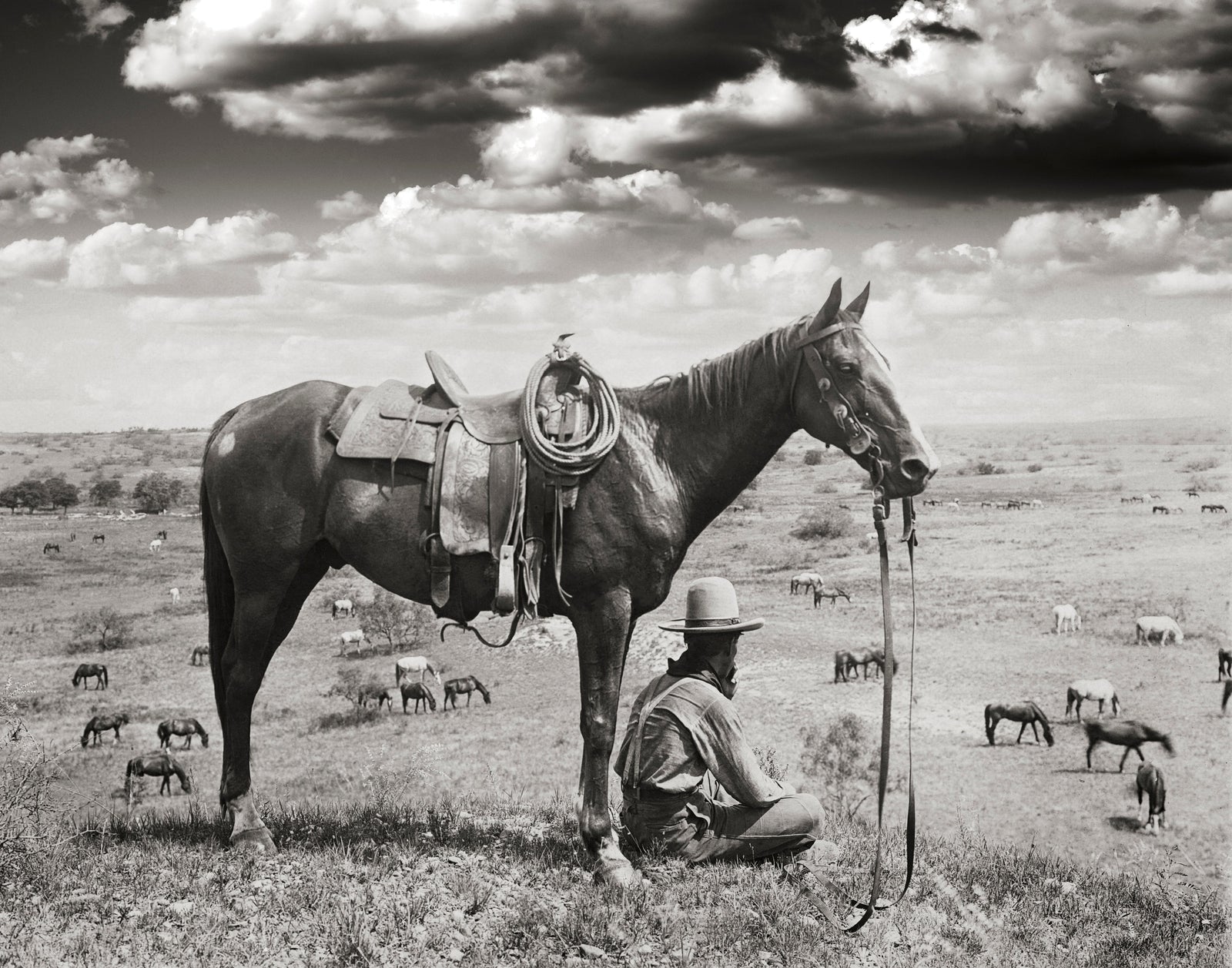
A cowboy on horseback overlooks the Dallas skyline in 1943—an image that seems to capture the Old West and modern America in a single frame. But the cowboy didn't disappear when the frontier closed. Discover how real working cowboys, rodeos, music and Hollywood carried the Old West into the 20th century.
Let customers speak for us
Gems
These short clips are gems. They are part of the history of music in America. Thank you for posting.
S. Kelley Chambers

Love the print and perfect decor for our n...
Love the print and perfect decor for our new apartment in Pittsburgh.
Chris P

5 stars review from Laura
5 stars review from Laura
Laura D

5 stars review from Geri
5 stars review from Geri
Geri L

5 stars review from Stephanie
5 stars review from Stephanie
Stephanie

5 stars review from Brookelynz
5 stars review from Brookelynz
Brookelynz
5 stars review from Deborah
5 stars review from Deborah
Deborah G

Spectacular!
Received as a gift and could not be happier with the quality of the print. Shipping container ensure this arrived in perfect condition.
John

5 stars review from Kayla
5 stars review from Kayla
Kayla G

5 stars review from Blondiee
5 stars review from Blondiee
Blondiee

5 stars review from April
5 stars review from April
April Y

5 stars review from Tracie
5 stars review from Tracie
Tracie C

Great quality and fast delivery!
Great quality and fast delivery!
Amanda C

5 stars review from Autumnrayne4
5 stars review from Autumnrayne4
Autumnrayne4

5 stars review from Traca
5 stars review from Traca
Traca B
