


The History of the Good Humor Truck
A Candy Maker’s Problem — and a Simple Solution
The story of the Good Humor truck begins not with a vehicle but with a confectioner and a practical innovation in early twentieth-century America. In 1920, Harry Burt, a candy maker in Youngstown, Ohio, developed a chocolate coating that adhered smoothly to ice cream without cracking or sliding off. At the time, frozen novelties were difficult to handle and often messy to eat. Burt’s breakthrough solved one problem, but another remained: how could customers eat the treat cleanly and conveniently without utensils? According to family accounts, the answer came from inside his own household when a wooden stick was inserted into the frozen bar. That simple addition transformed the product into something portable, affordable, and accessible. Burt patented both the coating process and the stick-mounted bar, laying the groundwork for what would become Good Humor.
What distinguished Burt’s business, however, was not just the product itself but the method of delivering it. Instead of waiting for customers to visit a storefront, he decided to bring the ice cream directly into neighborhoods. That decision would reshape not only his company but the broader concept of mobile food vending in America.
Taking Ice Cream to the Streets
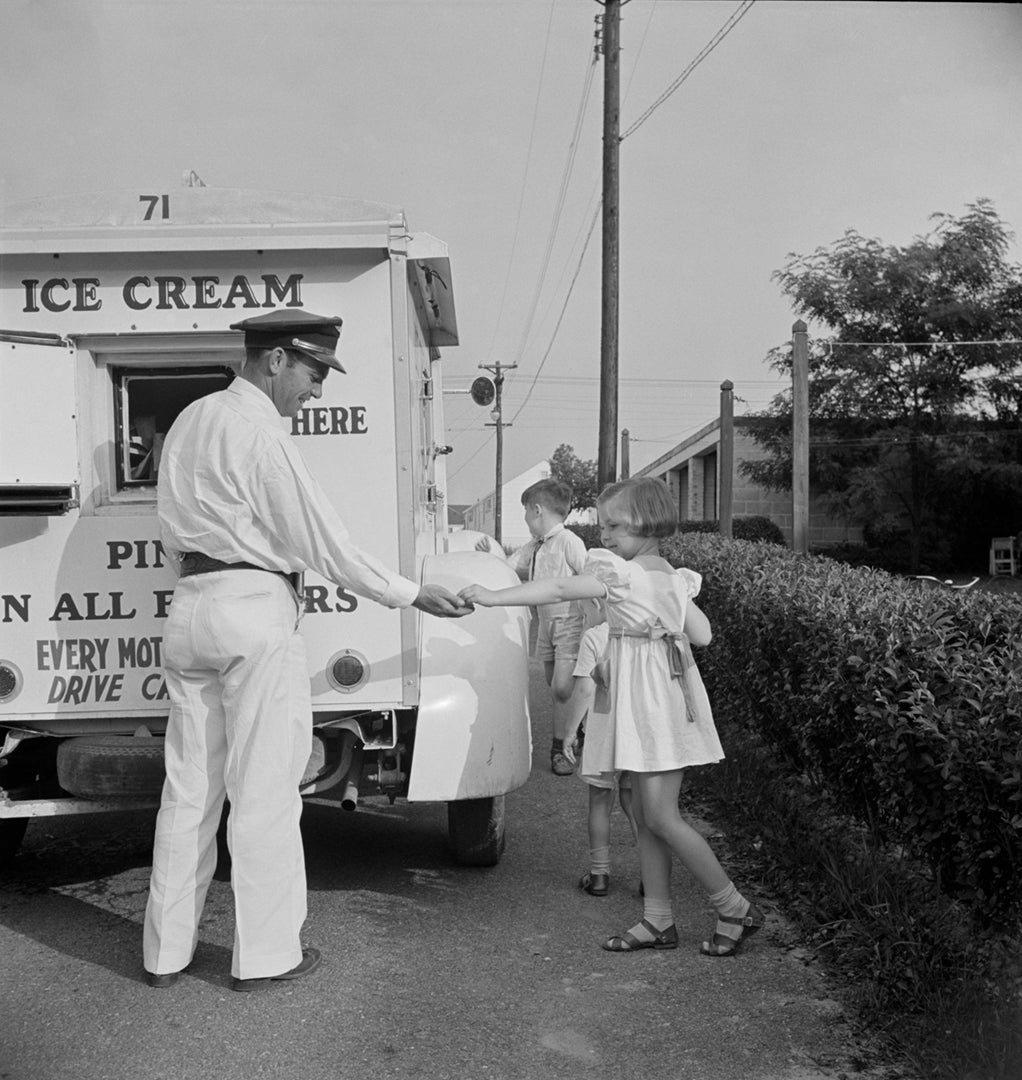
By 1923, white motorized vehicles equipped with insulated compartments were traveling residential streets, delivering ice cream bars directly to families. This distribution model was innovative in a country rapidly transformed by automobiles and expanding suburbs. The trucks were painted white to signal cleanliness and modern efficiency, and drivers wore crisp white uniforms resembling soda fountain attendants or even medical staff. In an era when food safety standards were evolving and refrigeration technology was still relatively new, appearance mattered. The truck had to look sanitary. The driver had to look trustworthy.
The sound of a mounted bell announced each arrival. It was simple and mechanical, not amplified or musical, but it carried down blocks. Children learned to recognize it instantly. Before the truck even came into view, anticipation built. The bell became a signal of possibility—a small daily event that punctuated summer afternoons. In time, that sound would become one of the most enduring auditory memories of mid-century American childhood.
Expansion in the Roaring Twenties
The 1920s proved fertile ground for growth. America was urbanizing and suburbanizing at the same time, and consumer culture was accelerating. Refrigeration improved, automobiles became more common, and convenience became a selling point in everyday life. Good Humor expanded beyond Ohio into major cities, including New York, where dense neighborhoods provided steady customer bases.
The company established standardized uniforms, route systems, and behavioral expectations. Drivers were trained not just to sell but to represent the brand. In many markets, background checks were required, and strict codes of conduct were enforced. The company understood that parents were the true decision-makers. Children might rush to the curb with coins in hand, but adults had to trust the man behind the service window. This emphasis on discipline and consistency differentiated Good Humor from later independent operators.
Ice Cream During Hard Times
When the Great Depression struck in 1929, countless businesses collapsed. Ice cream, however, proved surprisingly resilient. The Good Humor bar was inexpensive enough to qualify as an affordable indulgence. During periods of economic hardship, consumers often seek small comforts—items that offer pleasure without significant expense. A five-cent treat could still fit within tight budgets.
The truck’s continued presence in neighborhoods during the 1930s provided a modest distraction from widespread uncertainty. Ice cream had once been a parlor luxury, associated with special outings. Now it arrived at the curb. The democratization of indulgence helped sustain the business through one of the most difficult decades in American history.
War, Rationing, and Renewal
World War II introduced new complications. Sugar, dairy products, and gasoline were rationed, limiting production and distribution. Many drivers and factory workers entered military service. Yet ice cream retained symbolic value. It represented home, comfort, and normalcy. Efforts were made to provide frozen treats to American troops overseas when possible, reinforcing its association with morale.
After the war ended, economic growth returned rapidly. The Good Humor truck entered what many consider its golden era, benefiting from demographic and geographic shifts that perfectly suited its model.
The Suburban Golden Age
The 1950s marked the height of the Good Humor truck’s cultural presence. Suburban neighborhoods expanded across the country, filled with young families and children playing outdoors. Residential streets were quieter and more uniform. Disposable income increased. The Good Humor truck fit seamlessly into this environment.
Drivers followed predictable routes, arriving at roughly the same times each day during warm months. Children listened for the bell as part of their routine. The experience became communal. Several children might gather at once, comparing selections and counting change. The truck was not merely a vending vehicle; it was a neighborhood event.
Product offerings expanded to include creamsicles, strawberry bars, ice cream sandwiches, and other novelties. Refrigeration systems improved, allowing greater variety and reliability. Yet the visual identity remained consistent: white trucks, restrained branding, uniformed drivers. The Good Humor man represented order and corporate reliability in a rapidly changing consumer landscape.
Corporate Consolidation and Changing Markets
In 1960, Good Humor was acquired by Best Foods, Inc., reflecting a broader trend of consolidation in the American food industry. Over time, corporate restructuring placed the brand under the ownership of Unilever. As supermarkets expanded freezer capacity, consumers gained easier access to packaged ice cream bars for home storage. The need to wait for a neighborhood truck diminished.
At the same time, independent ice cream vendors became more common. These operators were often small entrepreneurs rather than corporate employees. Their trucks were colorful, their menus extensive, and their music amplified through loudspeakers. Instead of a simple bell, recorded jingles announced their arrival. The atmosphere shifted from disciplined uniformity to carnival-like spectacle. Municipal regulations governing street vending grew more complex, and operating costs increased. The structured Good Humor fleet gradually declined.
From Infrastructure to Icon
Even as the fleet diminished, the Good Humor truck embedded itself in American cultural memory. It appeared in films, television shows, and literature as shorthand for childhood summers. The image is instantly recognizable: a white truck turning onto a sunlit street, a uniformed driver leaning from the window, children gathering at the curb.
The truck symbolizes not merely ice cream but a particular version of mid-century neighborhood life—one characterized by shared public spaces, informal social trust, and seasonal ritual. Its decline parallels broader shifts in urban design, suburban growth, and changing patterns of consumption.
Design and Psychology
Early trucks were modified commercial vehicles with insulated storage compartments packed with ice. Later models incorporated mechanical refrigeration, improved safety features, and larger service windows. Yet even as mechanical systems evolved, the aesthetic remained restrained compared to later competitors. Good Humor relied less on spectacle and more on brand trust.
Psychologically, the model was precise. Scarcity created urgency; the truck’s brief presence encouraged impulse purchases. The bell built anticipation before the product was visible. Children were the primary customers, but parents were the gatekeepers. The uniform and white paint signaled reliability. Few mobile vending systems were so carefully calibrated.
Nostalgia and Revival
In the twenty-first century, the Good Humor brand continues primarily through packaged products sold in supermarkets. Periodic attempts have been made to revive branded trucks in select markets, often leaning heavily into nostalgia marketing. Meanwhile, gourmet food trucks have reframed mobile vending as artisanal and experimental rather than nostalgic.
Yet the Good Humor truck occupies a distinct cultural category. It represents simplicity rather than novelty, routine rather than experimentation. Its power lies in memory as much as in commerce.
A Vehicle of Ritual
Ask someone who grew up in the 1950s or 1960s about the Good Humor truck, and they often recall not the corporate history but the feeling: coins warmed in a small hand, pavement hot under bare feet, the metallic ring of the bell echoing down the block. That memory is remarkably durable.
The Good Humor truck was among the first large-scale branded food trucks in American history. It demonstrated that mobility could extend market reach long before franchised fast-food chains perfected standardized expansion. It brought a modest luxury directly to the curb and, in doing so, transformed ice cream into ritual.
The white trucks may be rarer today, but their legacy remains firmly embedded in American cultural history. View the Good Humor Photo.
Leave a comment
Comments will be approved before showing up.
Also in Time Capsule

Six New York Landmarks That Changed the Manhattan Skyline
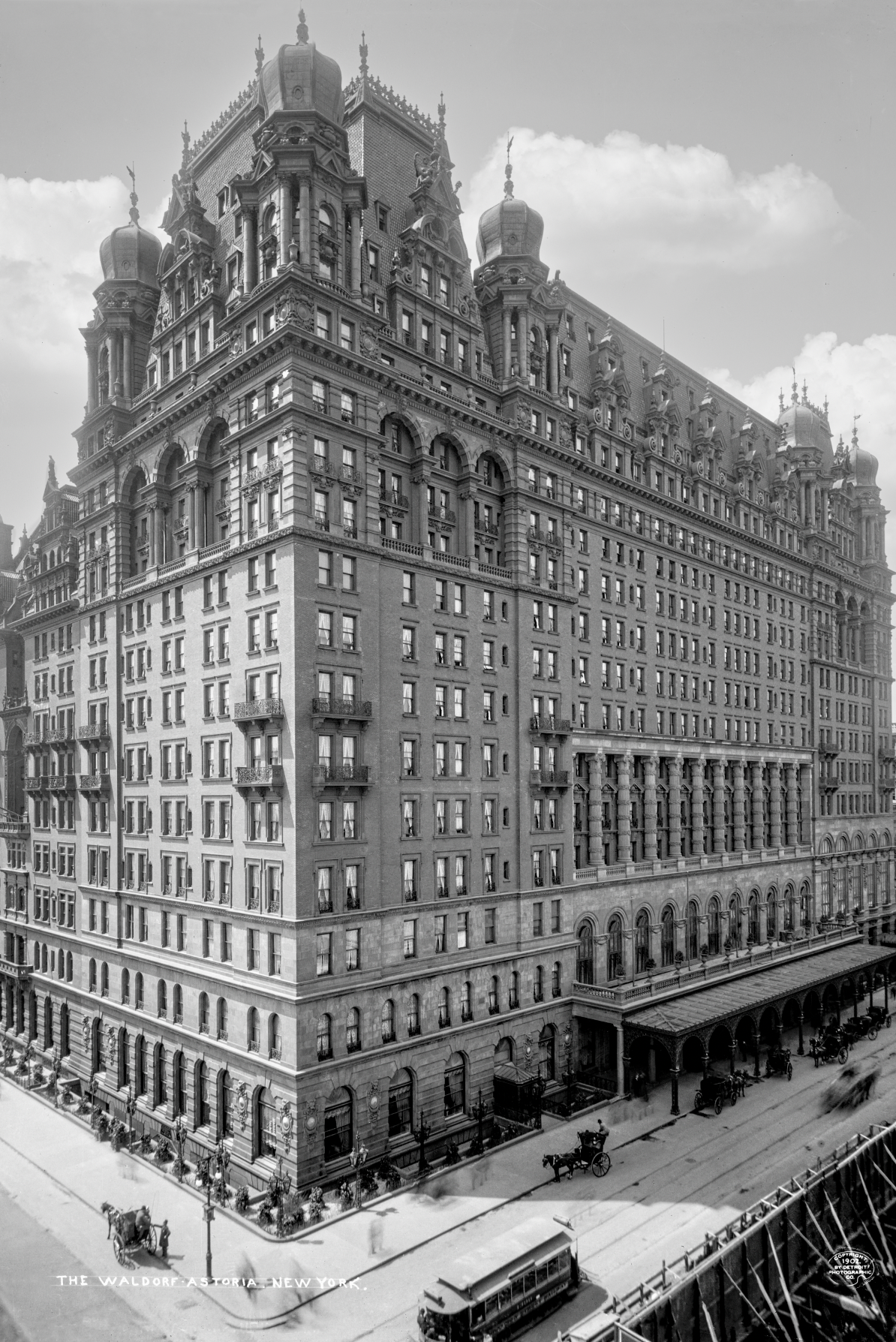
New York's skyline wasn't built overnight. Vintage photographs of Trinity Church, the Plaza, Waldorf-Astoria, Chrysler Building, Empire State Building and Rockefeller Center reveal how Manhattan grew from a city of church steeples and grand hotels into the skyscraper capital of the world.


The Old West Never Really Ended
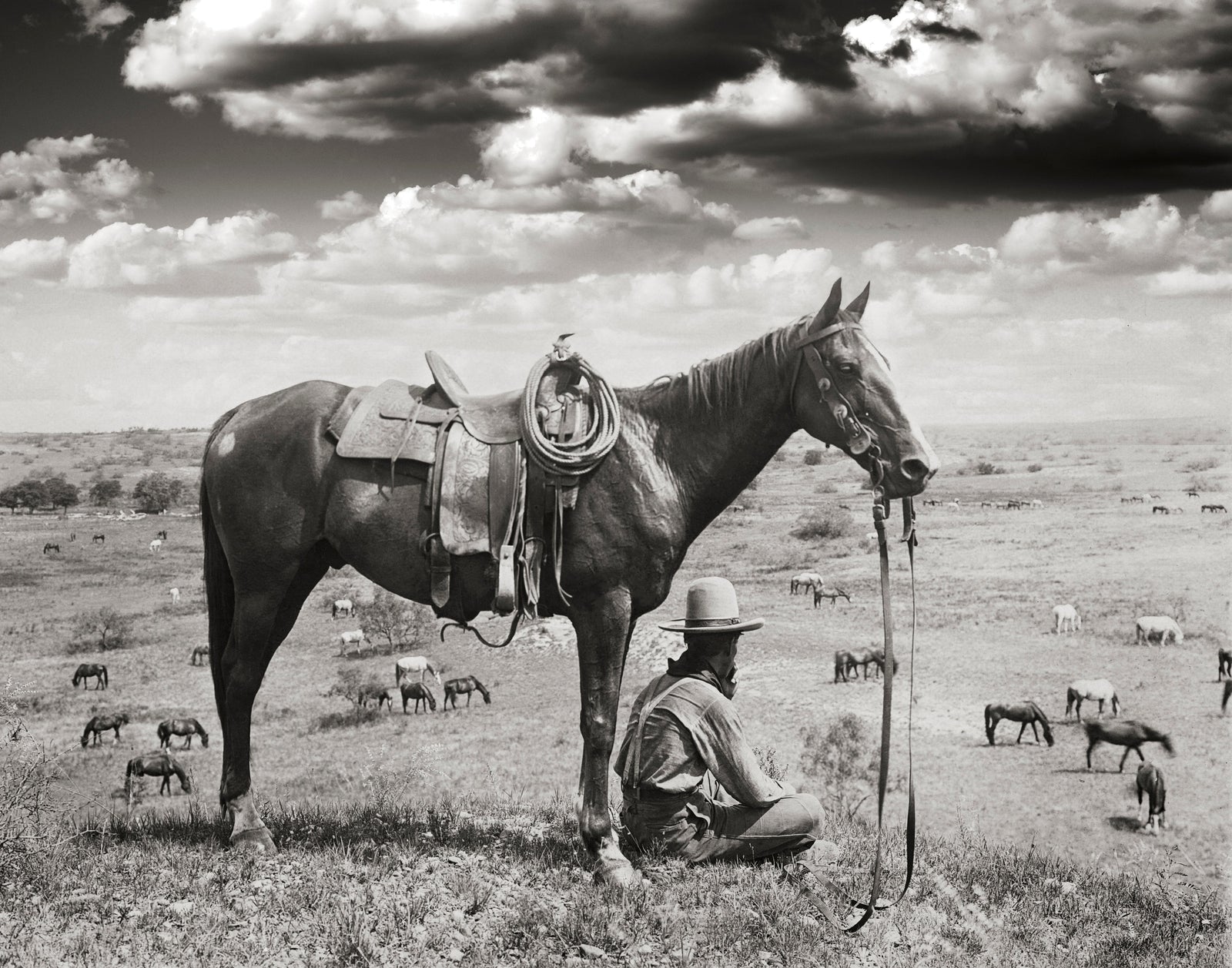
A cowboy on horseback overlooks the Dallas skyline in 1943—an image that seems to capture the Old West and modern America in a single frame. But the cowboy didn't disappear when the frontier closed. Discover how real working cowboys, rodeos, music and Hollywood carried the Old West into the 20th century.
Let customers speak for us
Gems
These short clips are gems. They are part of the history of music in America. Thank you for posting.
S. Kelley Chambers

Love the print and perfect decor for our n...
Love the print and perfect decor for our new apartment in Pittsburgh.
Chris P

5 stars review from Laura
5 stars review from Laura
Laura D

5 stars review from Geri
5 stars review from Geri
Geri L

5 stars review from Stephanie
5 stars review from Stephanie
Stephanie

5 stars review from Brookelynz
5 stars review from Brookelynz
Brookelynz
5 stars review from Deborah
5 stars review from Deborah
Deborah G

Spectacular!
Received as a gift and could not be happier with the quality of the print. Shipping container ensure this arrived in perfect condition.
John

5 stars review from Kayla
5 stars review from Kayla
Kayla G

5 stars review from Blondiee
5 stars review from Blondiee
Blondiee

5 stars review from April
5 stars review from April
April Y

5 stars review from Tracie
5 stars review from Tracie
Tracie C

Great quality and fast delivery!
Great quality and fast delivery!
Amanda C

5 stars review from Autumnrayne4
5 stars review from Autumnrayne4
Autumnrayne4

5 stars review from Traca
5 stars review from Traca
Traca B
