


Booker T. Washington: From Enslavement to National Leadership

Born Into Slavery
Few figures in American history embody the transformation from slavery to national leadership as powerfully as Booker T. Washington. Born into slavery in the American South and rising to become one of the most influential Black leaders of the late nineteenth and early twentieth centuries, Washington’s life reflects both the possibilities and the deep tensions of the post–Civil War United States.
Booker Taliaferro Washington was born in 1856 on a plantation in Franklin County, Virginia. His exact birth date was never recorded, a common reality for people born into slavery. His mother, Jane, was enslaved and worked as a cook on the plantation. Washington never knew his father, who was believed to have been a white man from a neighboring farm.
Life in slavery was marked by relentless labor and deprivation. As a young child, Washington worked long hours and had little exposure to formal education. Yet even in those early years he developed a deep desire to learn—a desire that would shape the rest of his life.
Freedom and the Pursuit of Education
The end of the Civil War in 1865 brought emancipation and a new beginning for Washington and millions of formerly enslaved people. His family moved to West Virginia, where Washington worked in salt furnaces and coal mines to help support the household.
Despite the exhausting labor, he remained determined to gain an education. When a school for Black children opened in the area, Washington attended whenever possible, often balancing work and study.
One of the defining moments of his youth came when he learned about the Hampton Institute in Virginia, an institution founded to educate formerly enslaved people. Determined to enroll, Washington traveled hundreds of miles—sometimes on foot—to reach the school.
When he arrived, he was exhausted, poorly dressed, and nearly penniless. According to his later recollections, he was asked to sweep a classroom as a test of his character and diligence. He cleaned it so thoroughly that the teacher allowed him to enroll.
Hampton Institute and a New Vision
At Hampton Institute, Washington encountered a philosophy of education that would shape his future work. The school emphasized industrial training, discipline, and practical skills alongside academic learning. Students were taught trades such as carpentry, agriculture, and printing, with the belief that economic independence was essential to long-term freedom.
Washington embraced this approach. He worked as a janitor to pay for his education and became one of the school’s most dedicated students. The founder of Hampton, Samuel Chapman Armstrong, became an important mentor and later recommended Washington for one of the most significant opportunities of his life.
Founding the Tuskegee Institute
In 1881, Washington was invited to Alabama to establish a new school for Black students in the town of Tuskegee. At just twenty-five years old, he accepted the challenge.
The institution that became the Tuskegee Institute began modestly. Classes were initially held in a small church building with few resources and little equipment. Washington and his students worked together to build the campus from the ground up.
Students constructed many of the buildings themselves, producing bricks, raising walls, and learning construction skills in the process. Washington believed that education should combine intellectual development with practical training that could help students earn a living.
Under his leadership, Tuskegee grew rapidly. Within a few decades it had become one of the most prominent educational institutions for African Americans in the United States. The school offered programs in agriculture, mechanical trades, teacher training, and domestic sciences.
A National Voice
As Tuskegee expanded, Washington’s reputation grew beyond Alabama. He became one of the most prominent Black leaders in the country, advising politicians, speaking at major events, and raising funds for education.
One of the most famous moments of his career occurred in 1895 at the Atlanta Cotton States and International Exposition. In what became known as the Atlanta Compromise speech, Washington addressed a largely white audience about the future of race relations in the South.
In the speech, he encouraged African Americans to focus on economic progress and vocational training while temporarily accepting segregation and political limitations. Washington argued that economic strength would eventually lead to greater respect and opportunity.
The speech was widely praised by white leaders and brought Washington national fame. Many saw him as a bridge between Black communities and the white political establishment.
Criticism and Debate
Washington’s approach, however, was controversial among other Black intellectuals and activists. Some believed his emphasis on gradual progress and accommodation to segregation conceded too much to discriminatory systems.
Among his most prominent critics was W. E. B. Du Bois. Du Bois argued that African Americans should demand full civil rights immediately, including voting rights and access to higher education.
The debate between Washington and Du Bois reflected broader tensions within the Black community about the best path forward after Reconstruction. Washington believed economic self-reliance was the foundation of long-term equality, while critics insisted that political rights and social justice could not be postponed.
Despite these disagreements, Washington continued to wield significant influence in American politics and philanthropy.
Building Networks and Opportunity
Washington worked tirelessly to raise funds for Black education. He built relationships with powerful industrialists and philanthropists, including Andrew Carnegie and Julius Rosenwald. Their support helped expand Tuskegee and other schools for African Americans throughout the South.
Washington also quietly supported legal challenges to discrimination and civil rights abuses, even while publicly emphasizing cooperation and economic progress. His leadership involved careful navigation of a deeply segregated society.
Under his guidance, Tuskegee became a center for agricultural research, teacher training, and industrial education. Graduates went on to establish schools and businesses across the South, spreading the influence of Washington’s educational philosophy.
Writing and Public Influence
Washington was also a prolific writer. His autobiography, Up From Slavery, published in 1901, became one of the most widely read accounts of African American life in the post-Civil War era. The book described his journey from enslavement to leadership and offered a message of perseverance and self-improvement.
Through his speeches, writings, and institutional leadership, Washington became one of the most recognized Black figures in America during his lifetime.
He advised presidents and spoke before large audiences across the country. Newspapers frequently reported his views on education, labor, and race relations.
Final Years and Legacy
Booker T. Washington continued leading Tuskegee until his death in 1915. By that time, the school had grown into a major institution with hundreds of students, numerous buildings, and national recognition.
Washington’s legacy remains complex and widely debated. Some historians view him as a pragmatic leader who worked within the constraints of his time to expand educational opportunities and economic advancement for African Americans. Others argue that his willingness to accommodate segregation slowed the push for civil rights.
Regardless of interpretation, Washington’s impact on American education and Black leadership was profound. The institution he built at Tuskegee continues to operate today as Tuskegee University.
A Life of Transformation
Booker T. Washington’s life spanned one of the most dramatic transitions in American history—from slavery to the early twentieth century. His journey from plantation laborer to national educator symbolized both the possibilities and the struggles of that era.
Through Tuskegee, his writings, and his leadership, Washington helped shape the educational landscape for generations of African Americans. He believed that education, discipline, and economic independence were tools capable of reshaping the future.
More than a century later, his story continues to provoke reflection about leadership, strategy, and the many paths people have pursued in the long struggle for equality in the United States. See Booker T. Washington's Portrait.
Leave a comment
Comments will be approved before showing up.
Also in Time Capsule


Six New York Landmarks That Changed the Manhattan Skyline
New York's skyline wasn't built overnight. Vintage photographs of Trinity Church, the Plaza, Waldorf-Astoria, Chrysler Building, Empire State Building and Rockefeller Center reveal how Manhattan grew from a city of church steeples and grand hotels into the skyscraper capital of the world.


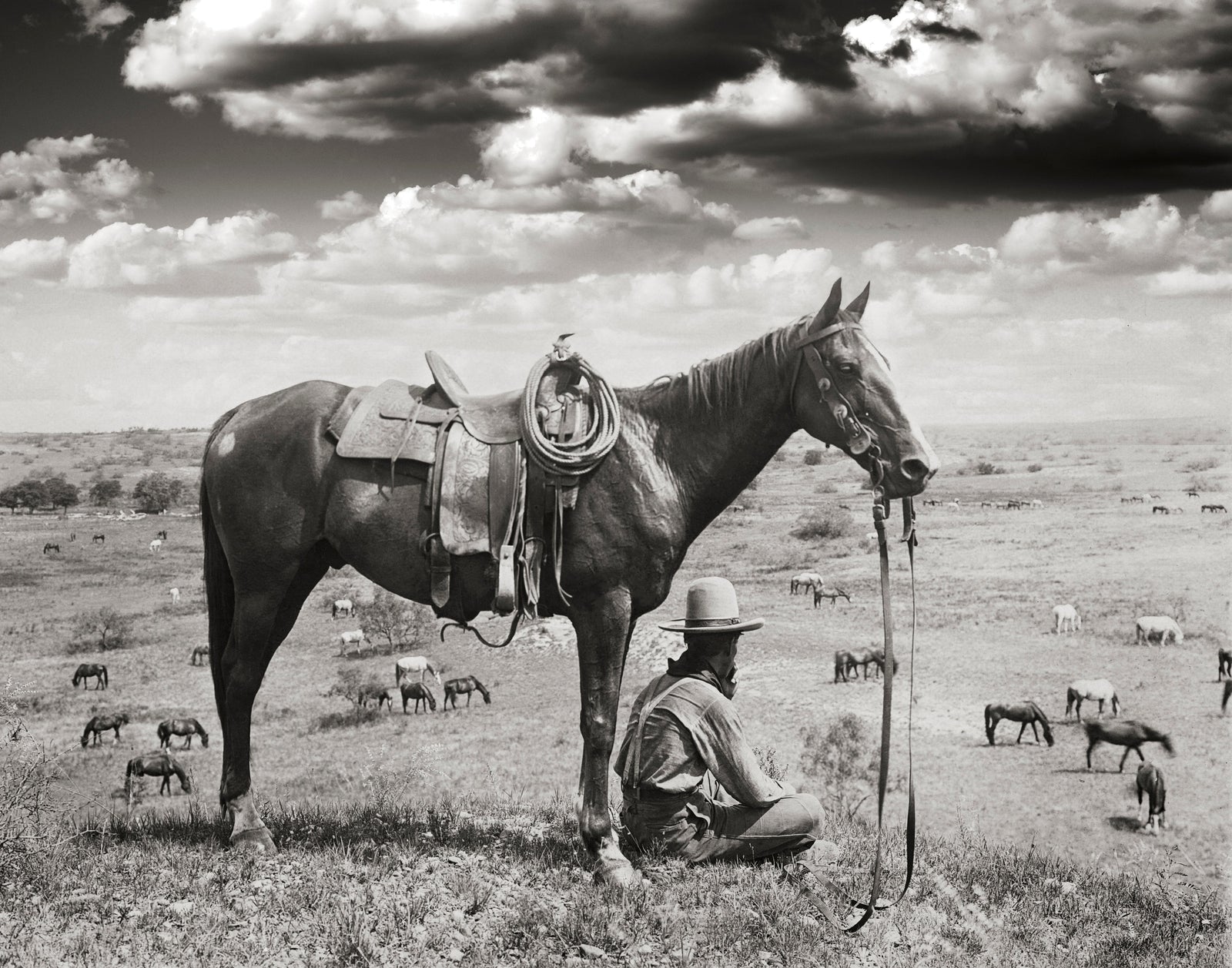

The Old West Never Really Ended
A cowboy on horseback overlooks the Dallas skyline in 1943—an image that seems to capture the Old West and modern America in a single frame. But the cowboy didn't disappear when the frontier closed. Discover how real working cowboys, rodeos, music and Hollywood carried the Old West into the 20th century.
Let customers speak for us
Gems
These short clips are gems. They are part of the history of music in America. Thank you for posting.
S. Kelley Chambers

Love the print and perfect decor for our n...
Love the print and perfect decor for our new apartment in Pittsburgh.
Chris P

5 stars review from Laura
5 stars review from Laura
Laura D

5 stars review from Geri
5 stars review from Geri
Geri L

5 stars review from Stephanie
5 stars review from Stephanie
Stephanie

5 stars review from Brookelynz
5 stars review from Brookelynz
Brookelynz
5 stars review from Deborah
5 stars review from Deborah
Deborah G

Spectacular!
Received as a gift and could not be happier with the quality of the print. Shipping container ensure this arrived in perfect condition.
John

5 stars review from Kayla
5 stars review from Kayla
Kayla G

5 stars review from Blondiee
5 stars review from Blondiee
Blondiee

5 stars review from April
5 stars review from April
April Y

5 stars review from Tracie
5 stars review from Tracie
Tracie C

Great quality and fast delivery!
Great quality and fast delivery!
Amanda C

5 stars review from Autumnrayne4
5 stars review from Autumnrayne4
Autumnrayne4

5 stars review from Traca
5 stars review from Traca
Traca B
