
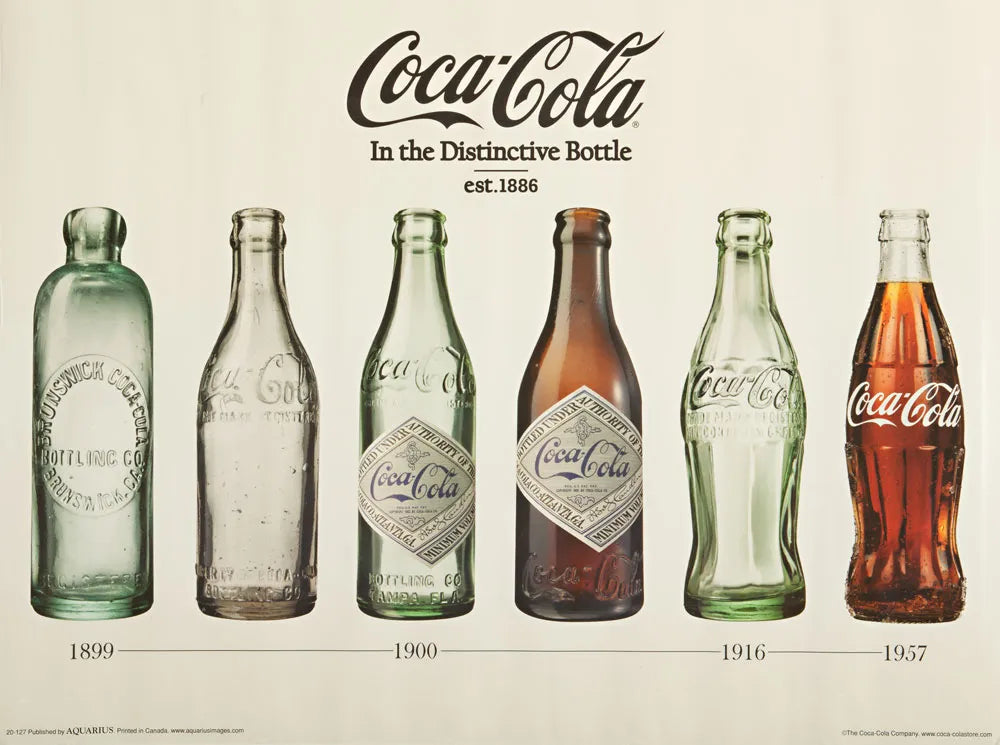

Coca-Cola: An In-Depth Look at the Drink that Captured the World
Introduction
Coca-Cola has not only quenched the thirst of billions but has also become a symbol of American culture, entrepreneurial brilliance, and ingenious marketing. The story of this iconic beverage spans over a century, filled with innovation, globalization, and the creation of a brand that transcends geographical and cultural boundaries. Below, we dive deep into each chapter of Coca-Cola's remarkable
history.
The Humble Beginnings: Dr. John Stith Pemberton's Tonic
Coca-Cola originated as a medicinal concoction created by Dr. John Stith Pemberton i
n 1886. The Atlanta-based pharmacist initially wanted to produce an over-the-counter cure to relieve headaches, fatigue, and morphine addiction, a personal struggle for him. The original mixture combined carbonated water with a syrup made from extracts of the coca leaf and kola nut, among other ingredients. Though it was initially sold as a 'patent medicine,' Coca-Cola's enjoyable taste quickly made it popular as a soda fountain drink at Jacobs' Pharmacy in Atlanta.
Asa Griggs Candler: The Marketing Pioneer
After Dr. Pemberton's death in 1888, the Coca-Cola formula and brand were acquired by Asa Griggs Candler, an Atlanta businessman, for a mere $2,300. Candler was the force that truly launched Coca-Cola into commercial success. His innovative promotional strategies ranged from distributing Coca-Cola coupons for free samples to investing in massive advertising campaigns, including wall murals and branded merchandise like clocks and calendars. He also expanded the distribution network, moving Coca-Cola beyond soda fountains and into bottled distribution. By the early 1900s, Coca-Cola had become a household name, thanks in large part to Candler's unyielding focus on brand visibility.

The Birth of the Iconic Bottle
With success came imitation, and soon the market was flooded with "Cola" drinks trying to mimic Coca-Cola's winning formula. This prompted the company to seek a distinctive, trademarked bottle design that could set Coca-Cola apart from its imitators. The Root Glass Company took on the challenge and, in 1915, came up with the unique "contour" design. Inspired by the coca bean's shape, this bottle was distinct enough to be recognized by touch alone and even in the dark. This iconic bottle would become one of the most recognized pieces of industrial design in the world.

World War II and Global Expansion
Coca-Cola had been making inroads into global markets since the early 20th century, but World War II accelerated this expansion. The company provided the beverage to U.S. military personnel stationed overseas, endearing the brand to soldiers and establishing it as an icon of American culture. Following the war, Coca-Cola seized the opportunity to set up bottling plants in several countries, facilitating rapid global distribution.
Becoming a Cultural Phenomenon
The post-war era saw Coca-Cola becoming more than just a beverage—it evolved into a cultural icon. Campaigns like "I'd Like to Buy the World a Coke" struck a chord with audiences, encapsulating sentiments of unity and global friendship. Over the years, Coca-Cola commercials featuring celebrities and musicians helped cement its status as a lifestyle brand, closely linked to youth, joy, and a carefree way of life.
Modern Times: Diversification and Social Responsibility
In the face of rising health concerns regarding sugar and obesity, Coca-Cola has diversified its product range to include Diet Coke, Coke Zero, and other non-cola beverages such as teas, juices, and mineral waters. The company has also taken significant steps towards sustainability, reducing plastic use and aiming for a more eco-friendly production cycle.
Coca-Cola now faces challenges from an increasingly health-conscious consumer base, as well as growing competition from a variety of beverage alternatives. Nevertheless, it remains a formidable player, using its historical strength in branding and marketing to adapt and evolve.
Leave a comment
Comments will be approved before showing up.
Also in Time Capsule



Dorothea Lange: The Photographer Who Made America Look at Itself
Dorothea Lange died in 1965, but her influence on photography and social awareness continues to resonate. Her work demonstrated that photographs could shape public understanding of major historical events. By focusing on individuals rather than abstract statistics, she transformed social issues into human stories.
Let customers speak for us
Love the print and perfect decor for our n...
Love the print and perfect decor for our new apartment in Pittsburgh.
Chris P

Pittsburgh, Pennsylvania, Mill District, Man Going To Work, 1940

5 stars review from Geri
5 stars review from Geri
Geri L

New England Fishing Schooner and Sailboat, 1907
5 stars review from Stephanie
5 stars review from Stephanie
Stephanie

Suffragettes Protesting, Women's March 1913 Program Cover
5 stars review from Deborah
5 stars review from Deborah
Deborah G

African American Girls Photo, St. Louis Missouri, 1940
Spectacular!
Received as a gift and could not be happier with the quality of the print. Shipping container ensure this arrived in perfect condition.
John

Pilgrim Monument, Provincetown, Barnstable County, MA, Summer, 1937
5 stars review from Kayla
5 stars review from Kayla
Kayla G

Four Messenger Girls, Western Union, Washington DC, 1925
5 stars review from Blondiee
5 stars review from Blondiee
Blondiee

Suffragettes On Their Way to Boston, Flanked by Men, Early 1900s
5 stars review from April
5 stars review from April
April Y

New York City, City Hall Subway Station, 1901
5 stars review from Tracie
5 stars review from Tracie
Tracie C

Las Vegas Motel Yucca and Little Chapel of the Flowers
Great quality and fast delivery!
Great quality and fast delivery!
Amanda C

Dallas Texas Skyline, Cowboy & Horse, Dallas Texas, 1943
5 stars review from Autumnrayne4
5 stars review from Autumnrayne4
Autumnrayne4

Painters on Brooklyn Bridge, Photo By Eugene de Salignac, NYC, 1914
5 stars review from Traca
5 stars review from Traca
Traca B

Shasta County, CA, "Eight Ball Pool Room," Photo, 1940s
I love it! It's beautiful! Thank you so mu...
I love it! It's beautiful! Thank you so much! Will definitely be ordering from this shop again!
Uuuhhhtash

Minneapolis Art, Foshay Tower Dedication, 1929