

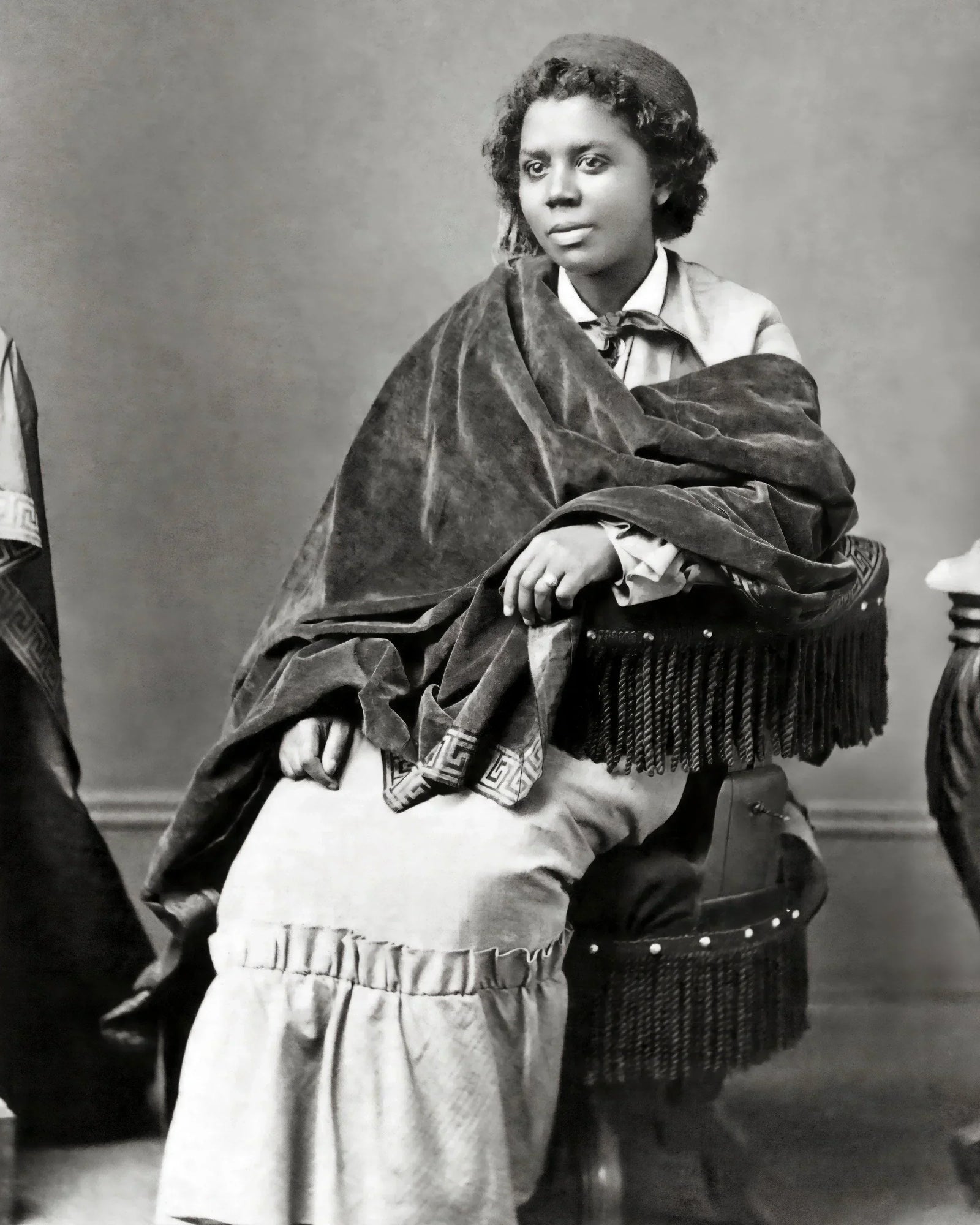

Edmonia Lewis: A Sculptor Who Carved Freedom in Marble
Edmonia Lewis (c. 1844–1907) was a pioneering American sculptor whose life and work defied the rigid boundaries of race, gender, and class in the 19th century. Born into a world that offered few opportunities—especially for a woman of African American and Native American descent—Lewis forged an international career and left behind a body of work that speaks powerfully about freedom, identity, and resilience.
Today, she is recognized as the first Black American sculptor to achieve international acclaim, yet during her lifetime she navigated extraordinary obstacles, from racism and sexism to false accusations and financial hardship. Her sculptures, many carved by her own hand in marble, remain lasting testaments to both her artistic skill and her determination to tell stories that were often ignored or suppressed.
Early Life and Identity
Edmonia Lewis was born around 1844 in New York State. Her father was of African descent, and her mother was Native American, often identified as Ojibwe (Chippewa). Orphaned at a young age, Lewis was raised by her maternal relatives, who traveled and lived independently, selling crafts and engaging in trade.
This early exposure to self-reliance and Indigenous culture would later influence her artistic themes. Unlike many artists of her era, Lewis did not distance herself from her heritage to gain acceptance. Instead, she embraced it—at times subtly, at times directly—through her subject matter.
Education and Injustice at Oberlin College
Lewis’s formal education began when her older half-brother helped finance her studies at Oberlin College in Ohio, one of the few institutions at the time that admitted women and Black students. She enrolled in the early 1860s, hoping to pursue a career in art or teaching.
However, her time at Oberlin was marked by racial hostility and injustice. In 1862, Lewis was falsely accused of poisoning two white female classmates. Though she was ultimately acquitted, she was brutally beaten by a mob while awaiting trial. Later, she faced additional accusations—this time of stealing art supplies—which further damaged her standing.
Despite being cleared of wrongdoing, Lewis was not allowed to complete her degree. The experience was devastating, but it also reinforced a lesson she would carry throughout her life: she would have to carve her own path, often without institutional support.
Boston and Early Success
After leaving Oberlin, Lewis moved to Boston, a center of abolitionist activity and artistic patronage. There, she studied under sculptor Edward Brackett and began creating portrait medallions and busts of prominent abolitionists, including figures such as John Brown and Colonel Robert Gould Shaw.
These works gained attention among antislavery supporters, helping Lewis earn both income and recognition. Her success in Boston proved that her talent could overcome social barriers—at least temporarily—and gave her the confidence to pursue sculpture on a larger scale.
Rome and Artistic Independence
Like many sculptors of her time, Lewis relocated to Rome, Italy, in the mid-1860s. Rome offered several advantages: access to high-quality marble, a supportive community of expatriate artists, and—perhaps most importantly—distance from the entrenched racism of the United States.
In Rome, Lewis joined a circle of women sculptors working in the Neoclassical tradition. Unlike some contemporaries who relied on assistants to carve their designs, Lewis insisted on carving her own marble. This was both a practical and political choice—proof that she possessed not just creative vision, but technical mastery.
She once remarked that she preferred sculpting in marble because “it was pure and white,” a statement often interpreted as both literal and symbolic, reflecting her complex relationship with race, perception, and artistic legitimacy.
Major Works and Themes
Lewis’s work often drew on themes of freedom, suffering, and moral strength. She blended classical forms with deeply political subject matter, creating sculptures that resonated with contemporary audiences while challenging prevailing narratives.
Forever Free (1867)
One of her most celebrated works, Forever Free depicts an African American man and woman after emancipation. The man stands upright, chains broken, while the woman kneels in prayer. Created shortly after the Civil War, the sculpture is both a celebration of liberation and a meditation on its fragility.
The Death of Cleopatra (1876)
Perhaps Lewis’s most ambitious work, this life-sized marble sculpture portrays Cleopatra at the moment of death. Rather than idealizing her subject, Lewis chose a raw, unromantic depiction—Cleopatra slumped, lifeless, yet dignified. The sculpture challenged Victorian sensibilities and stood out for its emotional realism.
Hiawatha and Minnehaha
Inspired by Henry Wadsworth Longfellow’s The Song of Hiawatha, these sculptures reflect Lewis’s engagement with Native American themes. While filtered through a popular literary lens, the works are notable for their tenderness and dignity, offering a counterpoint to the stereotypes common in 19th-century art.
Later Life and Disappearance from the Record
Despite her early success, Lewis struggled financially in her later years. Changing artistic tastes and declining patronage made it difficult to sustain her career. For decades, her final years were shrouded in mystery, with some historians believing she died in Rome.
More recent research suggests that Edmonia Lewis died in London in 1907, largely forgotten by the art world she had once impressed.
Rediscovery and Legacy
Like many women and artists of color, Lewis was marginalized in traditional art histories. It was not until the late 20th century that scholars began to seriously reassess her contributions. Today, her works are held in major institutions, including the Smithsonian American Art Museum and the Metropolitan Museum of Art.
Edmonia Lewis’s legacy is not only artistic but symbolic. She represents what is possible when talent, perseverance, and conviction intersect—even in the face of systemic exclusion.
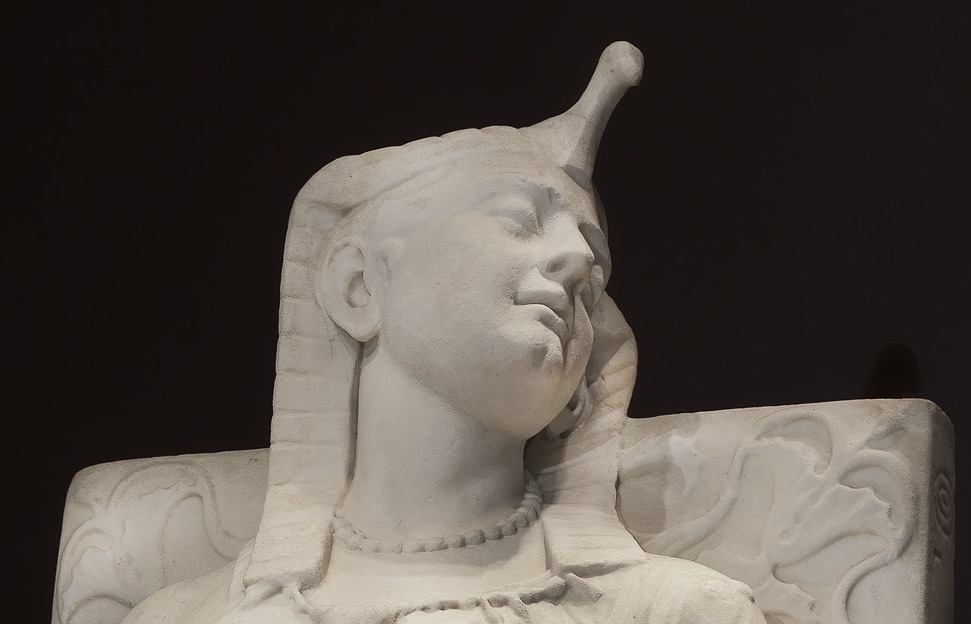
Why Edmonia Lewis Still Matters
Edmonia Lewis carved stories into stone at a time when people like her were rarely allowed to tell their own. Her sculptures confront themes of freedom, identity, and human dignity—issues that remain deeply relevant today.
She did not simply survive the 19th century art world; she challenged it. And though recognition came late, her work now stands as a powerful reminder that history is richer—and truer—when we look beyond the narrow canon and listen to voices long overlooked.
Purchase her portrait here.
Leave a comment
Comments will be approved before showing up.
Also in Time Capsule


Six New York Landmarks That Changed the Manhattan Skyline
New York's skyline wasn't built overnight. Vintage photographs of Trinity Church, the Plaza, Waldorf-Astoria, Chrysler Building, Empire State Building and Rockefeller Center reveal how Manhattan grew from a city of church steeples and grand hotels into the skyscraper capital of the world.

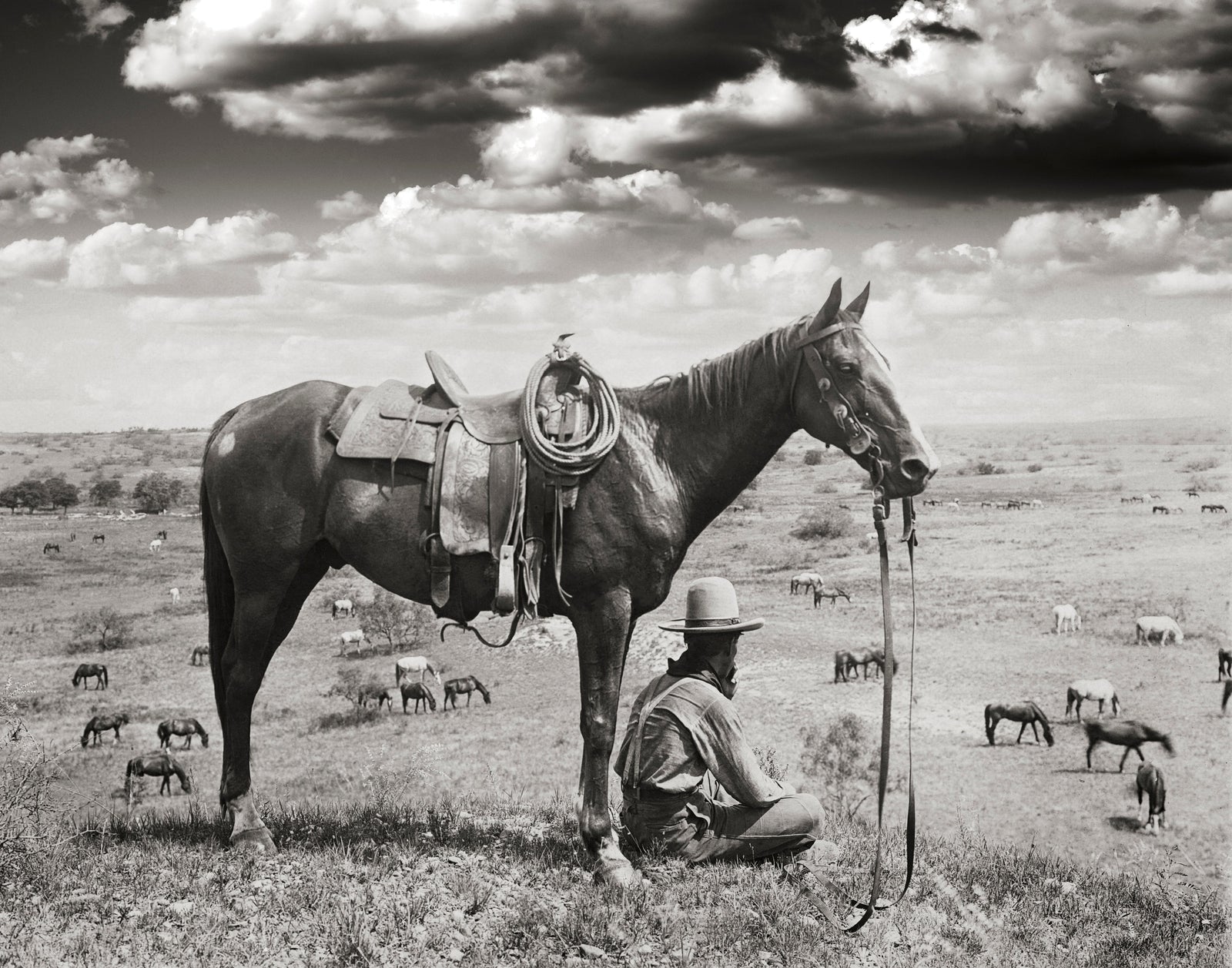

The Old West Never Really Ended
A cowboy on horseback overlooks the Dallas skyline in 1943—an image that seems to capture the Old West and modern America in a single frame. But the cowboy didn't disappear when the frontier closed. Discover how real working cowboys, rodeos, music and Hollywood carried the Old West into the 20th century.
Let customers speak for us
Gems
These short clips are gems. They are part of the history of music in America. Thank you for posting.
S. Kelley Chambers

Love the print and perfect decor for our n...
Love the print and perfect decor for our new apartment in Pittsburgh.
Chris P

5 stars review from Laura
5 stars review from Laura
Laura D

5 stars review from Geri
5 stars review from Geri
Geri L

5 stars review from Stephanie
5 stars review from Stephanie
Stephanie

5 stars review from Brookelynz
5 stars review from Brookelynz
Brookelynz
5 stars review from Deborah
5 stars review from Deborah
Deborah G

Spectacular!
Received as a gift and could not be happier with the quality of the print. Shipping container ensure this arrived in perfect condition.
John

5 stars review from Kayla
5 stars review from Kayla
Kayla G

5 stars review from Blondiee
5 stars review from Blondiee
Blondiee

5 stars review from April
5 stars review from April
April Y

5 stars review from Tracie
5 stars review from Tracie
Tracie C

Great quality and fast delivery!
Great quality and fast delivery!
Amanda C

5 stars review from Autumnrayne4
5 stars review from Autumnrayne4
Autumnrayne4

5 stars review from Traca
5 stars review from Traca
Traca B
