

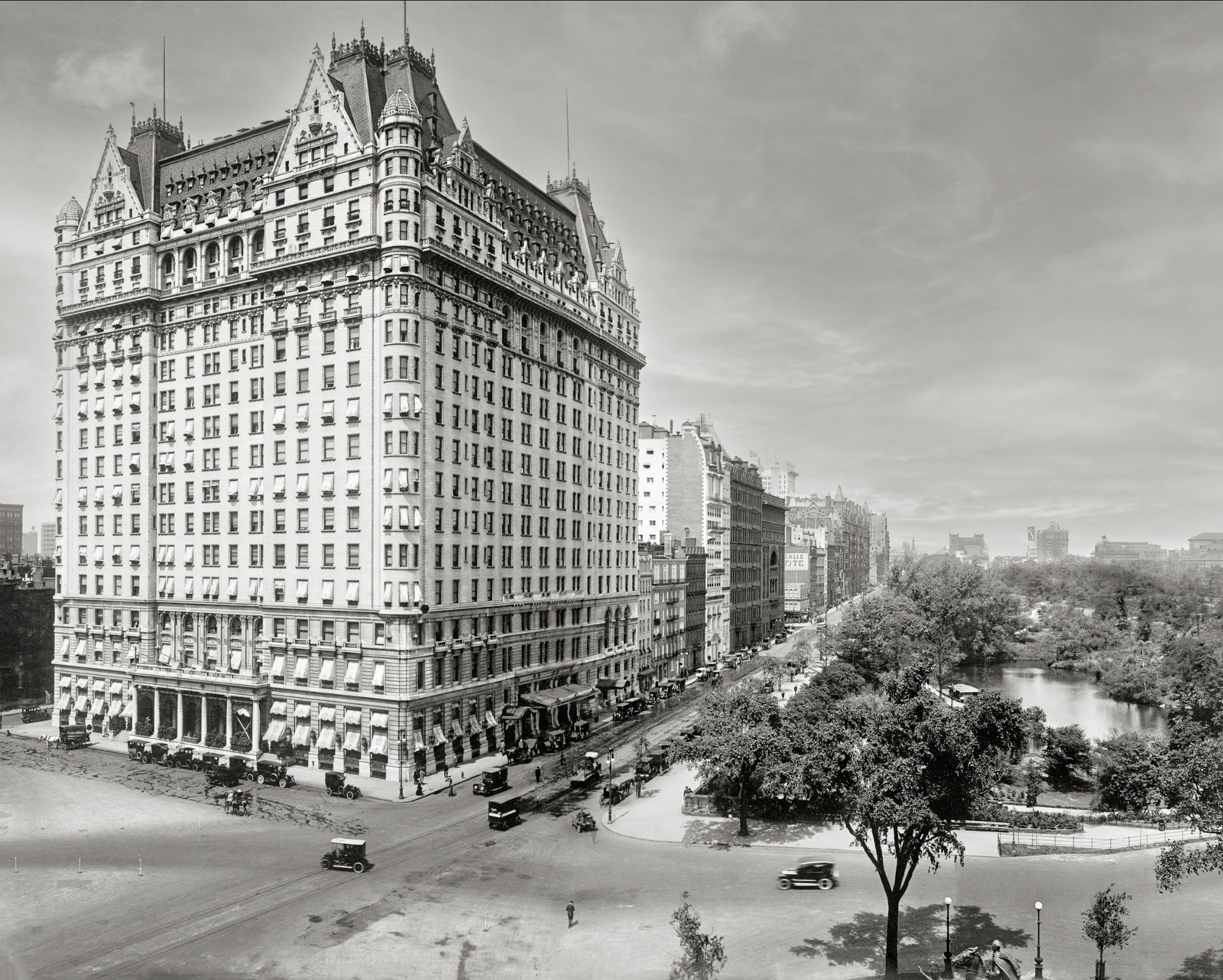

The Plaza Hotel: A Century at the Corner of Fifth Avenue
Few buildings in New York carry the symbolic weight of The Plaza Hotel. Standing at the southeast corner of Central Park, at Fifth Avenue and 59th Street, it has served as backdrop to Gilded Age ambition, Jazz Age glamour, mid-century power politics, late 20th-century financial drama, and 21st-century reinvention. More than a hotel, the Plaza has functioned as a cultural stage—where wealth performed, deals were struck, celebrities lingered, and fiction blurred with reality.
Its story begins not in 1907, when the present structure opened, but in the feverish expansion of Manhattan at the turn of the 20th century.
The First Plaza and the Transformation of Fifth Avenue
Before the current Plaza Hotel rose, an earlier hotel of the same name occupied the site beginning in 1890. That original Plaza was modest compared to what would follow. At the time, Midtown Manhattan was still evolving. Fifth Avenue north of 42nd Street had only recently begun transforming into an elite residential corridor lined with mansions.
But New York was growing upward and outward. The extension of Central Park, improvements in transit, and rising land values made the corner of Fifth Avenue and 59th Street prime real estate. Developers saw opportunity.
By the early 1900s, the original hotel no longer reflected the scale of the city’s ambitions. It was demolished in 1905 to make way for something far grander.
Building the New Plaza (1905–1907)
The current Plaza Hotel opened in 1907. It was developed by Henry J. Hardenbergh’s firm—the same architect responsible for New York’s Waldorf-Astoria and Dakota apartment building. Hardenbergh designed the Plaza in a French Renaissance château style, with ornate limestone façades, mansard roofs, and elaborate detailing that signaled European elegance transplanted onto American soil.
At 19 stories high, the Plaza was among the most luxurious hotels of its era. Construction reportedly cost over $12 million—an enormous sum at the time.
Its interior spaces reflected opulence. Marble floors, gilded ceilings, grand staircases, and expansive ballrooms made it not merely a place to sleep but a venue for spectacle.
The Palm Court, with its stained-glass ceiling, quickly became synonymous with afternoon tea and refined society gatherings. The Grand Ballroom would host banquets, weddings, and political events for decades.
The Plaza was not simply accommodating travelers. It was shaping New York’s identity as a global capital.
The Gilded Age and Early 20th-Century Prestige
In the years following its opening, the Plaza became a gathering place for industrial magnates, European aristocrats, and rising American elites. It reflected the concentration of wealth in the early 20th century—a period often described as the Gilded Age’s final flourish.
Families who had built fortunes in railroads, steel, and finance dined and entertained at the Plaza. Foreign dignitaries chose it as their New York residence. The hotel’s proximity to Central Park and Fifth Avenue shopping reinforced its prestige.
It also functioned as a residential hotel. Long-term guests occupied suites for months or years, blurring the line between hotel and private mansion.
New York’s social calendar frequently revolved around events hosted within its walls. Charity balls, debutante receptions, and diplomatic dinners unfolded beneath crystal chandeliers.
The Plaza was not just observing society. It was staging it.
The Jazz Age and Cultural Icon
The 1920s solidified the Plaza’s cultural mythos.
The hotel appeared in literature, most famously in works by F. Scott Fitzgerald. In The Great Gatsby, Fitzgerald referenced the Plaza as a setting for confrontation and revelation—cementing its association with glamour, excess, and emotional drama.
The Jazz Age transformed Manhattan nightlife. Speakeasies thrived despite Prohibition. The Plaza, while refined, did not remain isolated from the era’s shifting moods. Its ballrooms hosted lively celebrations. The hotel became a stage where old money and new money intersected.
Hollywood also embraced the Plaza. Film crews and stars frequented the property, reinforcing its role as a backdrop to romance and sophistication.
By the late 1920s, the Plaza was no longer just a hotel. It was an emblem of New York aspiration.
The Great Depression and Resilience
The economic collapse of 1929 reshaped Manhattan. Luxury hotels struggled as tourism declined and fortunes evaporated.
Yet the Plaza endured.
Part of its survival lay in diversification. Long-term residents provided steady income. Events and gatherings continued, albeit more subdued. The hotel’s reputation gave it resilience; prestige carried value even in hardship.
Ownership shifted several times during the mid-20th century, reflecting the broader volatility of the hospitality industry. But the building itself remained intact and central to Midtown life.
Its architecture—solid limestone and steel—proved durable. Its brand, equally so.
Postwar Manhattan and Changing Luxury
After World War II, New York entered a new phase. Corporate power expanded. International travel increased. The Plaza adapted.
By the 1950s and 1960s, it hosted political leaders, business conventions, and celebrities. Its ballrooms became settings for press conferences and diplomatic receptions.
Yet the nature of luxury was evolving. Newer hotels introduced modernist design, streamlined aesthetics, and updated amenities. The Plaza’s old-world grandeur risked appearing dated.
Still, nostalgia became part of its charm. Visitors did not come for minimalism. They came for tradition.
The hotel remained a filming location, further embedding itself in American cultural memory. Its appearance in films like Home Alone 2 decades later would reintroduce it to new generations.
Landmark Status and Preservation
In 1969, New York City designated the Plaza Hotel as a landmark. This decision proved critical.
Landmark status protected the exterior from demolition or radical alteration. At a time when historic buildings were routinely replaced by glass towers, the Plaza’s survival was not guaranteed.
The designation affirmed that the hotel was more than real estate—it was part of the city’s architectural heritage.
Preservation did not prevent change inside the building. But it ensured the iconic façade would endure.
The Late 20th Century: Ownership and Financial Drama
The Plaza’s later history is marked by high-profile ownership changes.
In the 1980s, real estate investor Donald Trump purchased the hotel, reportedly calling it a “masterpiece” and declaring he was buying it for emotional reasons as much as financial ones. The acquisition was emblematic of the decade’s leveraged real estate boom.
However, the hotel proved expensive to maintain. Financial pressures mounted, and Trump eventually ceded control as part of debt restructuring in the early 1990s.
Subsequent ownership groups sought to modernize operations while preserving prestige. The hospitality industry had become more competitive, and maintaining profitability in a historic structure posed challenges.
The Plaza’s identity was increasingly intertwined with branding rather than solely architecture.
Conversion and Controversy (2000s)
In 2005, the Plaza closed for a major renovation. The redevelopment plan included converting a significant portion of the building into private condominiums while retaining hotel operations in a smaller section.
This decision generated controversy. Critics argued that the conversion diluted the hotel’s public character. Supporters claimed it ensured financial sustainability.
When the Plaza reopened in 2008, it had been transformed. Luxury residences occupied former hotel floors. Public spaces were restored and updated. The Palm Court reopened with renewed elegance.
The hybrid model—part hotel, part private residence—reflected broader trends in high-end urban real estate.
The Plaza was no longer solely a hotel. It had become a vertical community.
The 21st Century: Global Ownership and Modern Identity
Ownership passed to international investors in the 2010s. The hotel became part of global hospitality portfolios, reflecting the internationalization of luxury real estate.
The brand remained strong. Weddings, galas, and high-profile events continued. Tourists visited simply to walk through the lobby or take photographs outside.
Technology and modern amenities were integrated discreetly. Climate control, digital booking systems, and updated infrastructure coexisted with chandeliers and carved moldings. The Plaza positioned itself as both heritage and contemporary luxury. That balance is delicate. Too much modernization erodes identity. Too little risks obsolescence. So far, the Plaza has managed to walk that line.
Cultural Memory and Fictional Life
The Plaza’s role in fiction deepened its myth.
Beyond Fitzgerald, it appears in Eloise stories by Kay Thompson, where a precocious child lives in the hotel’s upper floors. The character of Eloise became inseparable from the Plaza’s playful side.
Film and television repeatedly use the Plaza as shorthand for wealth and romance. Its façade communicates status instantly.
Few buildings achieve that level of narrative presence.
Crisis and Continuity
Like all hospitality businesses, the Plaza faced challenges during economic downturns and global crises. The COVID-19 pandemic in 2020 severely disrupted tourism and hotel operations worldwide.
The Plaza temporarily closed before reopening with health protocols in place.
Its survival through another major disruption reinforced a pattern established over more than a century: adaptation without surrendering core identity.
The Plaza Today
Today, the Plaza stands as both functioning hotel and historic monument.
Guests can still take tea in the Palm Court. Weddings still fill the Grand Ballroom. Residents occupy private condominiums overlooking Central Park.
Fifth Avenue’s skyline has grown taller around it. Glass towers loom nearby. Luxury retail lines the avenue, yet the Plaza’s limestone façade remains unmistakable.
It has witnessed the rise of automobiles, the advent of aviation, two world wars, financial collapses, cultural revolutions, and digital transformation. Few buildings remain so continuously woven into urban life.
What the Plaza Represents
The Plaza Hotel represents layered American aspiration.
It began as an expression of Gilded Age wealth. It became a Jazz Age symbol of romance. It weathered Depression and war. It adapted to corporate Manhattan. It survived speculative real estate cycles. It transitioned into a hybrid of hospitality and private residence.
At every stage, it reflected the economic and cultural priorities of its era. Its endurance is not accidental. It rests on three pillars:
Architecture strong enough to command preservation.
Brand identity powerful enough to attract global attention.
Location so strategic it cannot be ignored.
Standing at the edge of Central Park, the Plaza anchors Manhattan’s imagination. It is not the tallest building. It is not the newest. It is not the most technologically advanced, but it carries memory. And in a city defined by reinvention, memory is rare currency.
From its 1907 opening to its current role in 21st-century luxury culture, the Plaza Hotel remains more than a structure. It is a stage upon which more than a century of New York’s drama has unfolded—and continues to unfold, one gala, one guest, one generation at a time.
Leave a comment
Comments will be approved before showing up.
Also in Time Capsule
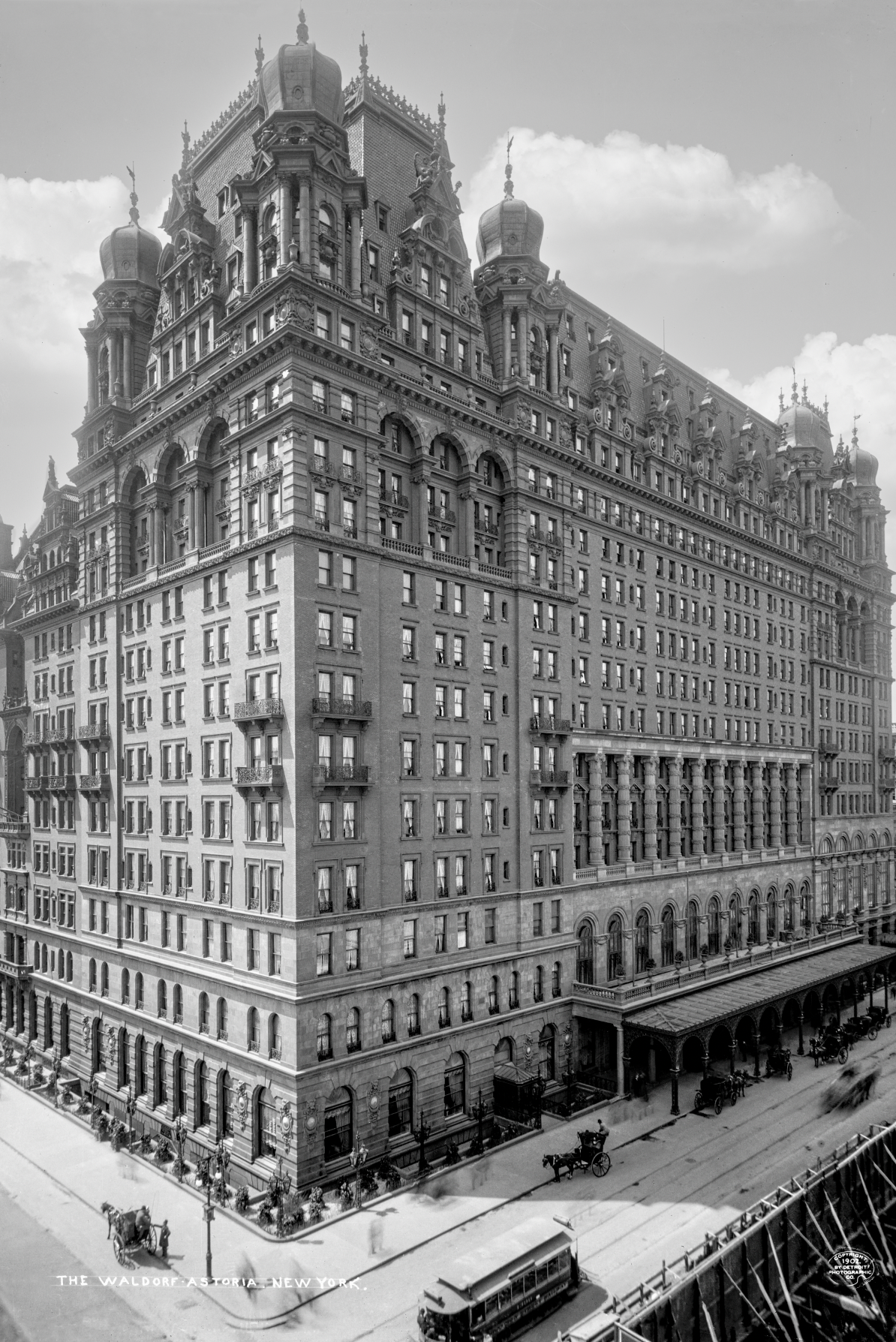

Six New York Landmarks That Changed the Manhattan Skyline
New York's skyline wasn't built overnight. Vintage photographs of Trinity Church, the Plaza, Waldorf-Astoria, Chrysler Building, Empire State Building and Rockefeller Center reveal how Manhattan grew from a city of church steeples and grand hotels into the skyscraper capital of the world.

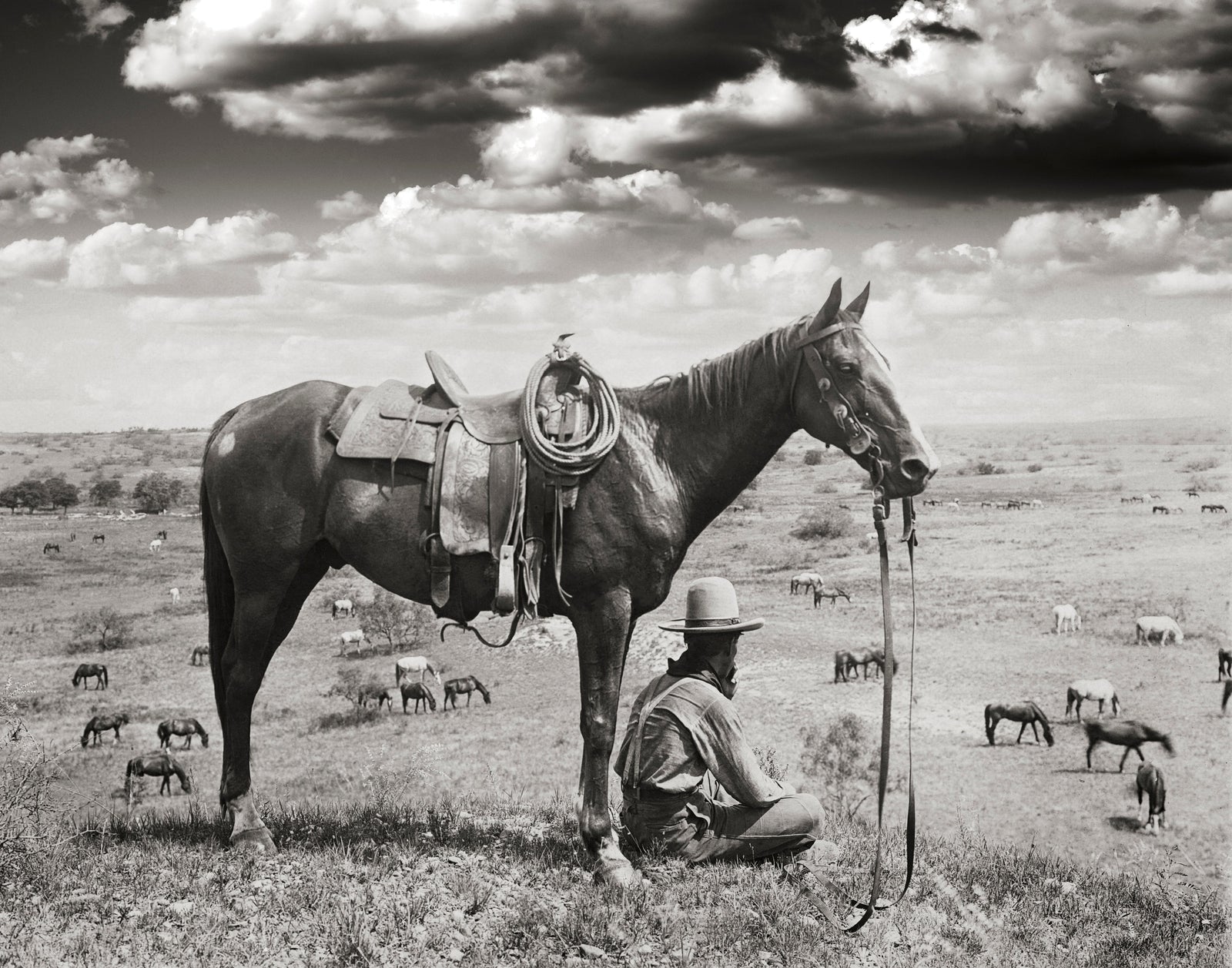

The Old West Never Really Ended
A cowboy on horseback overlooks the Dallas skyline in 1943—an image that seems to capture the Old West and modern America in a single frame. But the cowboy didn't disappear when the frontier closed. Discover how real working cowboys, rodeos, music and Hollywood carried the Old West into the 20th century.
Let customers speak for us
Gems
These short clips are gems. They are part of the history of music in America. Thank you for posting.
S. Kelley Chambers

Love the print and perfect decor for our n...
Love the print and perfect decor for our new apartment in Pittsburgh.
Chris P

5 stars review from Laura
5 stars review from Laura
Laura D

5 stars review from Geri
5 stars review from Geri
Geri L

5 stars review from Stephanie
5 stars review from Stephanie
Stephanie

5 stars review from Brookelynz
5 stars review from Brookelynz
Brookelynz
5 stars review from Deborah
5 stars review from Deborah
Deborah G

Spectacular!
Received as a gift and could not be happier with the quality of the print. Shipping container ensure this arrived in perfect condition.
John

5 stars review from Kayla
5 stars review from Kayla
Kayla G

5 stars review from Blondiee
5 stars review from Blondiee
Blondiee

5 stars review from April
5 stars review from April
April Y

5 stars review from Tracie
5 stars review from Tracie
Tracie C

Great quality and fast delivery!
Great quality and fast delivery!
Amanda C

5 stars review from Autumnrayne4
5 stars review from Autumnrayne4
Autumnrayne4

5 stars review from Traca
5 stars review from Traca
Traca B
