

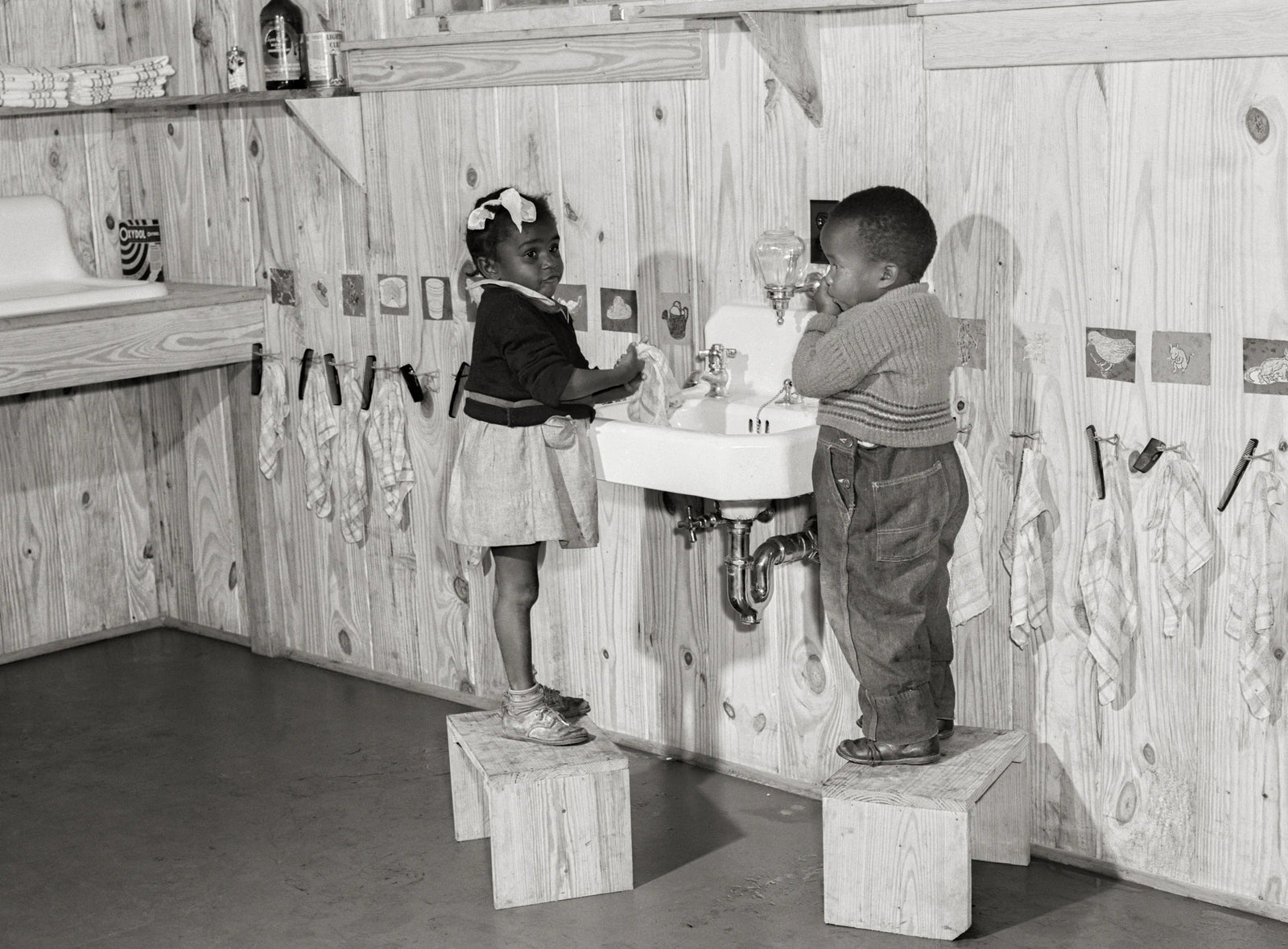

Tin Roofs in the Everglades: Okeechobee, Florida Migratory Labor Camp
A Federal Camp in the Fields of the Everglades
In the late 1930s, amid the vast agricultural lands south of Lake Okeechobee, the federal government established the Okeechobee Migratory Labor Camp in Belle Glade, Florida. The camp was part of a New Deal effort to confront the grinding poverty and unstable housing conditions faced by seasonal farmworkers across the United States. Belle Glade sat in the heart of what would become one of the nation’s most productive winter vegetable and sugar-growing regions. Crops demanded labor in waves, and laborers—many of them migrants—arrived in waves as well.

The camp was administered by the Farm Security Administration (FSA), the successor to earlier New Deal relief programs focused on rural America. Created in 1937, the FSA sought not only to stabilize farm production but to address the human cost of agricultural labor systems that relied on transient workers living in substandard conditions. Across the country, the agency developed a network of migratory labor camps intended to provide safe, sanitary housing and basic services. Okeechobee was one of Florida’s key examples.
The Agricultural Context of Belle Glade
The story of the camp cannot be separated from the land around it. The Everglades Agricultural Area, made arable through massive drainage projects in the early twentieth century, became a powerhouse of vegetable and sugar production. Crops such as beans, tomatoes, celery, and later sugarcane required intense seasonal labor. Growers needed a dependable workforce; workers needed income, even if it was sporadic and poorly paid.
Before federal intervention, migrant workers in the region often lived in makeshift shacks, tents, or overcrowded private labor camps run by growers. Sanitation was limited. Clean water was not guaranteed. Disease spread easily. Families moved from state to state following crop cycles, rarely finding stability. The federal camps were designed as a corrective to these conditions—at least in theory.

Design and Daily Life
By 1940, the Okeechobee camp consisted of rows of small, standardized housing units, some constructed of metal. The structures were simple and utilitarian. They were not luxurious, but they offered screened windows, raised floors, access to latrines, and potable water. The camp included community buildings and services such as a day nursery for children, which was particularly significant given that many migrant mothers worked long hours in the fields.
The FSA emphasized order and hygiene. Residents paid modest rent and were expected to adhere to camp regulations. In return, they received housing that met minimum health standards. Medical services, vaccination programs, and sanitation inspections were part of the federal approach. The camp functioned as a small, tightly managed community within a larger agricultural system that remained economically harsh.
One of the most important visual records of the camp comes from Marion Post Wolcott, who photographed the site in 1940 and 1941 as part of the FSA’s documentary program. Her images show families sitting outside metal dwellings, children gathered in nursery rooms, and workers at rest between shifts. These photographs were not casual snapshots. They were part of a deliberate federal effort to document rural America and to justify New Deal policies to the broader public.
Segregation in a Federal Program
The Okeechobee camp also reflected the racial realities of the Jim Crow South. Federal migratory camps in Belle Glade were segregated. The Okeechobee camp primarily housed Black migrant workers, while a separate facility, often referred to as the Osceola camp, housed white workers. Segregation was not incidental; it was built into the structure of public life in Florida at the time, and federal programs operating in the South typically conformed to local racial norms.
Black workers in Belle Glade included African Americans from other Southern states as well as migrants from the Caribbean. Their labor was central to the region’s agricultural success, yet wages remained low and opportunities limited. The federal camp system may have improved housing conditions relative to private camps, but it did not dismantle the underlying economic inequities.

War, Transition, and Continuing Struggles
During World War II, labor shortages intensified as many men entered military service. Agricultural production became even more critical to national supply chains. Federal oversight of labor camps evolved, and after the war the Farm Security Administration was reorganized and eventually dissolved. Its functions were absorbed into successor agencies, including the Farmers Home Administration.
The Okeechobee Migratory Labor Camp did not erase the systemic poverty of Belle Glade. In fact, the region would later draw national attention for its stark inequalities. In 1960, journalist Edward R. Murrow’s CBS documentary “Harvest of Shame” exposed the living and working conditions of migrant farmworkers in America, including those in Florida. Belle Glade was cited as an example of a community where the people harvesting the nation’s food often struggled to feed their own families.
Legacy
Today, the Okeechobee Migratory Labor Camp stands as part of a larger historical narrative about labor, race, and federal intervention in the American South. It represents a moment when the federal government attempted to impose minimum standards of dignity within a deeply unequal agricultural system. The camp improved sanitation and offered a measure of stability to some families. At the same time, it operated within the confines of segregation and did not fundamentally alter the economic vulnerabilities of migrant labor.
The surviving photographs and archival records give the camp an enduring presence in the historical record. They remind us that behind every crate of vegetables or bundle of sugarcane was a family living in a small metal dwelling at the edge of the Everglades, navigating seasonal work, racial division, and uncertain futures.
The history of the Okeechobee Migratory Labor Camp is not simply about housing. It is about how a nation confronted—partially and imperfectly—the human cost of feeding itself.
You can find a photo of children at the camp here.
Leave a comment
Comments will be approved before showing up.
Also in Time Capsule


Six New York Landmarks That Changed the Manhattan Skyline
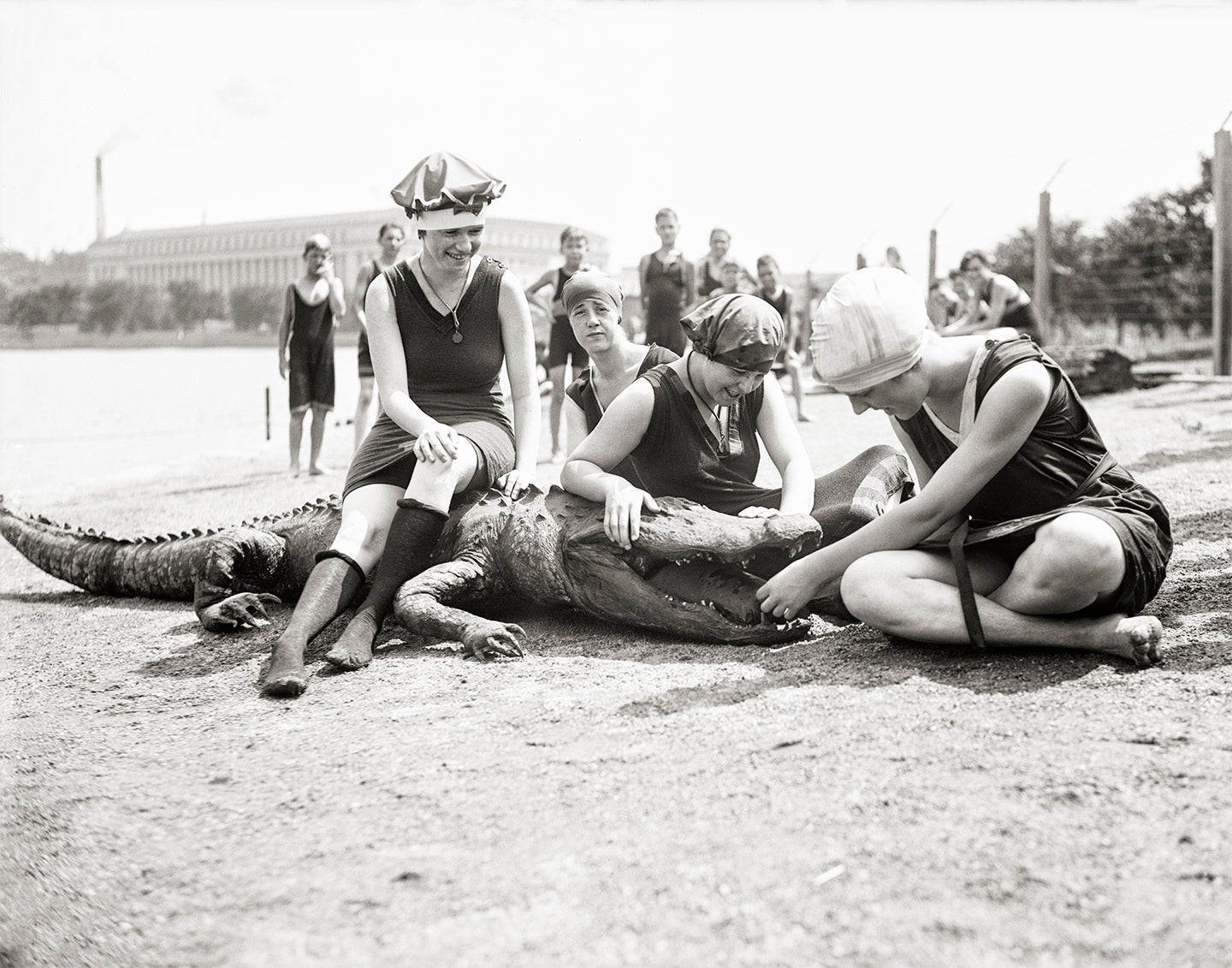
New York's skyline wasn't built overnight. Vintage photographs of Trinity Church, the Plaza, Waldorf-Astoria, Chrysler Building, Empire State Building and Rockefeller Center reveal how Manhattan grew from a city of church steeples and grand hotels into the skyscraper capital of the world.


The Old West Never Really Ended
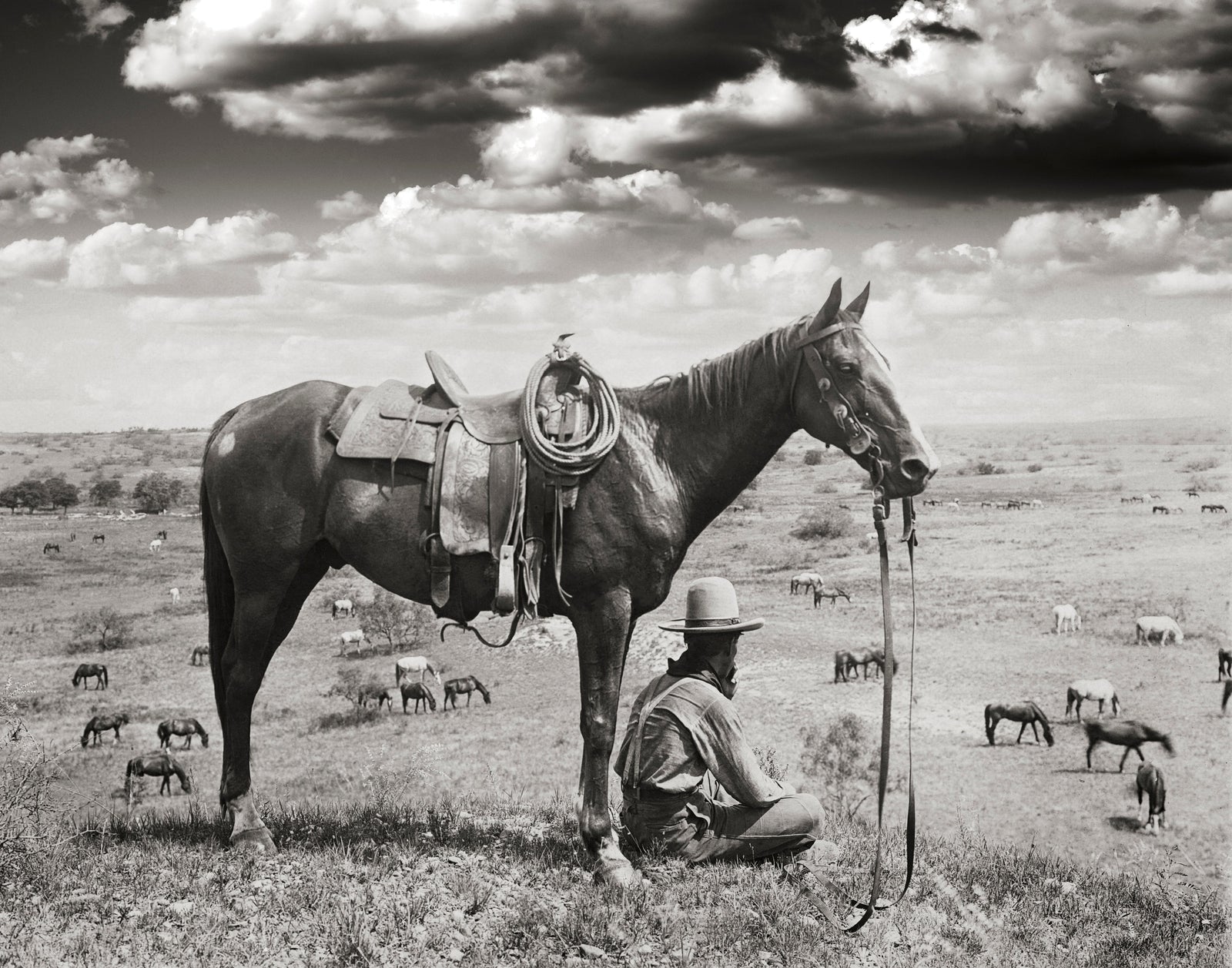
A cowboy on horseback overlooks the Dallas skyline in 1943—an image that seems to capture the Old West and modern America in a single frame. But the cowboy didn't disappear when the frontier closed. Discover how real working cowboys, rodeos, music and Hollywood carried the Old West into the 20th century.
Let customers speak for us
Gems
These short clips are gems. They are part of the history of music in America. Thank you for posting.
S. Kelley Chambers

Love the print and perfect decor for our n...
Love the print and perfect decor for our new apartment in Pittsburgh.
Chris P

5 stars review from Laura
5 stars review from Laura
Laura D

5 stars review from Geri
5 stars review from Geri
Geri L

5 stars review from Stephanie
5 stars review from Stephanie
Stephanie

5 stars review from Brookelynz
5 stars review from Brookelynz
Brookelynz
5 stars review from Deborah
5 stars review from Deborah
Deborah G

Spectacular!
Received as a gift and could not be happier with the quality of the print. Shipping container ensure this arrived in perfect condition.
John

5 stars review from Kayla
5 stars review from Kayla
Kayla G

5 stars review from Blondiee
5 stars review from Blondiee
Blondiee

5 stars review from April
5 stars review from April
April Y

5 stars review from Tracie
5 stars review from Tracie
Tracie C

Great quality and fast delivery!
Great quality and fast delivery!
Amanda C

5 stars review from Autumnrayne4
5 stars review from Autumnrayne4
Autumnrayne4

5 stars review from Traca
5 stars review from Traca
Traca B
