

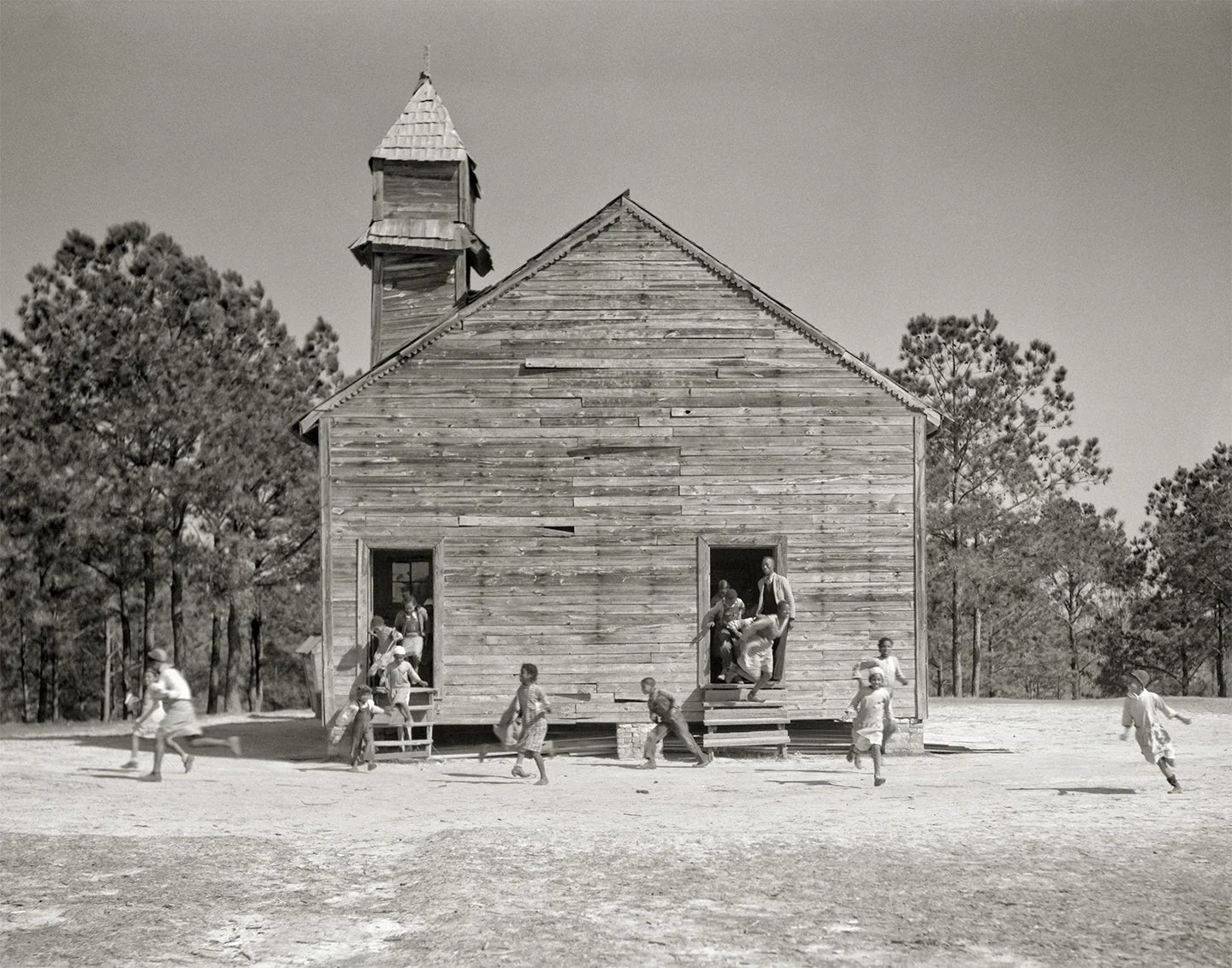

Isolation and Ownership in Gee’s Bend (aka Boykin) Alabama
Isolation in the Black Belt
In the late 1930s and early 1940s, Gee’s Bend—officially known as Boykin, Alabama—was one of the most isolated rural communities in the American South. Located in a deep bend of the Alabama River in Wilcox County, it was geographically cut off from major roads and economic centers. The river functioned both as a boundary and a barrier. Travel in and out of the area was difficult, and during periods when ferry service stopped, residents were effectively stranded.
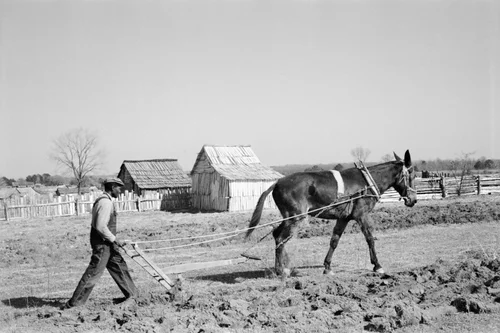
The population was overwhelmingly African American, descended largely from enslaved people who had worked the Pettway plantation before the Civil War. By the 1930s, most families in Gee’s Bend were tenant farmers or sharecroppers. They farmed cotton, corn, and vegetables on land still owned by white landlords. Poverty was widespread, and the Great Depression only deepened the hardship.
The New Deal Arrives
The turning point came with the arrival of the federal government under the New Deal. In 1937, the Farm Security Administration began surveying Gee’s Bend as part of its broader mission to combat rural poverty. The region’s extreme isolation and entrenched poverty made it a focus of federal attention.
The FSA eventually purchased thousands of acres of land from white landowners and began resettling Black tenant families onto that land. Instead of sharecropping, selected families were allowed to buy small farms on long-term, low-interest loans. This was radical in the Deep South. For generations, Black farmers had been locked into exploitative systems that kept them landless. Ownership—even partial ownership—represented stability and a measure of autonomy.
New homes were built. They were modest but sturdier than many of the original cabins. Wells were dug. Sanitation improved. The federal presence did not eliminate poverty, but it interrupted the cycle of total dependency on plantation landlords.
Life and Work in the Bend
Despite federal involvement, daily life remained physically demanding. Families worked their own plots, growing food crops alongside cotton. Most homes had no electricity. Running water was rare. Transportation was limited to dirt roads and river crossings. Schools were underfunded but deeply valued within the community.
Isolation shaped culture. Because residents were not heavily exposed to outside markets, many traditional practices survived. Families made what they needed. Clothing was sewn from feed sacks. Quilts were pieced together from worn garments and work clothes. These quilts—bold, improvisational, and geometrically powerful—were practical objects in the 1930s and 1940s, not yet recognized as fine art. They would not gain national attention until decades later, when the Gee's Bend quilters became internationally known.
At the time, quilting was simply part of survival. Patterns were often invented rather than copied from commercial templates. The aesthetic was rooted in necessity, memory, and community tradition.
Federal Documentation and Attention
Gee’s Bend also became one of the most photographed rural Black communities of the New Deal era. Photographers working under the FSA documented life in the Bend as part of a national effort to illustrate poverty and justify reform programs. Images from the period show families on porches, children standing barefoot in yards, farmers behind mule-drawn plows, and modest wooden homes against open fields.
These photographs were not accidental art. They were policy tools. The federal government wanted the American public to see the conditions that New Deal programs were trying to address. Gee’s Bend became a symbol of both rural deprivation and federal intervention.
War Years and Continued Hardship
When World War II began, the dynamics shifted again. Some men left for military service or wartime labor. Agricultural demands changed. Yet Gee’s Bend remained largely isolated. Mechanization in Southern agriculture would not fully reshape the region until later decades.
The New Deal reforms improved land access for some families, but they did not fully integrate the community into the broader Southern economy. Racial segregation, voter suppression, and systemic inequality continued to define life in Wilcox County.
A Community Holding Its Ground
By the early 1940s, Gee’s Bend had transformed in one crucial way: a number of Black families owned land in a region where land ownership had long been denied to them. That ownership anchored generations. It also preserved a community structure that might otherwise have dissolved under economic pressure.
The late 1930s and early 1940s were not a golden age in Gee’s Bend. Poverty persisted. Isolation endured. But it was a period when federal intervention briefly aligned with local resilience, allowing a deeply rooted Black farming community to survive on its own terms.
That survival—more than anything—shaped what Gee’s Bend would become in the decades that followed.
See the Schoolhouse photo in Gees Bend, Alabama here.
1 Response
Leave a comment
Comments will be approved before showing up.
Also in Time Capsule


Six New York Landmarks That Changed the Manhattan Skyline
New York's skyline wasn't built overnight. Vintage photographs of Trinity Church, the Plaza, Waldorf-Astoria, Chrysler Building, Empire State Building and Rockefeller Center reveal how Manhattan grew from a city of church steeples and grand hotels into the skyscraper capital of the world.


The Old West Never Really Ended
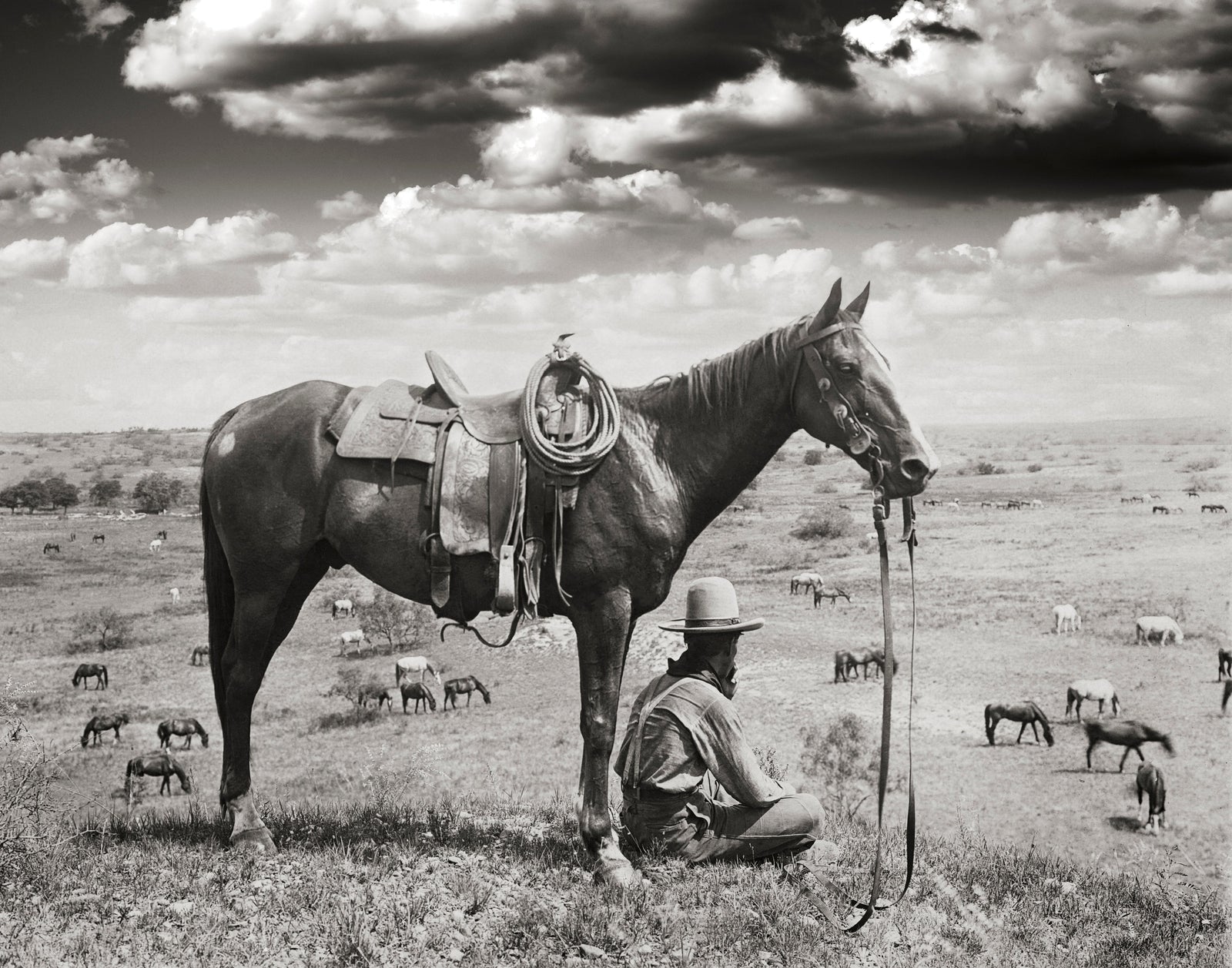
A cowboy on horseback overlooks the Dallas skyline in 1943—an image that seems to capture the Old West and modern America in a single frame. But the cowboy didn't disappear when the frontier closed. Discover how real working cowboys, rodeos, music and Hollywood carried the Old West into the 20th century.
Let customers speak for us
Gems
These short clips are gems. They are part of the history of music in America. Thank you for posting.
S. Kelley Chambers

Love the print and perfect decor for our n...
Love the print and perfect decor for our new apartment in Pittsburgh.
Chris P

5 stars review from Laura
5 stars review from Laura
Laura D

5 stars review from Geri
5 stars review from Geri
Geri L

5 stars review from Stephanie
5 stars review from Stephanie
Stephanie

5 stars review from Brookelynz
5 stars review from Brookelynz
Brookelynz
5 stars review from Deborah
5 stars review from Deborah
Deborah G

Spectacular!
Received as a gift and could not be happier with the quality of the print. Shipping container ensure this arrived in perfect condition.
John

5 stars review from Kayla
5 stars review from Kayla
Kayla G

5 stars review from Blondiee
5 stars review from Blondiee
Blondiee

5 stars review from April
5 stars review from April
April Y

5 stars review from Tracie
5 stars review from Tracie
Tracie C

Great quality and fast delivery!
Great quality and fast delivery!
Amanda C

5 stars review from Autumnrayne4
5 stars review from Autumnrayne4
Autumnrayne4

5 stars review from Traca
5 stars review from Traca
Traca B

Horace Purifoy
October 02, 2026
I visited Gees Bend approximately 18 years ago and was fascinated with the beautiful quilts, including those that were in the making. However, i was a bit disappointed with the continued levels of isolation. I think the whole Island should be a living museum show casing the plight of African American history. Just a thought!