

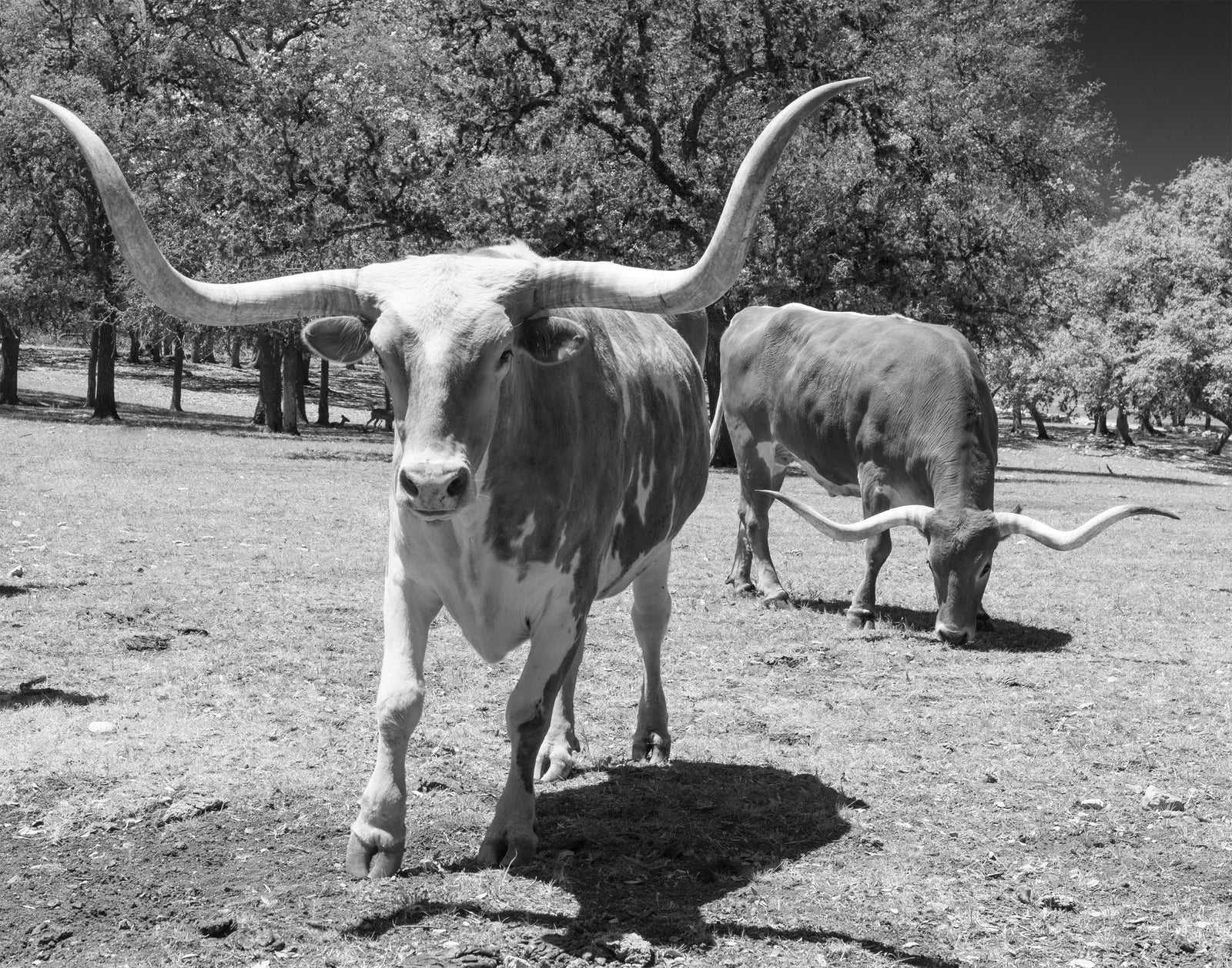

The History of the Texas Longhorn
Spanish Origins in the 1500s
The story of the Texas Longhorn begins long before Texas was Texas.
In the early 1500s, Spanish explorers brought Iberian cattle to the Americas. These cattle, hardy and adaptable, were left to roam in what is now Mexico and the American Southwest. Over generations, they survived drought, predators, floods, and harsh terrain with little human management.
Natural selection shaped them into something distinct: lean, disease-resistant, and capable of walking long distances. Their most striking feature — horns that could span six feet or more from tip to tip — became their defining trait.
By the time Anglo settlers arrived in Texas in the 1800s, vast herds of these feral cattle were roaming freely.
The Open Range and the Cattle Boom
After the Civil War ended in 1865, Texas was full of cattle but short on cash. Beef prices were low in the South but high in northern states, where industrial cities were growing rapidly.
This imbalance sparked the great cattle drives.
Texas cowboys gathered Longhorns and drove them hundreds of miles north along routes like the Chisholm Trail to railheads in Kansas. From there, cattle were shipped east to markets in Chicago and beyond.
The Longhorn was perfect for this job. It could survive on sparse grass, endure brutal weather, and defend itself from predators. Other breeds might have failed on those long drives. The Longhorn thrived.
Between the late 1860s and 1880s, millions of cattle were moved north in one of the largest livestock migrations in history. The Longhorn became a symbol of the American West.
Ranching Empires and the Closing of the Frontier
As barbed wire spread across Texas in the 1880s, the era of the open range began to end. Large ranches emerged, including operations like King Ranch, which became one of the most famous ranches in the world.
Ranchers began crossbreeding Longhorns with British breeds such as Hereford and Angus. These newer breeds produced more marbled beef and higher yields, which were more profitable for commercial markets.
As a result, pure Texas Longhorn numbers declined sharply by the early 20th century. By the 1920s, the breed was close to disappearing.
Preservation and Revival
A small group of ranchers and historians recognized the Longhorn’s cultural importance. In the 1920s, the U.S. government helped preserve remaining herds by establishing a refuge in Oklahoma. Texas ranchers also began maintaining purebred lines.
The Longhorn was no longer the dominant commercial beef animal, but it survived as a heritage breed.
Today, the Texas Longhorn is valued for more than just beef production. It represents resilience, independence, and the mythology of the American cowboy.
A Cultural Symbol of Texas
The Longhorn’s image is now deeply tied to Texas identity. It appears on state imagery, ranch brands, and sports logos. It symbolizes toughness and frontier endurance.
The animal’s physical traits tell its story: long legs built for distance, sweeping horns shaped by environment, and a hide that comes in countless color patterns. Each reflects centuries of adaptation without pampering.
The Texas Longhorn is not just livestock. It is a living artifact of Spanish colonization, frontier economics, post–Civil War expansion, and modern preservation efforts.
Its history mirrors Texas itself — shaped by survival, reinvention, and scale.
See more Longhorn photos here.
Leave a comment
Comments will be approved before showing up.
Also in Time Capsule


Six New York Landmarks That Changed the Manhattan Skyline
New York's skyline wasn't built overnight. Vintage photographs of Trinity Church, the Plaza, Waldorf-Astoria, Chrysler Building, Empire State Building and Rockefeller Center reveal how Manhattan grew from a city of church steeples and grand hotels into the skyscraper capital of the world.


The Old West Never Really Ended
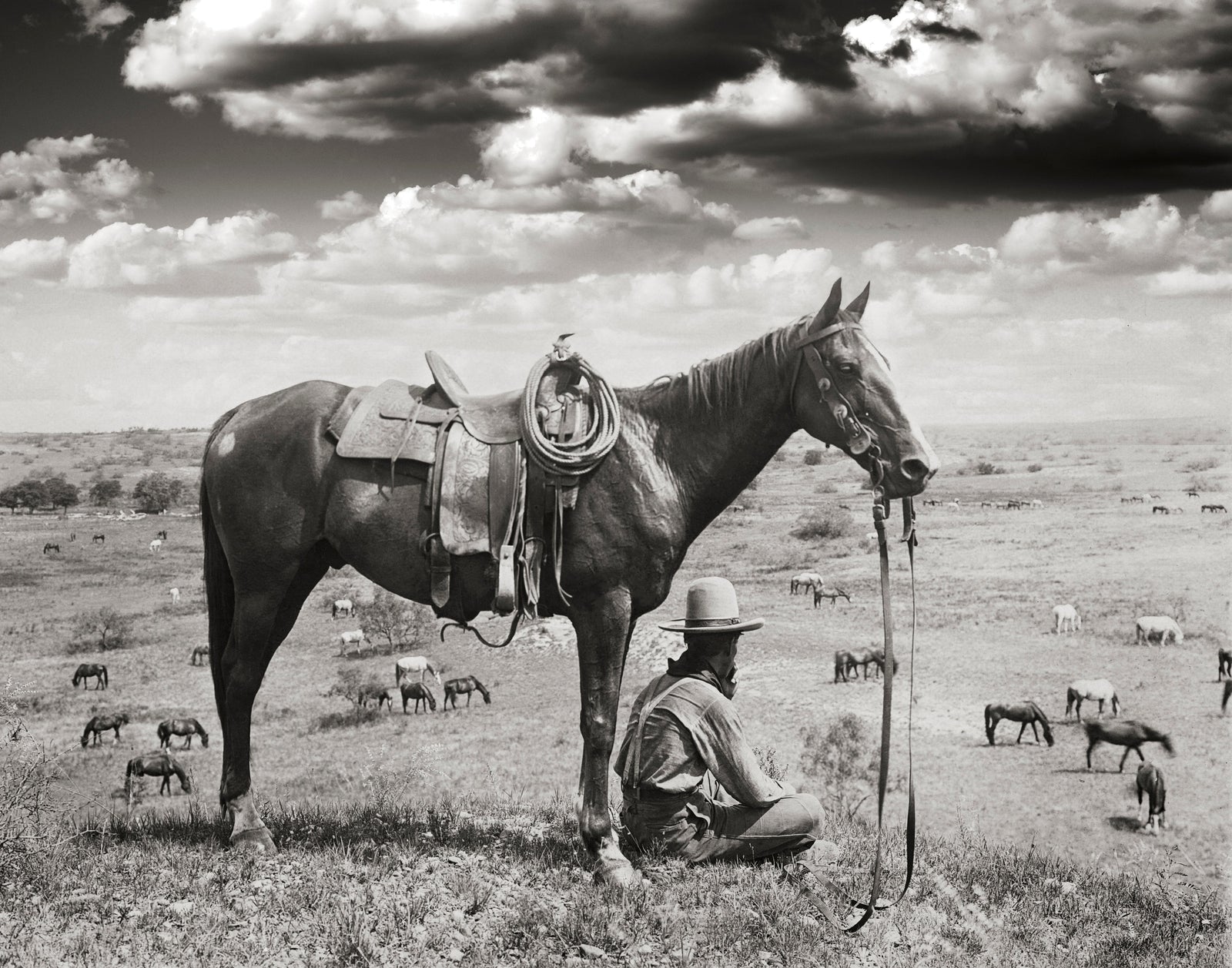
A cowboy on horseback overlooks the Dallas skyline in 1943—an image that seems to capture the Old West and modern America in a single frame. But the cowboy didn't disappear when the frontier closed. Discover how real working cowboys, rodeos, music and Hollywood carried the Old West into the 20th century.
Let customers speak for us
Gems
These short clips are gems. They are part of the history of music in America. Thank you for posting.
S. Kelley Chambers

Love the print and perfect decor for our n...
Love the print and perfect decor for our new apartment in Pittsburgh.
Chris P

5 stars review from Laura
5 stars review from Laura
Laura D

5 stars review from Geri
5 stars review from Geri
Geri L

5 stars review from Stephanie
5 stars review from Stephanie
Stephanie

5 stars review from Brookelynz
5 stars review from Brookelynz
Brookelynz
5 stars review from Deborah
5 stars review from Deborah
Deborah G

Spectacular!
Received as a gift and could not be happier with the quality of the print. Shipping container ensure this arrived in perfect condition.
John

5 stars review from Kayla
5 stars review from Kayla
Kayla G

5 stars review from Blondiee
5 stars review from Blondiee
Blondiee

5 stars review from April
5 stars review from April
April Y

5 stars review from Tracie
5 stars review from Tracie
Tracie C

Great quality and fast delivery!
Great quality and fast delivery!
Amanda C

5 stars review from Autumnrayne4
5 stars review from Autumnrayne4
Autumnrayne4

5 stars review from Traca
5 stars review from Traca
Traca B
