

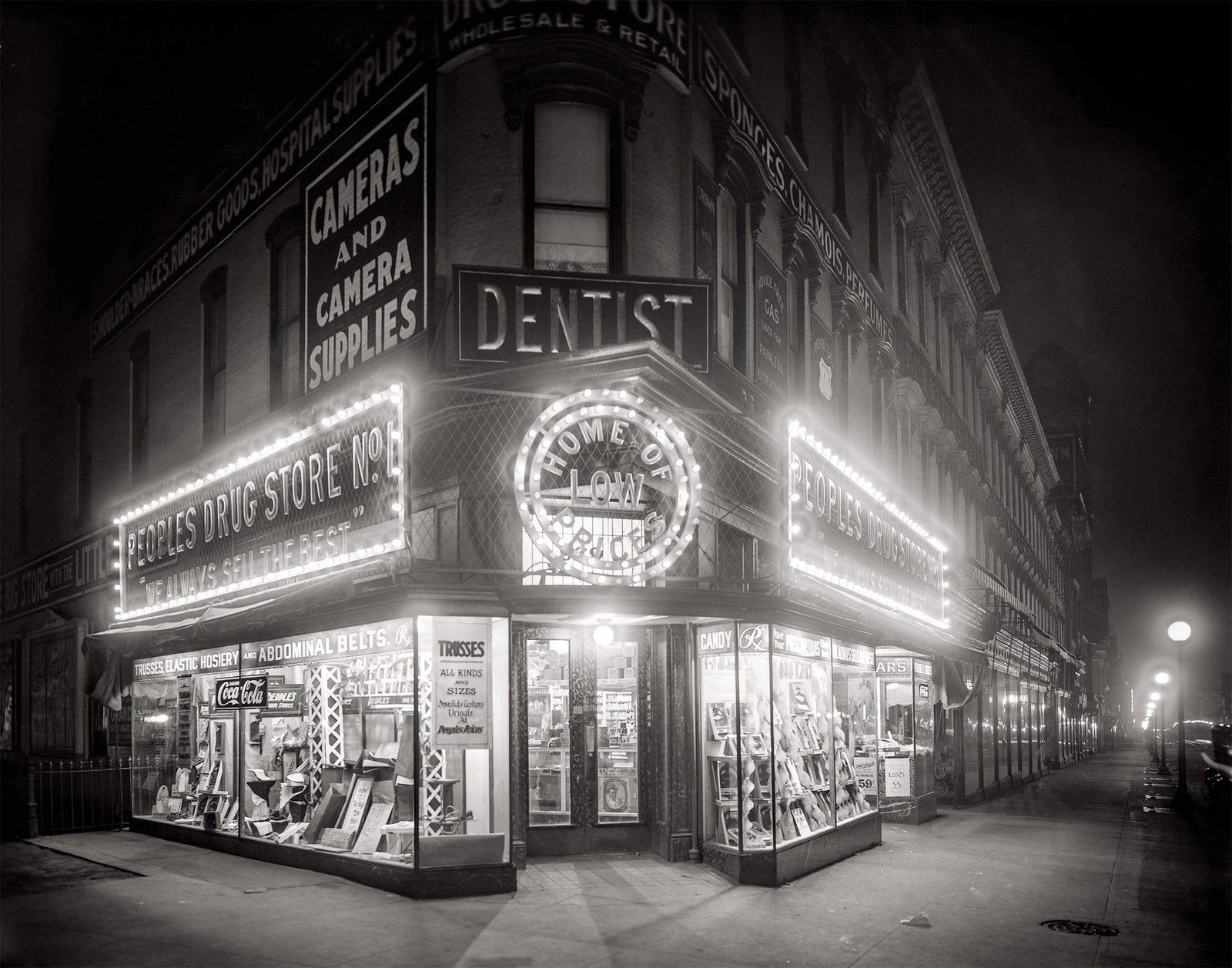

Peoples Drug: A Washington DC Community Cornerstone
Long before chain pharmacies became interchangeable, Peoples Drug was something far more personal. In neighborhoods across Washington, D.C., it was where you filled a prescription, yes—but also where you ran into your neighbors, where teenagers ordered cherry Cokes at the counter, where mothers picked up cold remedies and exchanged news, and where the rhythms of daily life quietly unfolded.
For much of the 20th century, Peoples Drug was not just a store. It was part of the social fabric of the city.
Beginnings in 1905
Peoples Drug was founded in 1905 in Washington, D.C., by Malcolm G. Gibbs. The first store opened at 824 7th Street NW in downtown Washington. Gibbs’ concept was straightforward but powerful: create an affordable, reliable pharmacy that served everyday working people.
This was not positioned as an elite apothecary. It was practical, accessible, and neighborhood-focused from the start. The early success of the first store led to rapid expansion. Within a few years, additional locations opened, including larger spaces near Mount Vernon Square and acquisitions of existing local drugstores such as W.S. Thompson Drugstore.
From the beginning, growth was tied to community presence. Each new store embedded itself in a specific neighborhood rather than functioning as a distant corporate outpost.
The Soda Fountain: Where Community Gathered
The soda fountain and lunch counter became the emotional center of many Peoples Drug locations.
In an era before fast food chains and coffee shop franchises dominated public space, the neighborhood drugstore counter served as an informal civic hub. You could sit down, order an ice cream soda or a grilled sandwich, and linger. Teenagers met after school. Office workers grabbed quick lunches. Elderly residents stopped in for a chat.
These counters mattered socially for several reasons:
-
They were affordable gathering places.
-
They were open to the public without formality.
-
They blurred class lines in subtle ways—everyone sat at the same counter.
During the mid-20th century, particularly in the 1930s through the 1950s, soda fountains were fixtures of American life. At Peoples Drug, they reinforced the idea that this was not just a transactional business—it was a shared neighborhood space.
In Washington, D.C., where communities were tightly knit and often defined by specific commercial corridors, a Peoples Drug location often anchored a block. It was visible, dependable, and open long hours. When someone said, “I’ll meet you at Peoples,” everyone knew exactly where.
Expansion Across the Mid-Atlantic
The chain grew steadily throughout the early and mid-20th century.
By 1930, Peoples Drug operated approximately 110 stores in Washington and surrounding states. By 1970, the company had expanded to roughly 252 locations across the Mid-Atlantic and parts of the Midwest, including Maryland, Virginia, Pennsylvania, and Ohio.
Despite its growth, the brand maintained a regional identity. It was not a distant national corporation yet—it still felt like “our” drugstore to many Washingtonians.
The stores offered prescriptions, over-the-counter medicines, cosmetics, small household goods, magazines, and seasonal items. In many neighborhoods, it functioned as a general convenience store before that term became common.
Corporate Shifts and Industry Pressure
By the 1970s, retail pharmacy was changing.
In 1975, Ohio-based Lane Drug acquired a controlling stake in Peoples Drug. This marked the beginning of more formal corporate consolidation. In 1984, the company was purchased by Canadian conglomerate Imasco, which owned other pharmacy brands.
The competitive landscape intensified in the 1980s. National chains were standardizing operations, modernizing layouts, and leveraging large-scale purchasing power. Regional chains like Peoples faced increasing pressure.
The CVS Acquisition and the End of the Name
In 1990, CVS Corporation acquired Peoples Drug for approximately $330 million. Initially, the Peoples name remained on many storefronts, but the integration process had begun.
Over the next few years, stores were remodeled and folded into CVS’s national system. By May 1994, the Peoples Drug name was fully retired, just shy of its 90th anniversary. All locations were rebranded as CVS/Pharmacy.
With that, a distinct regional identity quietly disappeared.
More Than Retail: Why It Mattered
It is easy to view the history of Peoples Drug as a standard corporate arc—founding, expansion, acquisition, rebranding. But that misses what people actually remember.
They remember:
-
The chrome stools at the soda fountain.
-
The sound of dishes clinking behind the lunch counter.
-
The reliable pharmacist who knew your family.
-
The predictable comfort of a familiar storefront.
In Washington, D.C., particularly before rapid urban redevelopment reshaped commercial districts, Peoples Drug was woven into daily life. It served as a point of continuity through wars, economic shifts, suburban expansion, and social change.
The loss of the name in 1994 was not dramatic, but it marked the end of a particular kind of neighborhood business—one that combined medicine, meals, gossip, and routine under one roof.
Legacy
Though the original chain no longer exists, its memory persists among longtime Washington residents. The brand still evokes a period when local institutions anchored communities in ways that were both ordinary and deeply meaningful.
Peoples Drug began as a practical pharmacy in 1905. Over nearly nine decades, it became something more enduring: a place where Washingtonians did not just shop—but gathered, paused, and recognized one another.
Leave a comment
Comments will be approved before showing up.
Also in Time Capsule
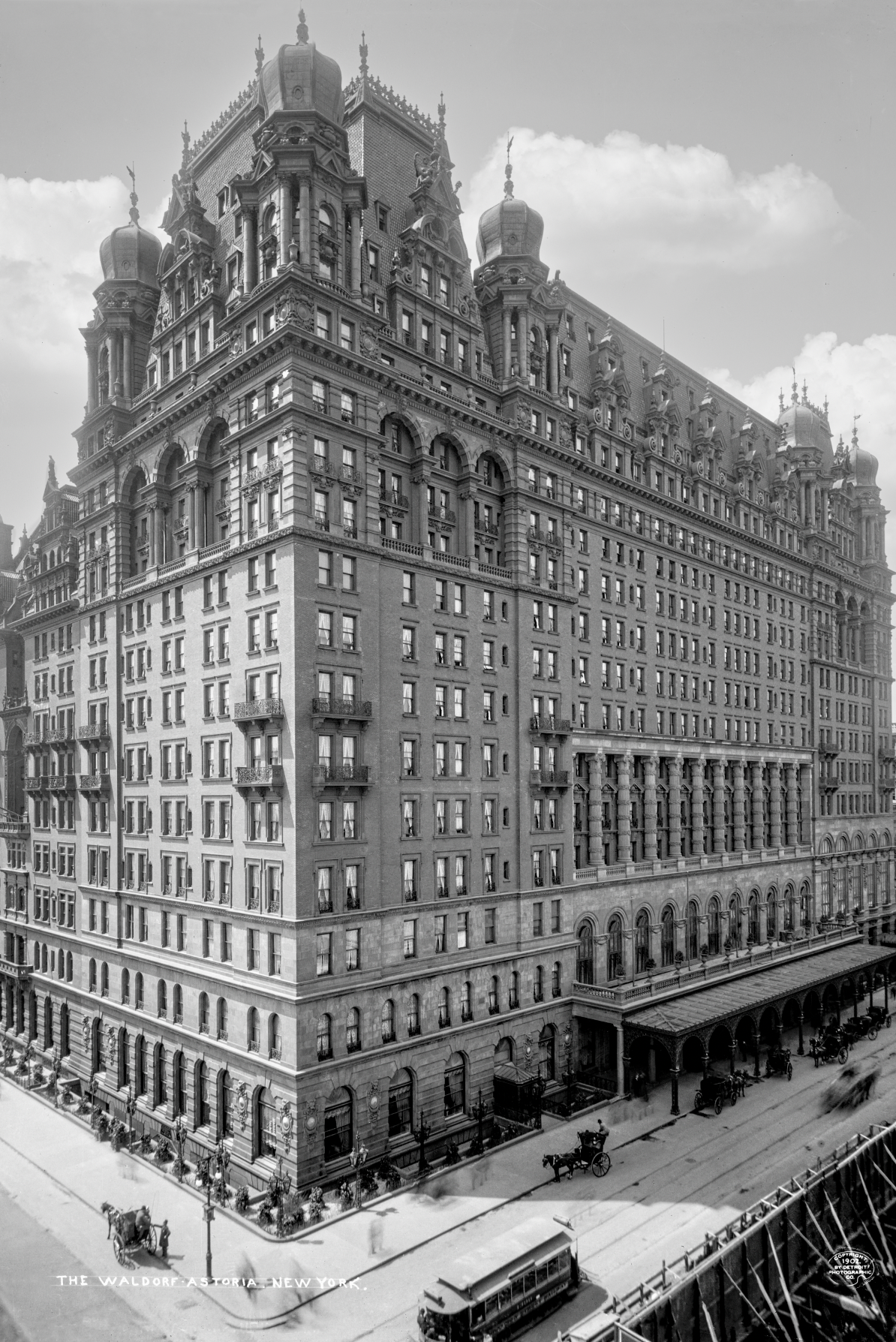

Six New York Landmarks That Changed the Manhattan Skyline
New York's skyline wasn't built overnight. Vintage photographs of Trinity Church, the Plaza, Waldorf-Astoria, Chrysler Building, Empire State Building and Rockefeller Center reveal how Manhattan grew from a city of church steeples and grand hotels into the skyscraper capital of the world.

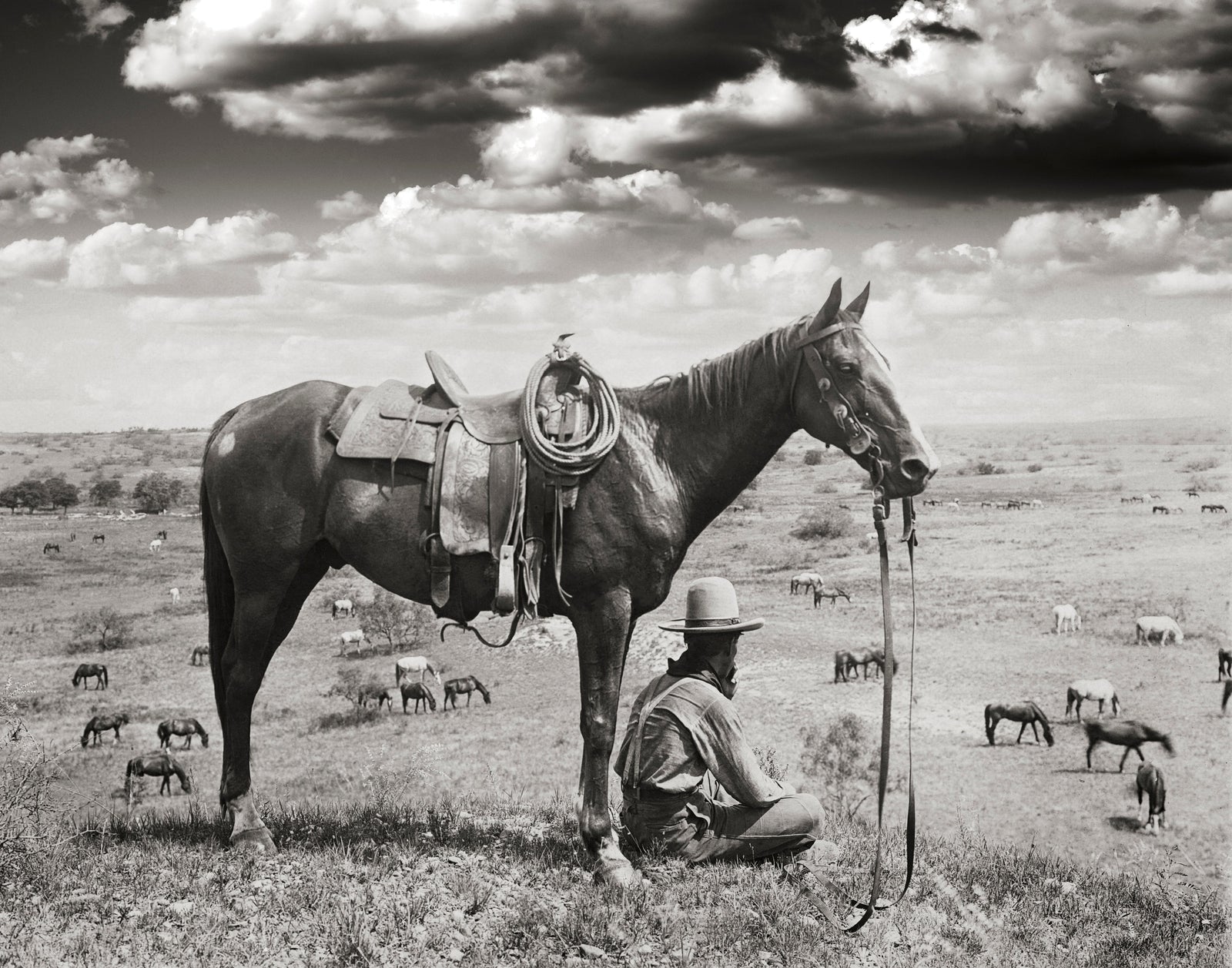

The Old West Never Really Ended
A cowboy on horseback overlooks the Dallas skyline in 1943—an image that seems to capture the Old West and modern America in a single frame. But the cowboy didn't disappear when the frontier closed. Discover how real working cowboys, rodeos, music and Hollywood carried the Old West into the 20th century.
Let customers speak for us
Gems
These short clips are gems. They are part of the history of music in America. Thank you for posting.
S. Kelley Chambers

Love the print and perfect decor for our n...
Love the print and perfect decor for our new apartment in Pittsburgh.
Chris P

5 stars review from Laura
5 stars review from Laura
Laura D

5 stars review from Geri
5 stars review from Geri
Geri L

5 stars review from Stephanie
5 stars review from Stephanie
Stephanie

5 stars review from Brookelynz
5 stars review from Brookelynz
Brookelynz
5 stars review from Deborah
5 stars review from Deborah
Deborah G

Spectacular!
Received as a gift and could not be happier with the quality of the print. Shipping container ensure this arrived in perfect condition.
John

5 stars review from Kayla
5 stars review from Kayla
Kayla G

5 stars review from Blondiee
5 stars review from Blondiee
Blondiee

5 stars review from April
5 stars review from April
April Y

5 stars review from Tracie
5 stars review from Tracie
Tracie C

Great quality and fast delivery!
Great quality and fast delivery!
Amanda C

5 stars review from Autumnrayne4
5 stars review from Autumnrayne4
Autumnrayne4

5 stars review from Traca
5 stars review from Traca
Traca B
