


The First Ferris Wheel: Engineering Wonder of the Gilded Age
In 1893, visitors to the World’s Columbian Exposition in Chicago encountered something they had never seen before: a gigantic revolving wheel rising above the fairgrounds, lifting passengers high into the sky in suspended cars the size of small rail coaches. It was not merely an amusement ride. It was a declaration. America, still young compared to Europe’s ancient powers, was announcing its industrial might to the world.
The structure was called the Ferris Wheel, named for its designer, George Washington Gale Ferris Jr.. It would become one of the most recognizable mechanical forms in modern history. But when it was first proposed, it was controversial, risky, and nearly dismissed as impossible.
The original Ferris Wheel was not a fairground novelty. It was a bold engineering answer to a challenge: build something that would rival the Eiffel Tower.
The Challenge of 1893: Outdoing Paris
The World's Columbian Exposition was organized to celebrate the 400th anniversary of Christopher Columbus’s arrival in the Americas. Chicago won the bid to host the exposition over New York, Washington, and St. Louis. The fair was meant to display American innovation, culture, and industrial power.
But there was a problem.
Just four years earlier, the 1889 Exposition Universelle in Paris had unveiled the Eiffel Tower. At over 1,000 feet tall, it stunned the world. It was daring, skeletal, unapologetically modern. It became a symbol of French engineering prowess.
Chicago’s fair organizers wanted something equally bold—something uniquely American.
They invited engineers to submit ideas for a structure that would be as impressive as the Eiffel Tower. Many proposals came in, including schemes for taller towers. But none seemed both practical and visionary.
Then George Ferris stepped forward with an idea that was simple in concept but monumental in scale: a wheel.
George Ferris: The Engineer Behind the Vision
George Washington Gale Ferris Jr. was born in 1859. He trained as a civil engineer and specialized in large-scale steel structures. His company inspected and tested metals for railroads and bridges. He understood the properties of steel at a time when steel construction was transforming the American skyline.
Ferris believed that a rotating wheel could be built safely on a scale no one had attempted before. Not a modest carnival ride. A colossal steel circle towering over the fairgrounds.
The idea was radical. Critics argued that it would collapse. Others questioned whether the central axle could support such immense weight. Fair organizers were skeptical. Ferris had to persuade them not only that it could be done—but that it would be safe.
He personally guaranteed the financing and put his own reputation on the line.
Engineering the Impossible
The original Ferris Wheel stood 264 feet tall—roughly equivalent to a 26-story building. At the time, it was the tallest attraction at the exposition.
Its most remarkable feature was the axle. Forged as a single piece of steel, it measured 45 feet long and weighed approximately 56 tons. It was one of the largest hollow steel forgings ever made at the time. Manufacturing it required advanced metallurgical techniques and specialized foundries.
The wheel’s diameter was about 250 feet. It was supported by two 140-foot steel towers connected by a massive axle. The wheel rotated on a system of bearings and was powered by steam engines.
There were 36 passenger cars. Each car could hold up to 60 people—40 seated and 20 standing—allowing more than 2,000 passengers at a time.
To put that in perspective, most amusement rides today carry far fewer people per cycle.
Each full rotation took about 20 minutes. The ride typically included six stops to allow passengers to board and disembark, followed by a continuous revolution that offered panoramic views of Chicago and Lake Michigan.
From the top, riders could see miles in every direction. In an age before commercial aviation, such height was astonishing.
The Cultural Impact of Height
Today, vertical height is common. Skyscrapers dominate city skylines. Airplanes cross continents. Observation decks are routine.
But in 1893, vertical experience was new and psychologically powerful.
The Ferris Wheel offered a safe way for ordinary people—families, laborers, immigrants, businessmen—to rise above the city. Unlike the Eiffel Tower, which required climbing or elevator rides inside a tower structure, the Ferris Wheel offered movement. It did not simply lift you upward. It carried you through space.
That distinction matters. The motion created anticipation, suspense, and a sense of shared experience.
The ride was not static architecture. It was kinetic spectacle.
Construction Against Doubt
Construction began in 1892. Workers assembled the steel towers first, then installed the enormous axle. Raising and positioning that axle was itself a dramatic engineering feat. Massive cranes and careful calculations were required. Safety was a constant concern. Skeptics predicted catastrophe.
But Ferris’s engineering background proved decisive. He insisted on rigorous testing of materials. The wheel’s structural system distributed weight carefully through tension and compression in the steel spokes.
Unlike wooden carnival wheels that preceded it, this was a fully steel structure. Steel allowed for greater strength and flexibility.
By June 1893, the wheel was operational.
When it opened, it immediately became one of the fair’s most popular attractions.
Financial Stakes and Personal Cost
The Ferris Wheel was not merely an engineering gamble—it was a financial one.
Ferris invested heavily. Construction costs reportedly reached around $300,000, a substantial sum at the time.
Ticket prices were 50 cents per ride, matching the admission price to the fair itself. Despite skepticism, the wheel drew massive crowds. By the end of the exposition, it had carried approximately 1.5 million passengers and generated significant revenue.
However, legal disputes with fair organizers over profits drained Ferris financially. He struggled to recover his investment fully. His health declined in the years following the fair, and he died in 1896 at age 37.
He did not live to see the long-term legacy of his creation.
After the Fair: A Moving Giant
When the exposition closed, the Ferris Wheel did not disappear immediately. It was dismantled and rebuilt in 1895 at a new location in Chicago’s Lincoln Park.
Later, it was moved again to St. Louis for the 1904 Louisiana Purchase Exposition.
By then, it had become an icon. The wheel symbolized American ingenuity and spectacle. Other amusement parks began constructing smaller versions.
Eventually, the original wheel was demolished in 1906. Reports indicate it was dynamited and scrapped for metal.
The physical structure vanished, but the concept endured.
Birth of a New Industry
The success of the Ferris Wheel helped launch the modern amusement ride industry.
Permanent amusement parks were emerging in the late 19th century—most famously Coney Island in New York. Mechanical rides became increasingly elaborate.
Smaller Ferris wheels appeared at fairs and parks around the world. The term “Ferris wheel” entered common language.
It is worth noting that in Britain, similar rides were often called “big wheels.” But in the United States, Ferris’s name stuck which is rare. Few inventors have their surname permanently attached to a machine used globally.
Engineering Legacy
The original Ferris Wheel demonstrated several principles that influenced future large-scale engineering:
First, the viability of large rotating steel structures.
Second, the use of advanced metallurgy for massive components like axles.
Third, the commercial potential of engineering spectacle.
Bridges, skyscrapers, and observation towers would continue pushing scale and ambition. But the Ferris Wheel showed that engineering could also be playful.
It combined precision mechanics with public entertainment and that combination shaped 20th-century leisure culture.
Symbolism in the Gilded Age
The 1890s were marked by industrial expansion, corporate consolidation, and visible inequality. The same era that produced steel magnates and railroad empires also produced labor unrest and economic instability.
The Ferris Wheel embodied optimism about machinery and progress. It presented steel not as a tool of exploitation or warfare—but as a source of wonder.
Visitors to the Columbian Exposition encountered electric lights, grand neoclassical buildings, and new technologies. The fair projected order and confidence.
The Ferris Wheel became a centerpiece of that vision.
It was not defensive. It was aspirational.
The Experience of Riding the First Ferris Wheel
Accounts from riders describe a mix of awe and nervousness. The enclosed cars were relatively stable, but the height and motion were unfamiliar.
As the wheel rose, Chicago spread outward below. Lake Michigan shimmered. The fairgrounds—known as the “White City”—glowed with electric illumination at night.
Passengers could converse, move around, and look through large windows. The ride was social. It allowed time to absorb the view.
Unlike modern high-speed attractions designed for adrenaline, the original Ferris Wheel emphasized scale and perspective.
It was less about thrill and more about elevation.
Influence on Urban Landscapes
Today, observation wheels stand in major cities worldwide. London has the London Eye. Las Vegas has the High Roller. Many waterfront cities build large wheels as visual anchors.
The DNA of those structures traces directly back to Ferris’s 1893 design.
Modern wheels use updated materials, computerized controls, and climate-controlled capsules. But the core concept—a rotating steel circle offering panoramic views—remains unchanged.
Few inventions achieve that level of conceptual permanence.
Why the First Matters
There were earlier pleasure wheels of modest size in Europe, but none approached the scale or ambition of Ferris’s creation.
The 1893 wheel was the first true giant observation wheel. It established the template for all that followed.
Being first is not merely about chronology. It is about redefining expectations. Before 1893, no one imagined a wheel that size could operate safely with thousands of passengers daily.
A Circle That Changed the Skyline
The original Ferris Wheel stood for just over a decade. It no longer exists physically. No fragments remain as museum pieces. It was dismantled, sold for scrap, and erased from the Chicago skyline.
It proved that engineering could be monumental without being static. It invited the public into the machinery of modernity. It gave ordinary people access to extraordinary height.
George Ferris did not become as internationally celebrated as Gustave Eiffel. His life was shorter and his recognition quieter. Yet his invention became part of everyday language across continents.
The wheel turns. That is what it does. In 1893, it turned for the first time at colossal scale, carrying thousands upward and signaling that American engineering had entered a new era.
From that moment forward, no world’s fair, no seaside amusement park, no modern skyline would feel complete without a great circle rising into the air.
And it all began with one engineer willing to bet his career on a rotating dream of steel.
See the photo here.
Leave a comment
Comments will be approved before showing up.
Also in Time Capsule
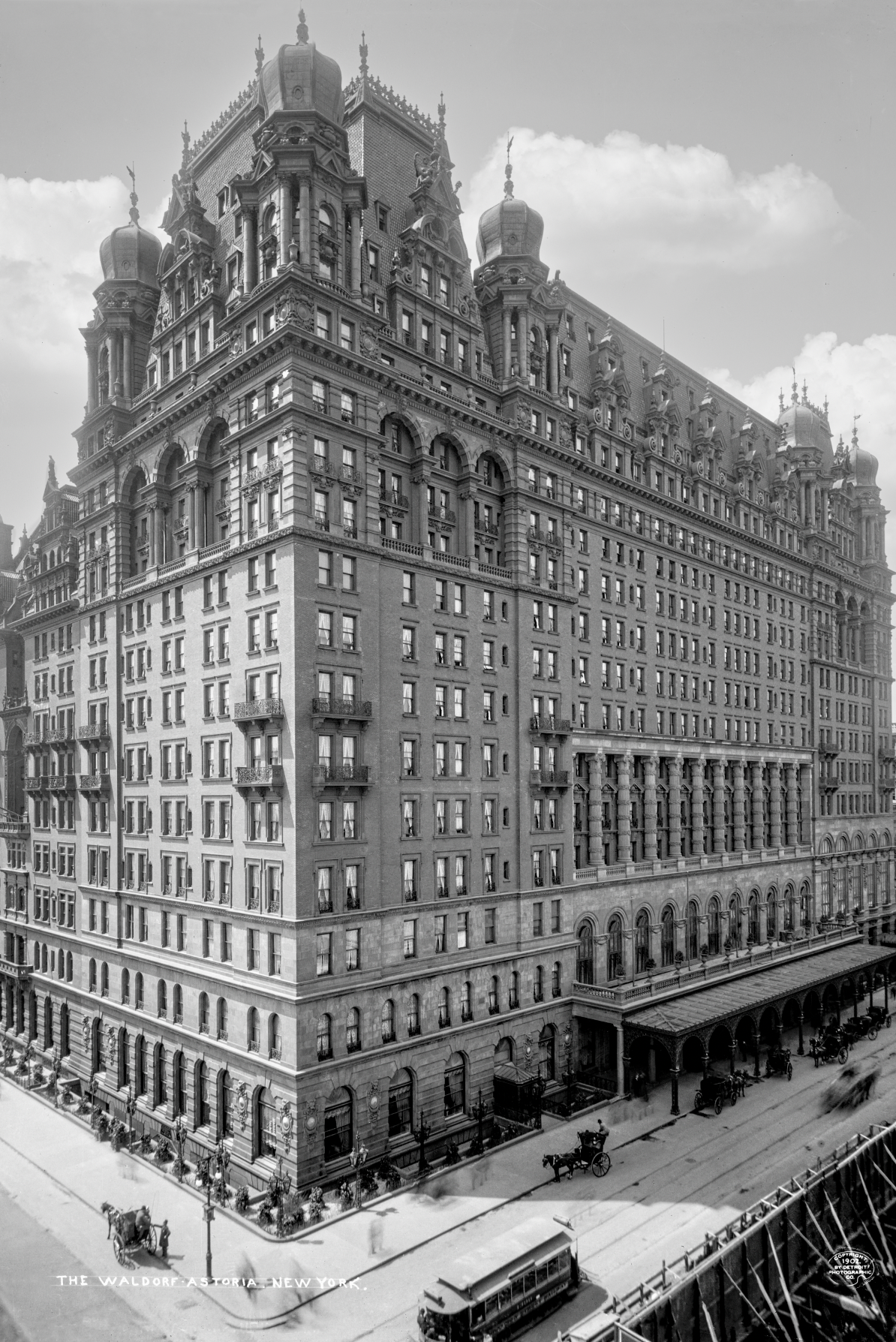

Six New York Landmarks That Changed the Manhattan Skyline
New York's skyline wasn't built overnight. Vintage photographs of Trinity Church, the Plaza, Waldorf-Astoria, Chrysler Building, Empire State Building and Rockefeller Center reveal how Manhattan grew from a city of church steeples and grand hotels into the skyscraper capital of the world.

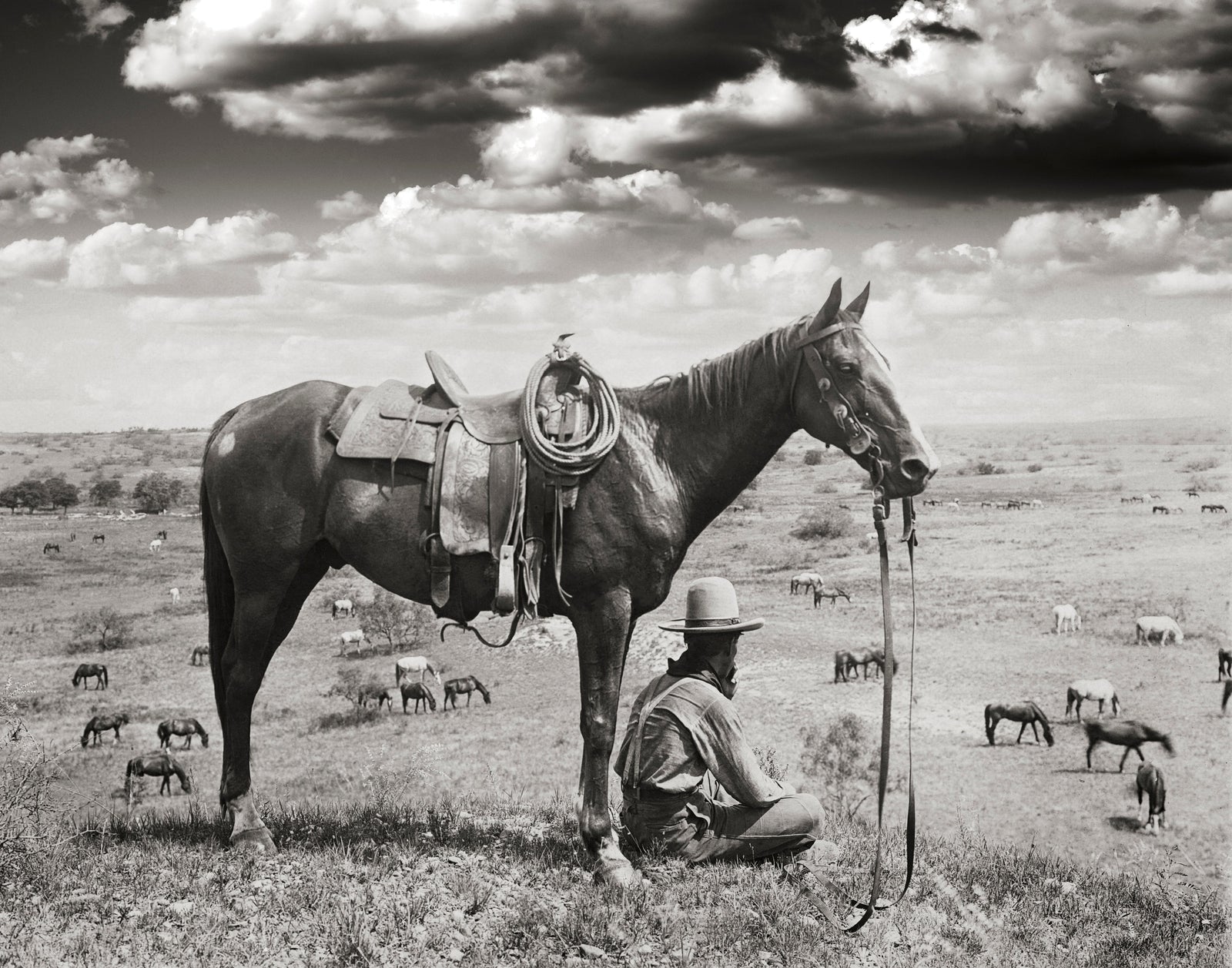

The Old West Never Really Ended
A cowboy on horseback overlooks the Dallas skyline in 1943—an image that seems to capture the Old West and modern America in a single frame. But the cowboy didn't disappear when the frontier closed. Discover how real working cowboys, rodeos, music and Hollywood carried the Old West into the 20th century.
Let customers speak for us
Gems
These short clips are gems. They are part of the history of music in America. Thank you for posting.
S. Kelley Chambers

Love the print and perfect decor for our n...
Love the print and perfect decor for our new apartment in Pittsburgh.
Chris P

5 stars review from Laura
5 stars review from Laura
Laura D

5 stars review from Geri
5 stars review from Geri
Geri L

5 stars review from Stephanie
5 stars review from Stephanie
Stephanie

5 stars review from Brookelynz
5 stars review from Brookelynz
Brookelynz
5 stars review from Deborah
5 stars review from Deborah
Deborah G

Spectacular!
Received as a gift and could not be happier with the quality of the print. Shipping container ensure this arrived in perfect condition.
John

5 stars review from Kayla
5 stars review from Kayla
Kayla G

5 stars review from Blondiee
5 stars review from Blondiee
Blondiee

5 stars review from April
5 stars review from April
April Y

5 stars review from Tracie
5 stars review from Tracie
Tracie C

Great quality and fast delivery!
Great quality and fast delivery!
Amanda C

5 stars review from Autumnrayne4
5 stars review from Autumnrayne4
Autumnrayne4

5 stars review from Traca
5 stars review from Traca
Traca B
